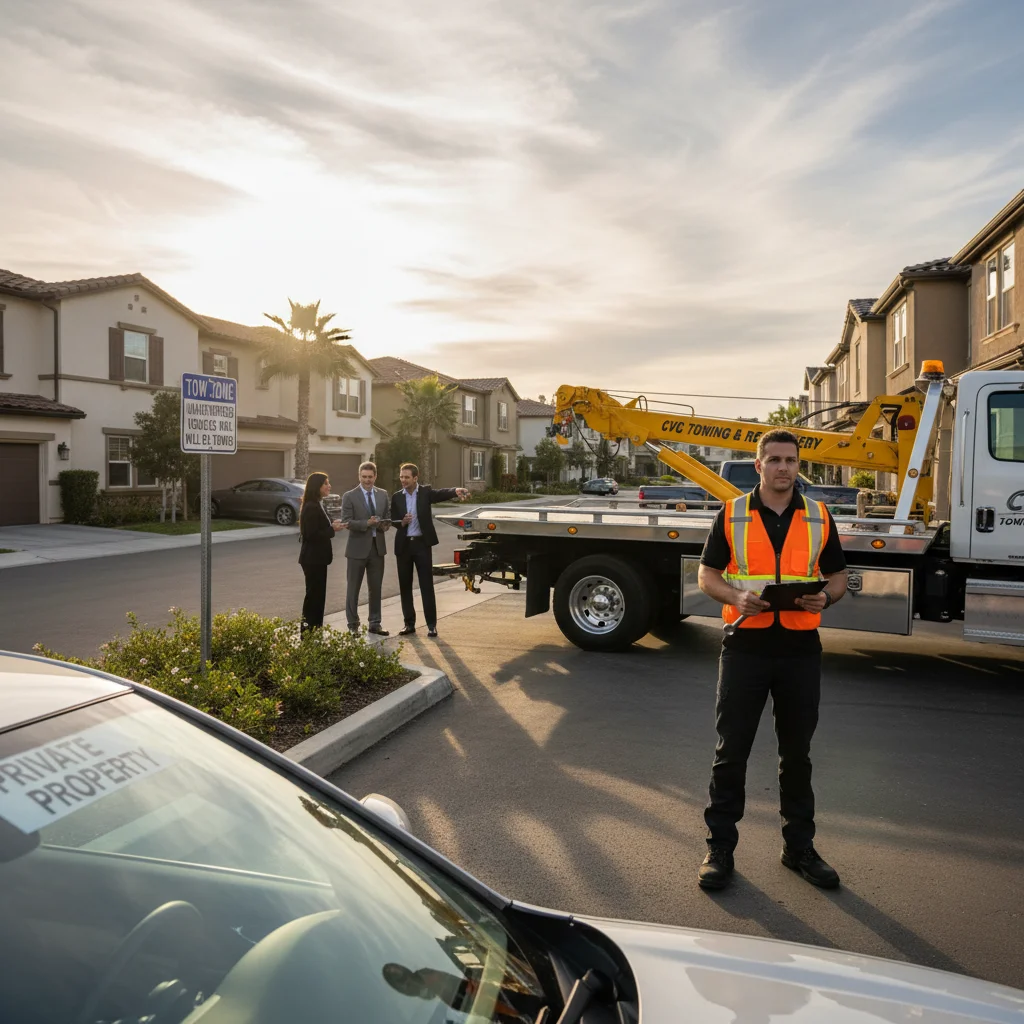
Texas law does not let a tow company do whatever it wants. Every operator working in Corpus Christi answers to the Texas Department of Licensing and Regulation, under Texas Occupations Code Chapter 2308. That law sets what a company can charge, what a lot has to post before it tows you, and what happens if you think a tow was wrong. This page covers the statewide rules. If your car just got towed from an apartment or shopping center lot in Corpus Christi and you need the practical, step-by-step version, read our private property towing guide instead.
Consent tow vs. non-consent tow
Every tow in Texas falls into one of two categories, and which one applies changes your rights completely.
A consent tow is one you asked for. You called a company, gave a location, and agreed to a price before the truck rolled. You control where the car goes and who moves it. See our Corpus Christi tow cost guide for what a normal consent tow runs.
A non-consent tow is different. Nobody asked you first. A property owner, an HOA, or a police officer ordered the tow because your car was parked somewhere it shouldn’t have been, or because it was tied to a crash or an arrest. Chapter 2308 exists mainly to regulate this second category, since you never chose the company and never agreed to a price.
The $272 cap, and what it actually covers
State rule 16 TAC 86.455 sets a hard ceiling on what a company can charge for a non-consent tow. For a light-duty vehicle, 10,000 lbs or less, which covers almost every car, SUV, and pickup in Corpus Christi, that cap is $272.
Heavier vehicles fall under their own weight classes with their own caps set by the same rule, so a commercial truck or a loaded trailer prices out differently than your daily driver. If a company hands you a ticket above the light-duty cap for a normal passenger car, ask to see the fee schedule they’re operating under. TDLR licenses every non-consent operator in the state, and that license number belongs on your paperwork.
Signage rules: what a lot has to post before it tows anyone
A property owner can’t just call a company and have your car hauled off. TDLR requires compliant signage at each entrance and exit of the lot before any non-consent tow is legal. Without that signage in place, the tow may not hold up if you challenge it later.
This matters most at apartment complexes, HOA lots, and shopping centers along busy corridors like SPID, where lots turn over fast and enforcement gets aggressive. If you manage a property in Corpus Christi and want your lot signed and towing handled correctly, our private property towing service covers compliant setup and dispatch. If you’re a driver trying to confirm a company towing near you is even licensed, our license verification guide walks through how to check.
Your right to a hearing before a Justice of the Peace
If you think a non-consent tow was wrong, whether the signage wasn’t there, the lot had no real basis to tow you, or the charge came in over the cap, Texas gives you a way to fight it in court.
You can request a tow hearing before a Justice of the Peace in the county where your car was towed. That request has to be in writing, and it has to be filed before the 14th day after the tow, not counting weekends or legal holidays. Once the court has your request, it has to hold the hearing within 21 days.
The burden of proof falls on you as the driver requesting the hearing. At the hearing, the Justice of the Peace decides two things: whether there was probable cause for the tow in the first place, and whether the company charged more than the legal cap.
This is a real deadline, not a suggestion. Miss the 14-day window and you lose the right to a hearing entirely, so the moment something about a tow looks off, start pulling your paperwork together.
Storage fees while your car sits at the yard
If your car ends up at a storage facility after a non-consent tow, the daily rate is capped too. A vehicle 25 feet or shorter runs up to $22.85 a day. Anything longer than 25 feet, meaning a full-size RV or a car towing a trailer, runs up to $39.99 a day.
Those numbers add up fast, which is one more reason the 14-day hearing window matters. The longer a dispute drags on, the more storage accrues, even if the tow turns out to have been wrong from the start.
This isn’t the same as a police impound
Everything above covers non-consent tows ordered by a property owner or HOA under Chapter 2308. A tow ordered by a police officer, for something like an arrest, an expired registration stop, or a car flagged abandoned, runs through a different process entirely. See our guide on getting a car out of police impound in Corpus Christi if that’s what you’re actually dealing with.
When to call Quick Tow Corpus Christi
We can’t undo a non-consent tow or step in on a hearing at the JP court. What we can do is get you moving again once your car’s back, or handle a tow the right way from the start if you call us directly.
If a company ever turns down a job you’re trying to book, our guide on when a tow truck can refuse a call explains the legitimate reasons that happens, so you know when it’s a real issue versus a normal business decision.
Call (361) 967-8088 and we’ll quote a real price before the truck rolls. No surprise fees, no guessing at what state law allows.
Frequently asked questions
What’s the difference between a consent and non-consent tow in Texas?
A consent tow is one you called for yourself, where you agree to the company and the price up front. A non-consent tow is ordered by someone else, a property owner, an HOA, or the police, without you asking for it, and it falls under stricter rules set by Texas Occupations Code Chapter 2308.
How much can a tow company legally charge for a non-consent tow in Corpus Christi?
For a light-duty vehicle, 10,000 lbs or less, the cap is $272 under 16 TAC 86.455. Heavier vehicles have their own caps under the same rule. Storage runs up to $22.85 a day for vehicles 25 feet or shorter, and up to $39.99 a day for anything longer.
How do I request a tow hearing, and what’s the deadline?
You request the hearing in writing before a Justice of the Peace in the county where the tow happened. The request has to be filed before the 14th day after the tow, not counting weekends or legal holidays. The court then has to hold the hearing within 21 days of receiving your request.
Does a lot have to post a sign before it can tow me?
Yes. TDLR requires compliant signage at each entrance and exit before any non-consent tow is legal. If the required signage wasn’t posted, that’s grounds to challenge the tow at a JP hearing.
Is a private-lot tow the same as a police impound?
No. A non-consent tow from a private lot follows Chapter 2308 and goes to a licensed storage facility. A police-ordered impound, for something like an arrest or an abandoned-vehicle flag, follows a different process. See our impound guide for the police side of it.