Accident Recovery in Three Rivers, TX.
Quick Tow is a referral line for Three Rivers callers seeking accident recovery. Share the vehicle, exact location, condition, and destination so an operator can confirm the job.
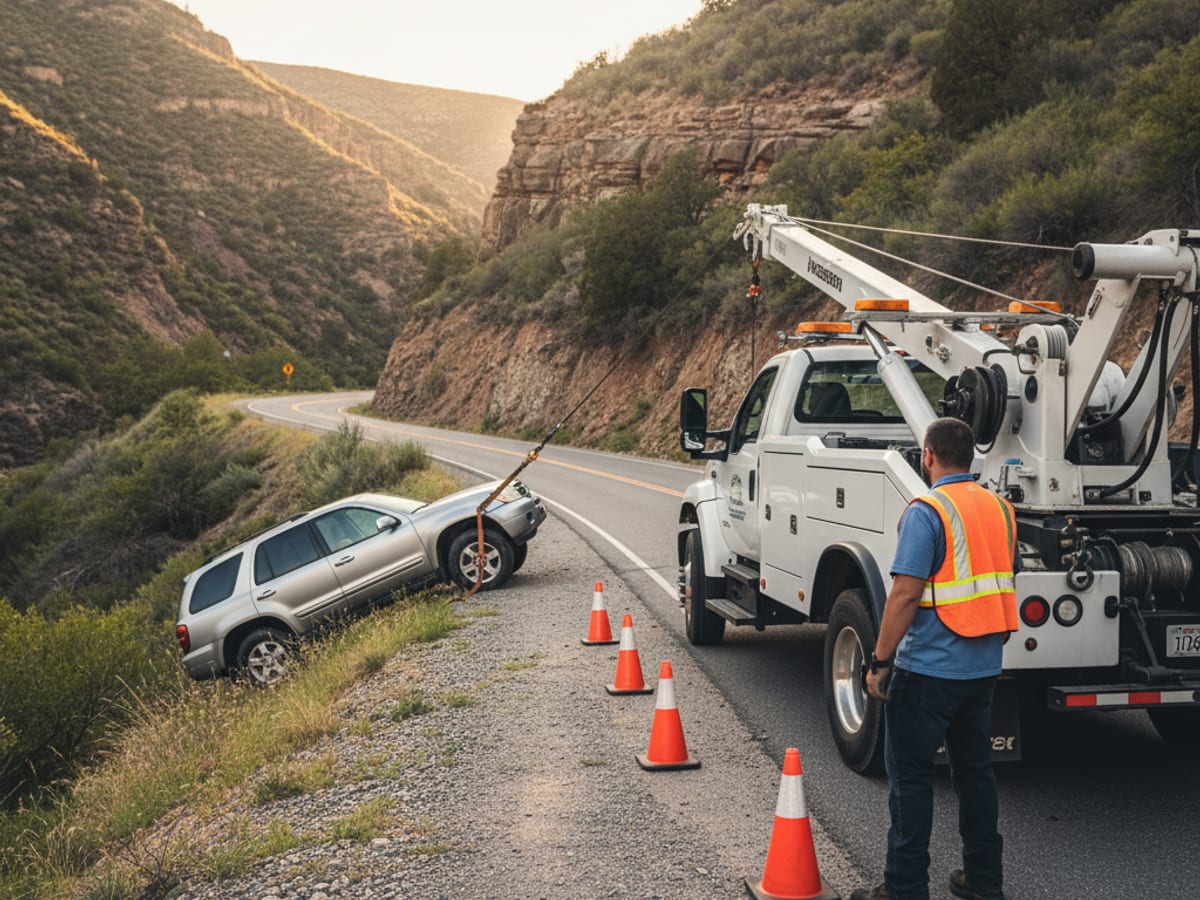
Why is accident recovery different in the Coastal & Outer Corridor?
On US-77 and US-281 wrecks can be high-speed and far from town, often with a long winch back to the road. Refugio's US-77 and SH-35 crossroads and Three Rivers on I-37 see collision work. Ask the operator about rigging so the recovery does not add damage.
What is accident recovery like in Three Rivers, TX?
Three Rivers is the I-37 / US-281 interchange, with SH-72 west to Choke Canyon and the boat ramps.
Three Rivers sits on I-37 between Corpus Christi and San Antonio. US-281 runs north-south and shares parts of the interchange. SH-72 heads west toward Choke Canyon Reservoir, Choke Canyon State Park, and FCI Three Rivers. The Valero Three Rivers Refinery is inside town. Inbound crude tankers and outbound product trucks use US-281 and I-37. If you are on the interstate, give the direction and the nearest exit.
What can you ask an operator about for accident recovery in Three Rivers?
- Freeway accident response and scene support
- Winch-out recovery from ditches, embankments, and soft shoulders
- Sand and mud extraction (Padre Island, Mustang Island, beach access roads)
- Rollover righting and recovery
- Post-collision staging to body shop or storage
- Insurance-company photo and documentation support
- Law-enforcement scene coordination
- Abandoned-vehicle recovery with proper paperwork
When do you need accident recovery in Three Rivers?
- Vehicle slid off the road into a ditch
- Collision with disabled or immobilized vehicle
- Rollover requiring careful righting
- Stuck in sand on Padre Island, Mustang Island, or a beach access road
- Stuck in mud on a rural farm-to-market road
- Need a licensed tow to complete an insurance claim
- Police or DPS directed removal from the scene
What do Three Rivers drivers ask about accident recovery?
How do I check availability in Three Rivers for accident recovery?
Call (361) 967-8088 with your exact Three Rivers location, vehicle details, and what happened. Quick Tow is a referral line. The operator who answers confirms whether they can take the job, what equipment they would use, and their arrival estimate.
What does accident recovery cost in Three Rivers?
Standard recovery from $125 · complex winch-out quoted on site. Ask the operator who accepts the job to confirm the complete quote, including mileage and any condition that could change it.
What's specific about accident recovery in Three Rivers?
Three Rivers is the I-37 / US-281 interchange, with SH-72 west to Choke Canyon and the boat ramps. On US-77 and US-281 wrecks can be high-speed and far from town, often with a long winch back to the road.
Will my insurance cover this?
Coverage depends on the policy and claim. Call the insurer to confirm authorization, destination, limits, and reimbursement. Ask the operator for a detailed invoice, but do not assume direct payment or reimbursement.
How do winch-outs work?
When a vehicle slides off the road, the wrecker's integrated winch pulls it back onto the pavement. On a soft shoulder that takes 15-30 minutes. On a steep embankment or a deep ditch, it takes careful anchor work and rigging - sometimes 1-2 hours. A good operator explains what they see and what they are going to do before starting.
Need accident recovery in Three Rivers?
The line takes calls 24/7. Flat-rate pricing.