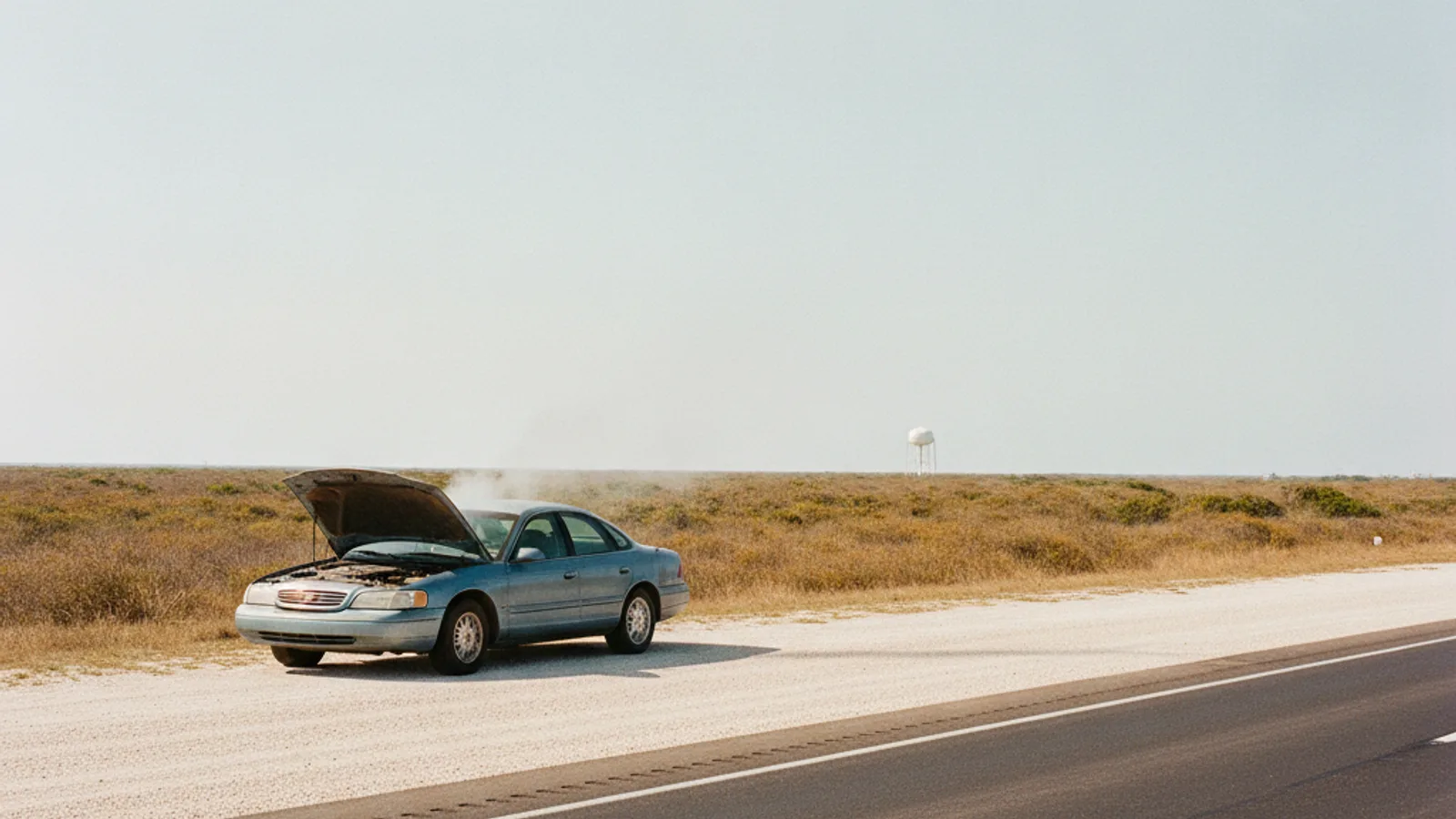
When your temperature gauge climbs into the red or steam starts curling out from under the hood, pull over as soon as it’s safe and shut the engine off. Every extra mile you drive on a hot engine risks a warped cylinder head or a blown head gasket, and either one costs far more than a tow. Call (361) 967-8088 and the job goes to a local operator anywhere in the Coastal Bend.
What should you do the moment your car starts overheating?
The moment you see the gauge climb or steam appear, get the car off the road and shut it down. Here’s the order that keeps you and the engine safe.
- Turn off the A/C and crank the heater to full blast. This pulls heat away from the engine and buys you a few extra minutes before things get worse.
- Pull over as soon as it’s safe. A shoulder, a parking lot, anywhere off the travel lane works better than pushing on toward the next exit.
- Shut the engine off. Idling hot doesn’t cool anything down, it just keeps cooking the same coolant.
- Pop the hood only after the engine has cooled. Never open a hot radiator cap or coolant reservoir, the pressurized steam can burn you badly.
- Wait at least 20 to 30 minutes before touching anything under the hood.
- Check the coolant level once everything is cool to the touch, not before.
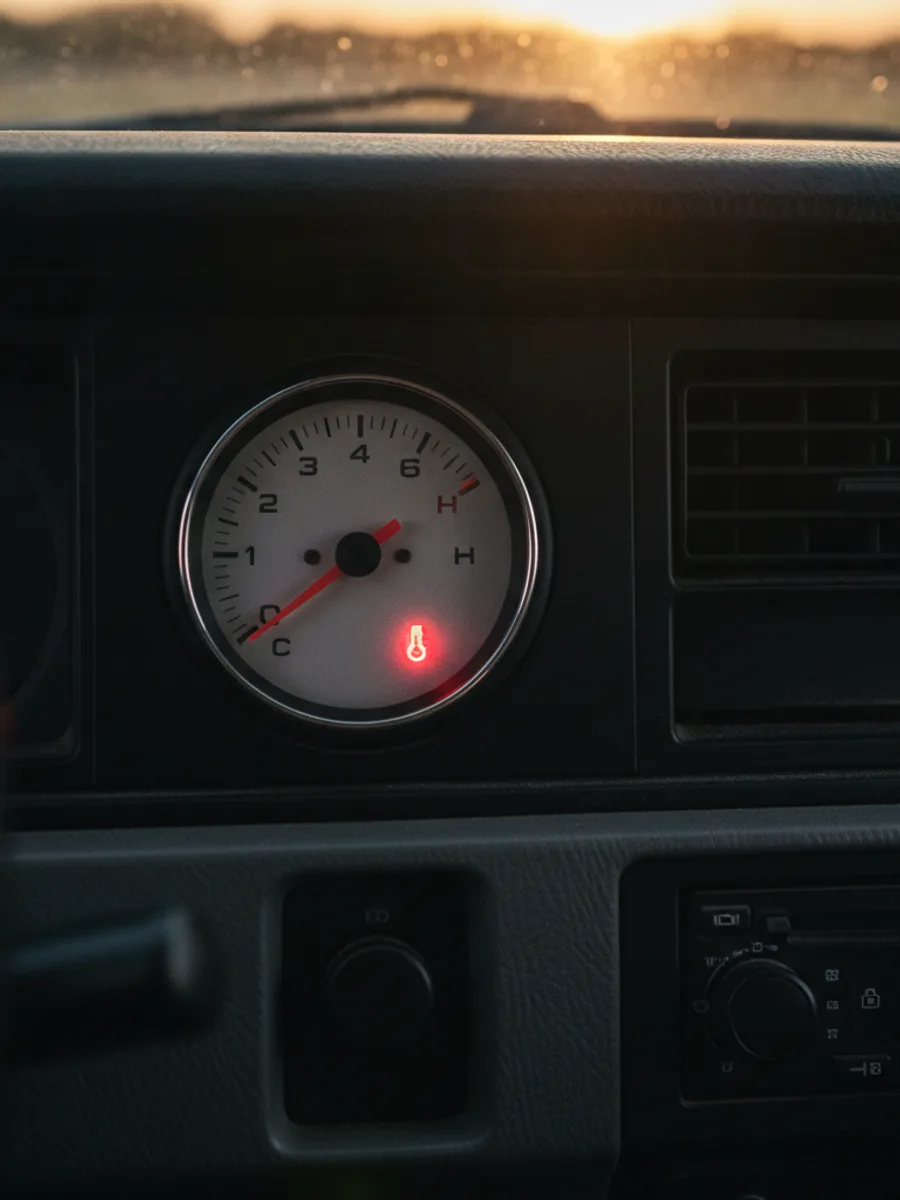
Why do cars overheat so often in Corpus Christi?
An engine-temperature warning, steam, or a gauge moving into the hot range calls for immediate attention. Follow the vehicle owner’s manual because warning displays and shutdown instructions vary by model. If you can reach a safe place without continuing to operate an overheating engine, stop there, turn the engine off, and keep clear of traffic.
Can you keep driving a car that’s overheating?
No, not safely. Once the gauge sits in the red or a warning light comes on, continuing to drive risks warping the cylinder head or blowing the head gasket. A repair that would have cost a couple hundred dollars can turn into an engine rebuild costing thousands, all because the car kept moving for a few more miles. If the needle is climbing, treat that as your cue to stop, not a suggestion to push a little further.
Why an overheated engine belongs on a flatbed, not the road
Continuing to drive while the engine is overheating can cause further damage. A tow keeps the engine off during the trip to a repair facility. The appropriate towing method depends on the vehicle, its condition, and the manufacturer’s instructions, so give the operator the year, make, model, and symptoms before accepting the quote.
What makes a car overheat, and what does it cost to fix?
Overheating can have several causes, and similar symptoms can point to different faults. Do not diagnose the cause from one warning light or from steam alone. A qualified repair facility can inspect the cooling system and give a repair estimate after identifying the problem. The towing quote covers moving the vehicle; it does not include diagnosis or repair.
When should you stop and call for a tow in Corpus Christi?
Stop and seek help when you see steam or an engine-temperature warning, following the vehicle manual and emergency instructions. On SPID, US-181, or another high-speed road, prioritize getting people away from moving traffic when that can be done safely. Quick Tow is a referral line: call (361) 967-8088, describe the location and symptoms, and ask whether an independent operator is available. The operator decides whether to accept the job, recommends a towing method, and quotes the work.
Frequently asked questions
Can you drive a car that’s overheating?
No. Driving on an overheated engine risks warping the cylinder head or blowing the head gasket, turning a cheap repair into an expensive one. Pull over, shut the engine off, and let it cool before deciding what’s next.
How long does it take for an engine to cool down?
Most engines need at least 20 to 30 minutes to cool enough to safely check coolant or open the hood. A badly overheated engine can take closer to an hour in the Corpus Christi heat, since the outside air is fighting you the whole time.
Is it safe to add water to an overheating radiator?
Only after the engine has fully cooled, and only as a temporary measure to get you to a shop. Never remove a radiator cap or reservoir cap while the engine is hot, the system is pressurized and the steam can cause serious burns.
Does Quick Tow tow overheated cars in Corpus Christi?
The referral line can check whether an independent operator is available for an overheated vehicle. Give the exact location, vehicle details, and destination, then confirm the towing method and total with the operator before service.
How much does it cost to tow an overheating car?
Pricing depends on your location and the distance to the shop. Call (361) 967-8088 for an exact price for your situation.
If your temp gauge is climbing right now, don’t push it. Call (361) 967-8088 and ask the dispatcher for the flat rate on your job.