When “classic car towing near me” is the search, equipment isn’t the only concern. The operator also needs your car’s clearance, loading limits, condition, and destination before moving it.
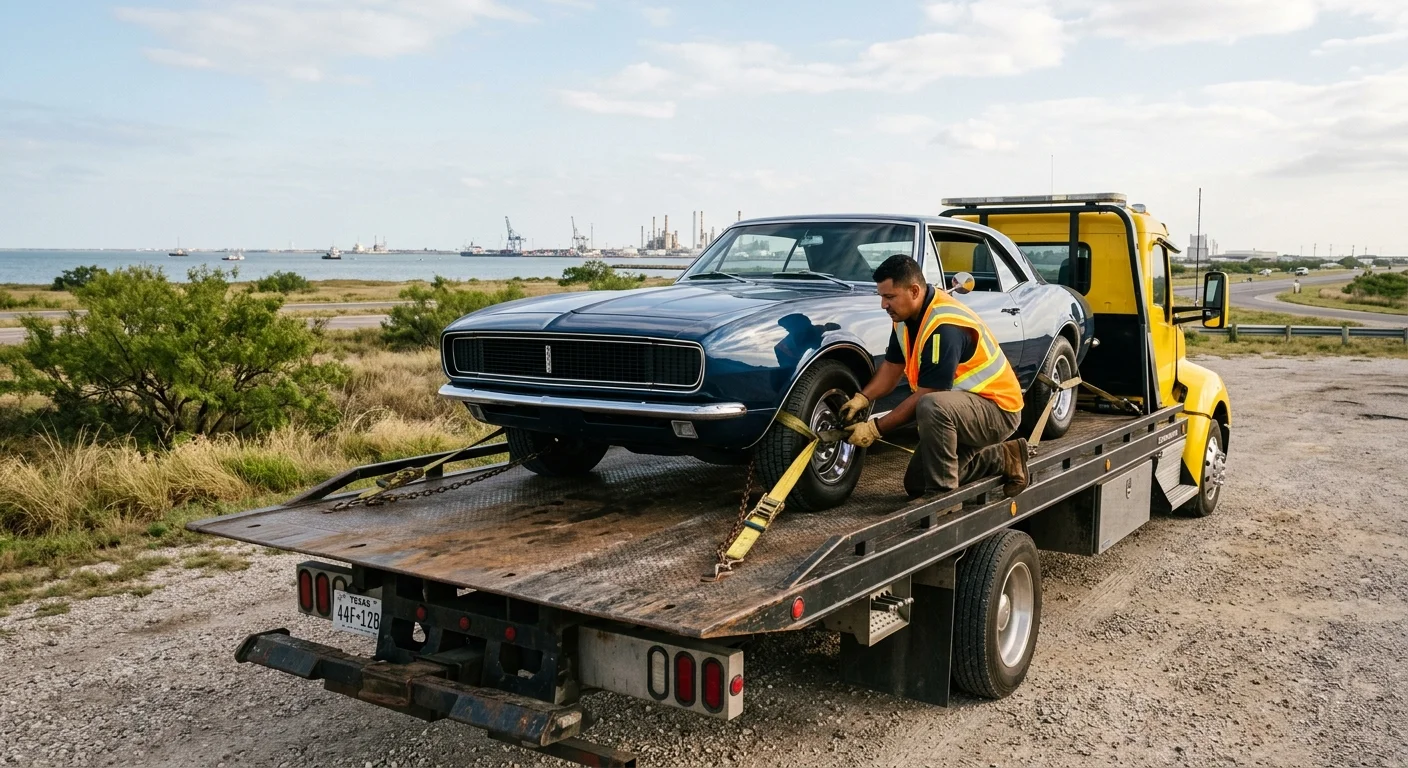
Why these only travel on a flatbed
For this guide, “only” means the default request, not a Texas law. Ask for a flatbed unless the vehicle manufacturer specifies another approved towing method.
A flatbed carries the whole vehicle on its deck. The car’s tires don’t roll along Ocean Drive, South Padre Island Drive, or US 181 during transport. That setup also gives the operator one platform for loading, securing, and unloading the vehicle.
This matters when the car has unusual wheels or limited ground clearance. It also matters when the transmission condition isn’t known. A restored classic may have original components. An exotic may have active suspension or a manufacturer-defined tow mode. The operator needs those details before touching the car.
Tell the dispatcher that the vehicle is classic, exotic, modified, or collectible. Don’t book it as a standard passenger car and explain later. Share the year, make, model, running condition, and transmission type. Mention any instructions in the owner’s manual.
Our exotic and classic vehicle towing service connects owners with licensed operators. Make the flatbed request clear during that first conversation. Confirm it again when the matched operator calls.
Location matters too. A car inside a downtown garage presents different access than one parked near Padre Island. North Beach, Flour Bluff, Portland, Robstown, and Kingsville also involve different pickup routes. Give the exact location and describe any gate, ceiling, driveway, or narrow turn.
Low clearance, ramps and approach angles
Low clearance becomes important before the first tire reaches the ramp. A front splitter, exhaust component, side skirt, or rear valance may sit lower than expected. Modified suspension can change the loading geometry further.
Approach angle depends on the car, ramp, deck, and pickup surface. A sloped Ocean Drive driveway isn’t the same as a level shop yard in Robstown. A parking structure also creates different limits than an open roadside location along SPID.
Send clear photos before dispatch when possible. Include both bumpers, each side, the wheels, and the ground beneath the car. Photograph the driveway or parking exit too. The operator can then decide whether the available truck and loading setup fit the job.
Provide these details before loading:
- Whether the car starts and stays running
- Whether it rolls, steers, and brakes
- Any suspension or body modifications
- The lowest areas you can identify
- The pickup surface and available working space
- Instructions from the owner’s manual
Don’t assume every flatbed has the same ramp setup. Ask whether the matched truck has equipment suitable for the reported clearance. If ramp extensions or another loading arrangement are needed, the operator must confirm what’s available.
Avoid directing anyone to push or drive the car onto the deck before there’s a plan. The operator on scene needs to inspect the access, position the truck, and choose the loading method. If the setup differs from what you described, pause and review it again.
Our flatbed towing page explains the service format. For a collector vehicle, the booking still needs vehicle-specific details.
Soft straps, wheel nets, and no chassis hooks
Tie-down instructions should come from the vehicle manufacturer or another approved source for that car. Classics, replicas, modified cars, and modern exotics don’t share one universal attachment method.
If you want wheel nets or soft straps, state that before dispatch. Ask the operator whether that method matches the car and the available equipment. Don’t treat a material name as a guarantee. Placement and vehicle instructions still matter.
You can also state that chassis hooks aren’t authorized unless you approve a confirmed attachment point. That boundary is useful when the frame, suspension, underbody panels, or restoration work may not be obvious. The operator shouldn’t have to discover those limits midway through loading.
Walk around the car before it moves. Take timestamped photos of the body, glass, wheels, and visible underside areas. Include existing chips, cracks, curb marks, or loose trim. Repeat the photos after unloading, using similar angles and lighting.
Tell the operator about details that may affect access or placement. Examples include side-exit exhaust, aftermarket wheels, removable spoilers, air suspension, or a battery cutoff. Share the relevant owner’s manual pages when you have them.
Texas requires towing companies and operators working over public roadways to hold the applicable licenses. You can check an operator through the Texas Department of Licensing and Regulation license search. Select “Tow Truck Operators,” then search by name, license number, city, county, or ZIP code.
Texas requires the operator who does the work to hold the applicable TDLR license, and that record is public. You still control the loading instructions you provide and the work you authorize.
Salt air on an open deck
A standard flatbed is open to the weather. It doesn’t enclose the car during a move through Corpus Christi, North Beach, Flour Bluff, Portland, or Padre Island.
No primary source in the approved research confirmed a Corpus Christi-specific corrosion rate or timeline for vehicles exposed to salt air. That figure couldn’t be verified. Don’t rely on anyone who gives you a precise local damage timeline without a source.
The practical issue is your required level of protection. An open flatbed and an enclosed vehicle transporter are different services. If the car can’t be exposed to outside air, rain, or road debris, say so before booking. The matched operator can explain the available service. You can then decide whether it meets the car’s needs.
Route and distance affect how long the vehicle remains outdoors. A short move within Corpus Christi isn’t the same assignment as delivery to Kingsville or beyond the Coastal Bend. Don’t assume the same equipment fits both jobs.
For a longer move, provide the full destination before accepting the assignment. Our long-distance towing service covers trips beyond a basic local tow. The operator still needs to confirm the vehicle, route, equipment, and delivery access.
Check the forecast and the car manufacturer’s care guidance before transport. If weather conditions conflict with your requirements, discuss another plan with the operator. Don’t assume an owner-supplied cover can remain on the vehicle during an open-deck trip. Ask what the operator permits before bringing one.
After delivery, follow the manufacturer’s cleaning and storage guidance. That’s more reliable than an unsupported rule about coastal exposure.
What to agree before the car is loaded
A clear agreement starts with the exact vehicle and exact trip. Confirm the year, make, model, pickup point, and destination. Then confirm that the operator knows the car is classic, exotic, modified, or otherwise restricted.
Review the loading method next. Identify manufacturer-approved towing instructions and any attachment points you authorize. State whether wheel nets or soft straps are requested. If chassis hooks aren’t authorized, put that in writing before loading starts.
The pickup and delivery contacts also matter. Share who can release the car and who will receive it. Confirm gate access, parking structure limits, driveway slopes, and available unloading space. A destination that can’t accept the flatbed may require a different plan.
Write down the condition of the vehicle. Note whether it starts, rolls, steers, and brakes. Record loose parts, fluid leaks, wheel concerns, or suspension settings. Take photos before loading and after delivery.
Discuss these items directly with the matched operator:
- The truck and loading setup being sent
- The approved securement method
- The pickup and delivery locations
- The scope and quoted charge
- Any condition that could change that scope
- Who can approve a change during the job
- How payment will be handled
The operator matched to the call should quote the job before doing the work. The driver contracts with and pays that independent towing operator directly. Quick Tow Corpus Christi is the referral service connecting the call.
Don’t let schedule pressure erase these checks. A classic parked near the Harbor Bridge still needs the same clear instructions as one stored inland. If the arriving equipment or proposed method doesn’t match the agreement, stop before loading and discuss the difference.
Keep the operator’s business name and license information with your trip notes. You can verify the license through TDLR before authorizing the move.
When to call us
Call when a classic or exotic car needs a licensed towing operator and vehicle-specific loading arrangements. Call us at (361) 967-8088 and we’ll connect you with a licensed operator.