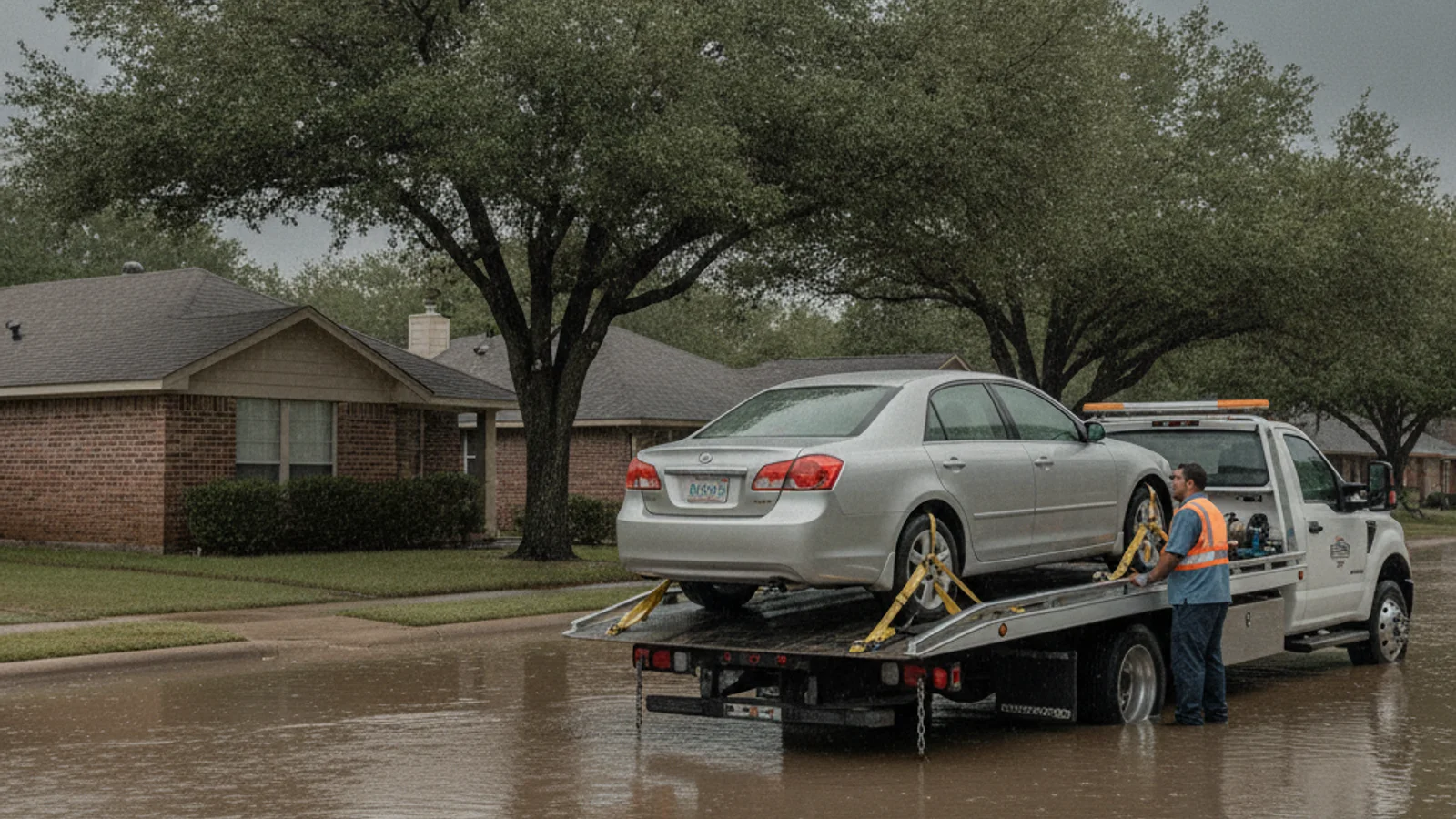
Do not start a vehicle that has been in floodwater. Starting it may create additional mechanical or electrical damage. Move yourself to safety, follow the vehicle manufacturer’s flood guidance, and call Quick Tow Corpus Christi at (361) 967-8088 to ask whether an independent operator is available. Give the water depth, vehicle location, year, make, and model so the operator can determine whether to accept the job and which towing method is appropriate.
Corpus Christi sits low against the bay, and hurricane season runs June through November. Every year, a stretch of heavy rain or a tropical system pushes water into driveways, underpasses, and low-lying streets across the Coastal Bend, and a car that was fine the night before is sitting in six inches of water by morning. This is what to do about it.
How to tell if your car is flood damaged
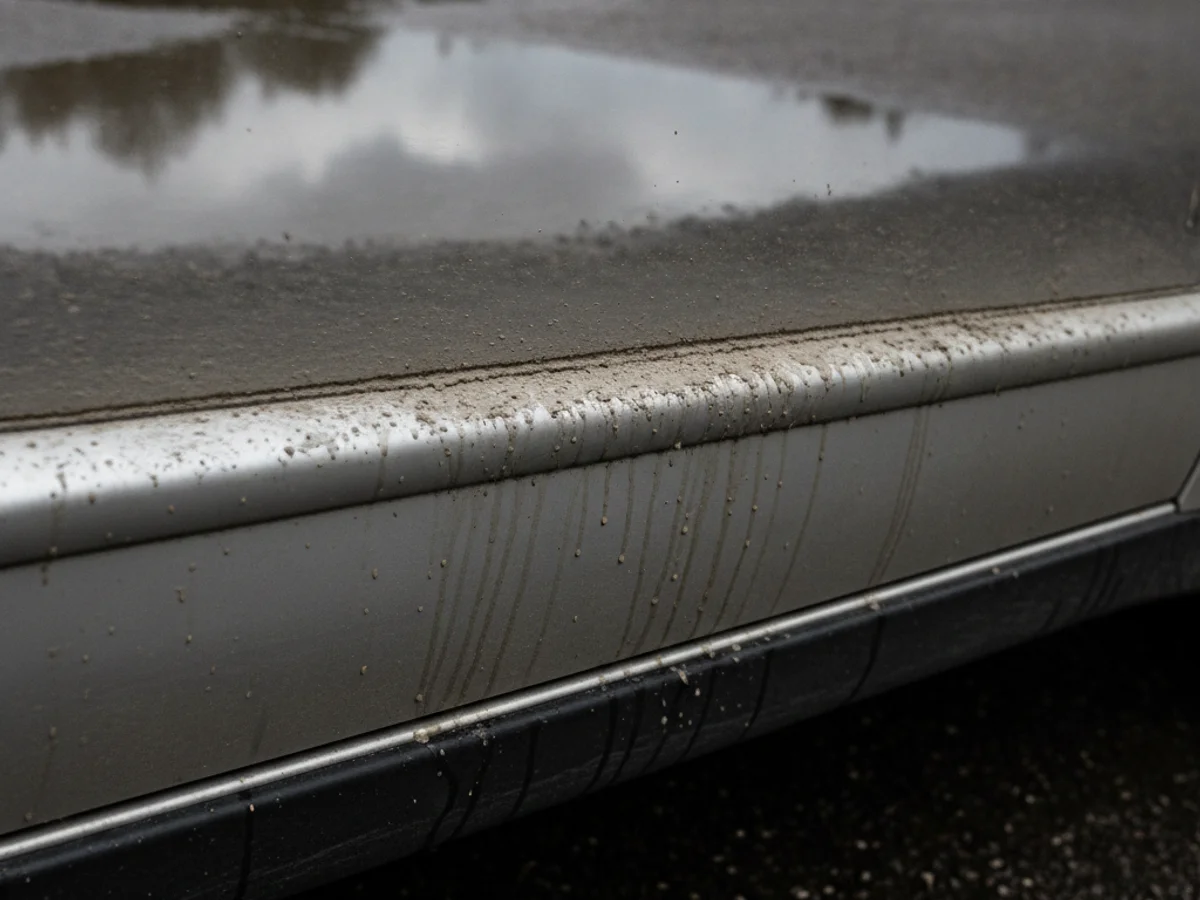
Look for a water line on the doors, seats, or dashboard, that is the clearest sign of how high the water got. Wet carpet, a musty smell that shows up a day or two later, fogged-up headlights or taillights, and dashboard warning lights that flicker or refuse to clear are all signs water reached further than the tires. Mud or debris packed into the wheel wells or visible inside the exhaust tip means the water was moving, not just standing, which usually means it got in deeper. If the water line sits above the bottom of the doors, assume the engine and electrical system were both exposed.
Why you should never start a flooded car
Modern engines pull air through an intake that sits low in the engine bay. If that intake was underwater, starting the engine draws water straight into the cylinders. Water does not compress the way air does, so a piston trying to compress a cylinder full of water instead of air can snap a connecting rod or crack the block on the very first crank. That is called hydro-lock, and it turns a car that might have been salvageable into scrap metal in about two seconds.
Electrical systems carry their own risk. A car’s wiring harness, fuse box, and battery connections were never built to sit underwater. Turning the key or pressing the start button on a car with waterlogged wiring can trip a short, and in rare cases that short becomes a fire. Leave it alone. Do not turn the key, do not press the brake to check if the lights come on, do not try the windows.
What to do first when your car floods in Corpus Christi
If the water is still rising or moving, get away from the vehicle and get to higher ground first. A car is replaceable. Once the water has receded and it is safe to approach, here is the order that protects you and the vehicle:
Do not attempt to start it, even to check accessories. Do not touch the battery or electrical components while the vehicle is in water. When safe, photograph the vehicle and visible water line for your own records, then contact the insurer and a qualified repair facility for their instructions. Tell the towing operator the vehicle’s condition and follow the manufacturer-approved towing method; drivetrain and flood damage can change how the vehicle should be moved.
Why a flooded car needs a flatbed, not a regular tow
A wheel-lift tow truck lifts one axle and rolls the other two wheels down the road. On a normal breakdown that is fine. On a flooded car, it is a mistake. Rolling wheels turn the driveshaft, which turns the transmission and the differential, both of which may already have water sitting inside them from the flood. Rolling those components even a few hundred feet can work water deeper into the gears and bearings, turning a repairable transmission into one that needs a full rebuild.
Flatbed towing carries all four wheels on the truck bed and may be appropriate for some flooded vehicles. It is not a universal rule for every vehicle. Confirm the method against the owner’s manual and the operator’s assessment of the drivetrain, wheel condition, access, and water damage.
Saltwater versus freshwater flooding in the Coastal Bend
Not all flood water does the same damage, and in Corpus Christi both kinds happen. Heavy rain that pools in underpasses, low intersections, and neighborhoods near the Nueces River and Oso Creek is freshwater. It still risks hydro-lock if it reaches the intake, but the corrosion damage afterward is slower and more limited.
Storm surge can expose a vehicle to saltwater. Saltwater can damage electrical connections, metal components, and safety systems even when surface damage looks limited. Tell the insurer and repair facility whether the water was fresh or salty and how high it reached. Do not estimate the repair or total-loss outcome before a qualified inspection.
Will insurance total your flooded car
Flood damage is covered under comprehensive coverage, not liability, so check your policy before you assume you are covered. If you only carry liability, flood damage to your own car is out of pocket.
Most insurers total a vehicle once water reaches above the bottom of the dashboard or gets into the engine block, because the cost of replacing wiring, sensors, carpet, seats, and a flood-damaged engine usually exceeds what the car is worth. Saltwater exposure lowers that bar even further. An adjuster who sees bay water intrusion will often total the car regardless of depth, because the corrosion clock does not stop once the car dries out. Before you agree to any repair estimate, get an independent inspection and pull a title history check. A flood title follows a car forever, and a rebuilt flood car is a hard sell down the road even after real repairs.
What happens to a flooded car after the tow
Once the flatbed drops it off, the path splits two ways. If the water stayed low, freshwater only, and never touched the engine or the electronics, a qualified shop may be able to dry it out, replace fluids, and get it running safely. That is the minority outcome. If the water reached the dashboard, if it was saltwater, or if the engine ran while flooded, repair costs typically outpace the car’s value fast.
If the insurer or repair facility determines that the vehicle is a total loss, ask the insurer how title and salvage handling will work before transferring it. A junk car removal provider may be another option, but title requirements, payment, and pickup availability must be confirmed directly with that provider.
Emergency towing during hurricane season in Corpus Christi
The referral line receives calls 24/7, but operator availability and safe access can change during a storm. Ask the independent operator for the towing method and full quote after describing the water, access, vehicle, pickup point, and destination. Flood recovery can require work beyond a standard roadside tow, so do not assume the posted light-duty starting rate will be the total.
If conditions are not safe, roads are still underwater or wind is still a factor, we will tell you honestly and get to you the moment it is safe rather than risk a driver on a flooded road.
Frequently asked questions
Should I try to start my car to see if it still runs after a flood?
No. Starting a flooded car risks hydro-lock, which can destroy the engine instantly if water reached the intake. Even if the car looks dry on the outside, leave it alone and call for a flatbed tow.
How do I know if my flooded car is a total loss?
Water above the bottom of the dashboard, water in the engine block, or any saltwater exposure usually means a total loss. Insurers weigh the repair cost against the car’s value, and flood damage almost always tips that balance, especially with saltwater corrosion factored in.
Does insurance cover flood damage to my car?
Only comprehensive coverage covers flood damage. Liability-only policies do not pay for damage to your own vehicle. Check your policy and file a claim as soon as it is safe, with photos of the water line and any standing water.
Can a flooded car be repaired?
Sometimes, if the water was freshwater, stayed below the dashboard, and never reached the engine or electronics. Saltwater exposure or deeper flooding usually makes repair cost more than the car is worth.
How much does it cost to tow a flooded car in Corpus Christi?
Flood recovery tows are priced the same as any other flatbed tow in the area, based on distance and vehicle weight. Call (361) 967-8088 for the flat rate on your job.
What should I do first if my car floods during a storm?
Get to safety before you worry about the car. Once it is safe to approach, do not start it, photograph the damage, disconnect the battery if you can reach it safely, and call for a flatbed tow. Never drive it, even a short distance.