If you searched for motorcycle towing near me, look for a licensed operator equipped for bikes. The operator should understand upright loading, secure contact points, and your motorcycle’s clearance. Share the bike type and exact location before dispatch.
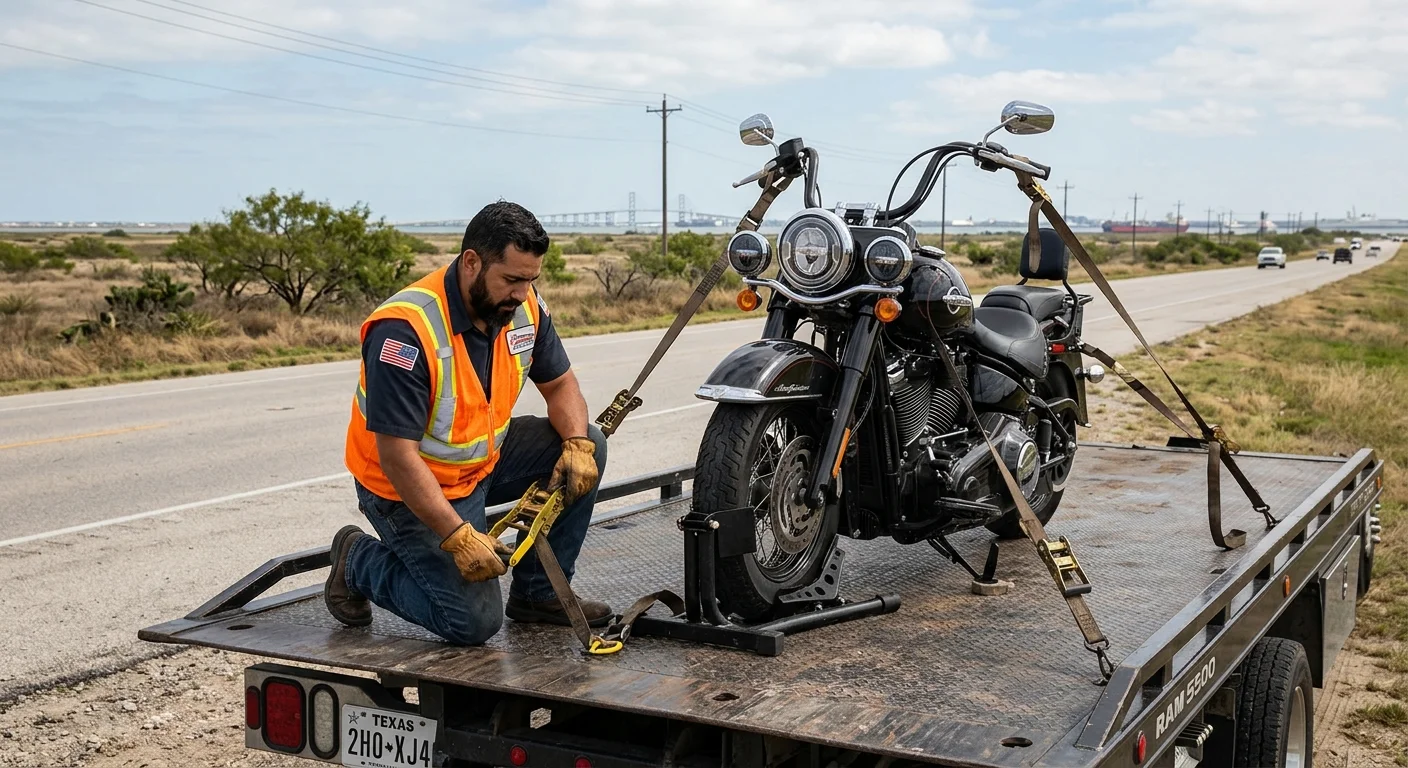
What separates a bike tow from a car tow
A motorcycle doesn’t have a car’s stable, four-wheel footprint. It can lean during loading and shift if secured carelessly. Painted panels, exposed controls, and low exhaust parts also leave little room for mistakes.
A careful operator starts by checking the bike’s condition and position. A motorcycle lying on its side needs a different approach from one standing upright. A locked steering column, damaged wheel, or stuck transmission can also change the loading plan.
Ask whether the dispatched truck has motorcycle-specific securing equipment. A wheel chock can hold the front wheel in line during loading. Soft loops can create contact points without placing metal hooks against painted or delicate parts. The operator should select each attachment point after seeing the motorcycle.
A motorcycle towing operator may use a flatbed because it carries the entire bike off the road. That doesn’t make every flatbed setup suitable for every motorcycle. Loading angle, deck condition, bike clearance, and available anchor points still matter.
Our flatbed towing service connects riders with independent operators who can review those details. Tell us if the motorcycle has a stretched frame, lowered suspension, wide handlebars, or added luggage. Mention crash damage before the truck is dispatched.
Give the operator the motorcycle’s make and model when possible. Describe whether it rolls, steers, and shifts into neutral. Those details help the operator arrive prepared for the actual bike, not a generic car tow.
Straps, chocks, and what damage looks like
Motorcycle rigging should hold the bike upright without grinding against finished surfaces. The chock controls the front wheel while the straps limit side-to-side movement. The final arrangement depends on the motorcycle and the available tie-down points.
Soft loops may be placed around suitable structural areas before straps are attached. Metal hooks shouldn’t rest against paint, bodywork, cables, or brake lines. Straps also shouldn’t cross sharp edges where movement could cut or loosen them.
Watch for straps touching mirrors, fairings, turn signals, or exhaust parts. On some motorcycles, handlebars aren’t suitable tie-down points. The operator must inspect the bike and choose attachment points that fit its design. If you have the owner’s manual, it may identify manufacturer-approved transport points.
Suspension movement also matters. The straps need enough tension to stabilize the motorcycle. Excessive compression can place needless load on components. Too little tension may let the bike move as the truck turns or crosses uneven pavement.
Before loading begins, photograph both sides of the motorcycle. Capture the wheels, controls, fuel tank, fairings, exhaust, and existing scratches. Take another set after unloading. These photos create a clear record of the bike’s condition.
After delivery, look for fresh scuffs, bent controls, cracked plastic, or fluid beneath the motorcycle. Check whether mirrors or accessories moved during transport. Don’t ride away until you’ve inspected the bike and confirmed that its controls feel normal.
No referral service can promise that damage is impossible. What you can do is request bike-specific equipment, describe modifications, and document the motorcycle before loading.
Down in traffic: what to do first
A stalled motorcycle on South Padre Island Drive creates a different problem from one parked in Flour Bluff. On SPID, tell the dispatcher whether you’re on the main lanes or frontage road. Near US 181, give your direction of travel and the nearest exit or landmark.
Move away from active traffic when you can do so without crossing lanes. Don’t stand beside the motorcycle if vehicles are passing close to it. If someone is injured or the bike creates an immediate traffic hazard, call 911.
Leave the motorcycle where it is if moving it would expose you to traffic. A dropped bike can be difficult to lift, especially on a slope or slick pavement. Tell the operator which side is down and whether fuel or another fluid is visible.
Texas drivers approaching a stationary permitted tow truck using proper visual signals must change lanes when the roadway has at least two lanes moving the same direction, or reduce speed as required by the Texas Move Over law. Don’t depend on passing drivers to follow that rule. Keep yourself outside the operator’s work area.
If the motorcycle went down during a collision, preserve the scene information you can gather safely. Exchange details, photograph visible damage, and note the bike’s position. Our guide on what to do after a Corpus Christi accident covers the next steps.
Location details matter across the Coastal Bend. On Park Road 22, say whether you’re closer to Flour Bluff or Padre Island. Around Portland, identify your direction on US 181. Inland near Robstown, provide the highway, direction, and nearest crossroad.
Cruisers, sport bikes, and trikes
Motorcycle type changes how the operator plans the tow. A cruiser may have a long wheelbase, low exhaust, saddlebags, or floorboards. Tell the dispatcher about those features because they can affect deck clearance and strap placement.
Sport bikes often have extensive bodywork and limited exposed frame access. Describe any cracked fairings, bent levers, or damaged wheels. If the motorcycle has frame sliders or aftermarket panels, mention them before loading. The operator still needs to inspect whether those parts are suitable contact points.
Touring motorcycles can be heavier and wider than an unmodified street bike. Hard luggage, a top case, wind deflectors, and audio equipment create more surfaces that straps must avoid. Tell the operator if luggage is loose or can’t be locked.
A trike isn’t simply secured like a two-wheel motorcycle. Its width, wheel arrangement, ground clearance, and overall condition must fit the dispatched equipment. Share whether it rolls freely and whether any wheel is damaged. Don’t assume every motorcycle setup can accommodate it.
Custom bikes need a fuller description. Mention stretched swingarms, lowered suspension, tall handlebars, custom paint, and unusually wide rear tires. Send photos if the operator requests them. A clear side view and a view of the damaged area can help with planning.
The same applies to scooters and small-displacement bikes. Their lighter size doesn’t remove the risk of panel or control damage. The operator should still assess secure attachment points instead of treating the bike like loose cargo.
What a motorcycle tow costs here
Our published motorcycle tow rate starts at $99. That figure is a starting point, not a guaranteed total. Quick Tow Corpus Christi is a referral service, and the independent operator sets the final charge.
The matched operator quotes the price before doing the work. The amount can depend on the pickup location, destination, motorcycle size, and current condition. A bike that rolls onto a flatbed presents a different job from one lodged in sand or lying against a curb.
Distance also affects the job. A tow within Corpus Christi isn’t the same trip as delivery to Portland, Robstown, or Kingsville. Give both locations before dispatch so the operator can price the actual route.
Be specific about access. A motorcycle inside a parking garage may have height or turning limits. A bike behind a locked gate creates another access issue. On Padre Island, tell the operator if the motorcycle is on pavement, a firm shoulder, or sand. Recovery work isn’t the same as a normal roadside pickup.
Ask what the quoted amount includes. Confirm the pickup point, destination, motorcycle type, and whether recovery equipment is needed. If plans change after dispatch, ask the operator how that change affects the charge.
State towing caps for nonconsent tows shouldn’t be confused with a motorcycle tow you request yourself. TDLR explains the distinction on its consumer towing information page. You can also verify an individual operator through the TDLR license search.
We connect customers with independent operators. The customer contracts with and pays the matched operator directly.
When to call us
A disabled, fallen, or crash-damaged bike needs a licensed towing operator when it can’t be moved normally. We’ll connect you with an independent operator equipped to assess the motorcycle and transport plan. Call us at (361) 967-8088 and we’ll connect you with a licensed operator.