A breakdown near Encino can leave you unsure what information matters. A search for “24 7 tow truck Encino” often starts during that stressful moment. Quick Tow’s line takes calls 24/7 and connects drivers with independent, licensed towing operators.
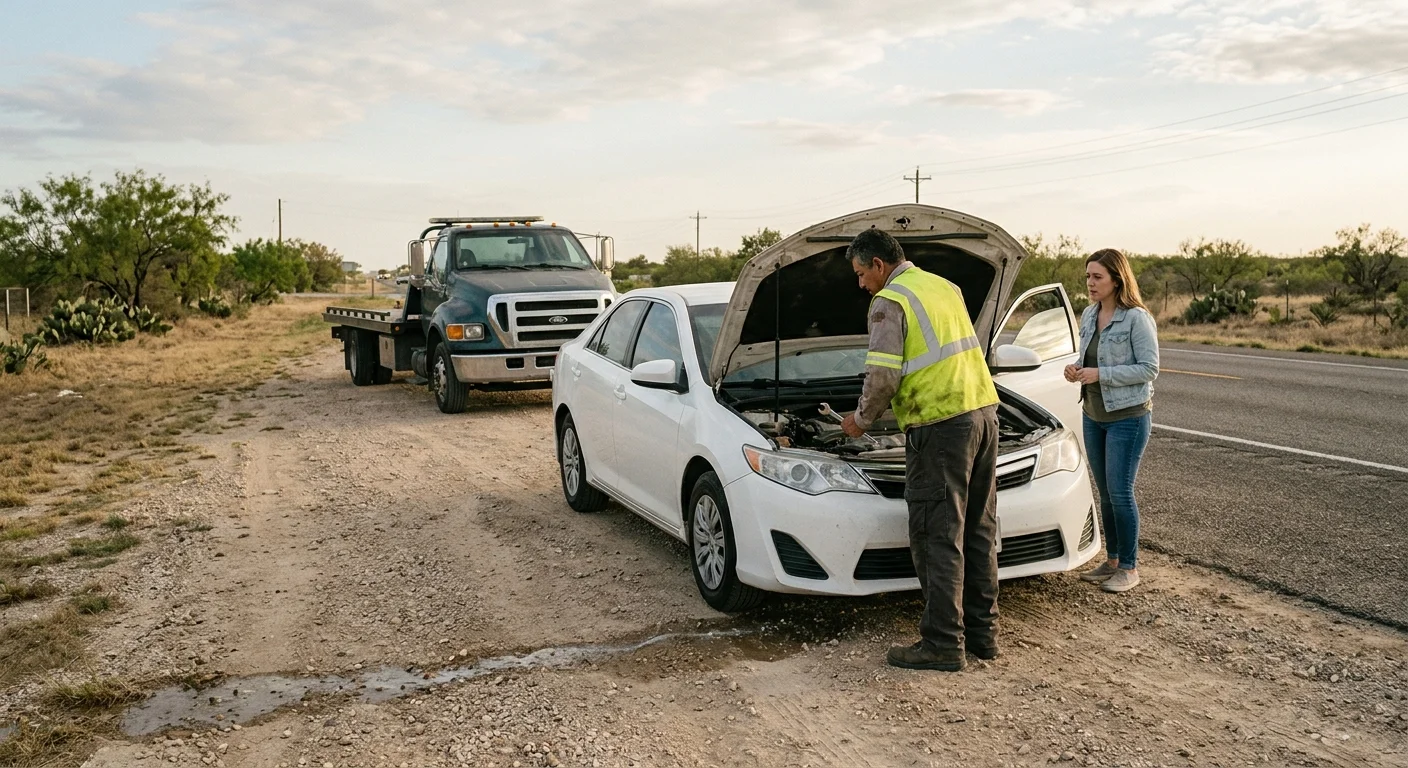
Share the closest safe location near Encino
Start with your location, not the vehicle problem. An operator needs to know where the vehicle sits before discussing the job.
Saying “near Encino” won’t narrow the location enough. Share the name of the road you’re on, if you can confirm it. Include your direction of travel and any visible mile marker. A crossroad, exit sign, bridge, business, or other posted landmark can also help.
Don’t guess at a highway name or nearby town. Read directly from a sign when possible. If signs aren’t visible, open the map application on your phone. Drop a pin on the vehicle’s location and share the displayed coordinates or map link.
Also explain where the vehicle sits in relation to the road. Tell the operator whether it’s in a parking area, driveway, travel lane, median, ditch, or shoulder. Mention nearby gates, fences, narrow entrances, soft ground, or blocked access. These details help the operator evaluate the scene before accepting the request.
Give one reliable callback number. Stay available at that number if conditions allow. Tell the operator if someone else will meet them at the vehicle. Include that person’s name and confirm whether they have the keys.
If the vehicle’s position changes, update the operator directly. The location attached to your first request may no longer be accurate. Clear updates matter around Encino, where a town name alone doesn’t identify one roadside spot.
Our guide to calling for roadside assistance in Corpus Christi explains how to collect these details before making the call.
Describe the vehicle and what stopped working
Next, describe the vehicle in plain terms. Give its year, make, model, color, and approximate size. Say whether it’s a car, pickup, van, motorcycle, recreational vehicle, trailer, or commercial vehicle.
Mention any trailer or load attached to it. Don’t describe a pickup and leave out the trailer behind it. The operator needs the complete combination when reviewing the request.
Share what happened immediately before the vehicle stopped. Useful observations include warning lights, smoke, leaking fluid, unusual noises, a flat tire, lost keys, an empty fuel gauge, or an engine that won’t start. You don’t need to diagnose the cause. Report only what you can see, hear, or feel.
Explain the vehicle’s current condition. Can it start, roll, steer, and shift into neutral? Are the wheels straight? Is a tire missing or damaged? Is the parking brake stuck? Did an impact affect the front, rear, or side?
Tell the operator if the keys are inside the vehicle. Mention whether the doors, trunk, or hood can open. If you know the vehicle’s drive type, share that too. Don’t guess if you’re unsure. The operator can use the confirmed vehicle details when discussing the towing method.
Photos can add context. Take wide images showing the vehicle and surrounding area. Then take closer images of visible damage, wheel position, and surface conditions. Avoid placing yourself in a worse position just to get a picture.
For a broader preparation list, see our Corpus Christi breakdown assistance guide. The same basic information helps with a tow truck request from Encino.
Choose roadside help or a tow
Tell the operator what outcome you need. “My car won’t start” describes the problem, but it doesn’t choose the service.
Roadside assistance may fit a limited request such as a jump start, tire change, fuel delivery, or vehicle lockout. Describe the exact issue and ask whether it can be addressed where the vehicle sits. Access, vehicle condition, and the operator’s accepted services can affect that decision.
A tow may make more sense when the vehicle needs transportation. That includes situations where it can’t roll, steer, start, or remain at its current location. It may also apply when you don’t want roadside work attempted and prefer delivery to a repair facility or another approved destination.
Don’t request a particular towing method unless you know it’s required. Explain the vehicle’s condition and let the independent operator discuss suitable options. Quick Tow doesn’t own trucks, choose equipment, or perform the work.
If the vehicle left the pavement, say exactly where it stopped. A vehicle resting in soft ground, against an obstruction, or below the road may involve more than a standard tow. Don’t describe it as a simple roadside pickup if recovery work may be involved.
If there was a collision, explain whether another vehicle or damaged property remains at the scene. Tell the operator if law enforcement, emergency responders, a property owner, or another towing company is already involved. Don’t assume a referral request replaces any directions given by an authority at the scene.
Our emergency towing service page explains how the referral process works. Quick Tow connects the caller with an independent operator. That operator evaluates the request, accepts the job, and performs the service.
Confirm the destination before work starts
Choose the destination before the operator begins work. A complete destination includes the business or property name, street address, city, and a working contact for whoever expects the vehicle.
Don’t rely on “the nearest shop” as your only direction. The operator may not know which business you prefer. A repair facility may also have its own intake process, gate, parking instructions, or limits on unattended vehicles.
Contact the destination yourself when possible. Confirm that it can receive your specific vehicle. Ask where a disabled vehicle should be placed and what happens if it arrives outside the facility’s receiving hours. Don’t assume someone will be waiting.
If you want the vehicle taken toward Corpus Christi instead of staying near Encino, provide the exact destination. Distance affects the scope of the request. It may also affect which independent operator decides to accept it.
Tell the operator whether you’ll ride separately or meet the vehicle there. Don’t assume passenger transportation is included. Ask the operator directly about passenger arrangements before the work starts.
If the vehicle belongs to someone else, confirm that you’re authorized to direct its movement. Have the owner’s contact information available. For a rental, company vehicle, or insured roadside claim, check whether another party must approve the destination.
Write down the final address and repeat it to the operator. Confirm whether the vehicle should go to a repair entrance, parking space, residence, storage facility, or another designated area. A precise destination reduces confusion after the vehicle leaves its Encino location.
Confirm the quote and payment terms
The independent operator sets the price and collects payment directly. Quick Tow doesn’t set operator rates or issue the towing bill.
Ask the operator to quote the requested job before work begins. Confirm what the quote covers, including the vehicle, pickup location, destination, and described conditions. If mileage, after-hours work, recovery, storage, or another service may affect the amount, ask how it will be handled.
Repeat the important details back:
- The exact pickup location near Encino
- The vehicle and any attached trailer
- The service being requested
- The confirmed destination
- The quoted amount and included work
- The accepted payment methods
- Any condition that could change the quote
Conditions may look different once the operator sees the vehicle. Ask how a change in scope will be discussed before additional work proceeds. Keep any text messages, receipts, or written details connected with the request.
A tow you request for your own disabled vehicle is a consent tow. Don’t assume Texas maximum charges for nonconsent towing establish the price for that request. Those limits concern tows performed without the vehicle owner’s consent.
Texas requires towing companies and operators working over public roadways to hold the applicable licenses. Texas requires the operator who does the work to hold the applicable TDLR license, and that record is public. You can independently check an operator through the Texas Department of Licensing and Regulation license search. Select the tow truck operator license type, then search using the available name, city, county, ZIP code, or license details.
Ask which company will appear on the receipt. Confirm the operator’s business identity before authorizing the work. If the person who requested the tow won’t be present, decide who can approve the service and pay the operator.
These steps don’t guarantee a particular price or operator availability. They give both parties the same description of the Encino request before work begins.
When to call us
Call when a vehicle near Encino can’t be driven, needs transportation, or requires a licensed towing operator instead of basic roadside help. Call us at (361) 967-8088 and we’ll connect you with a licensed operator.