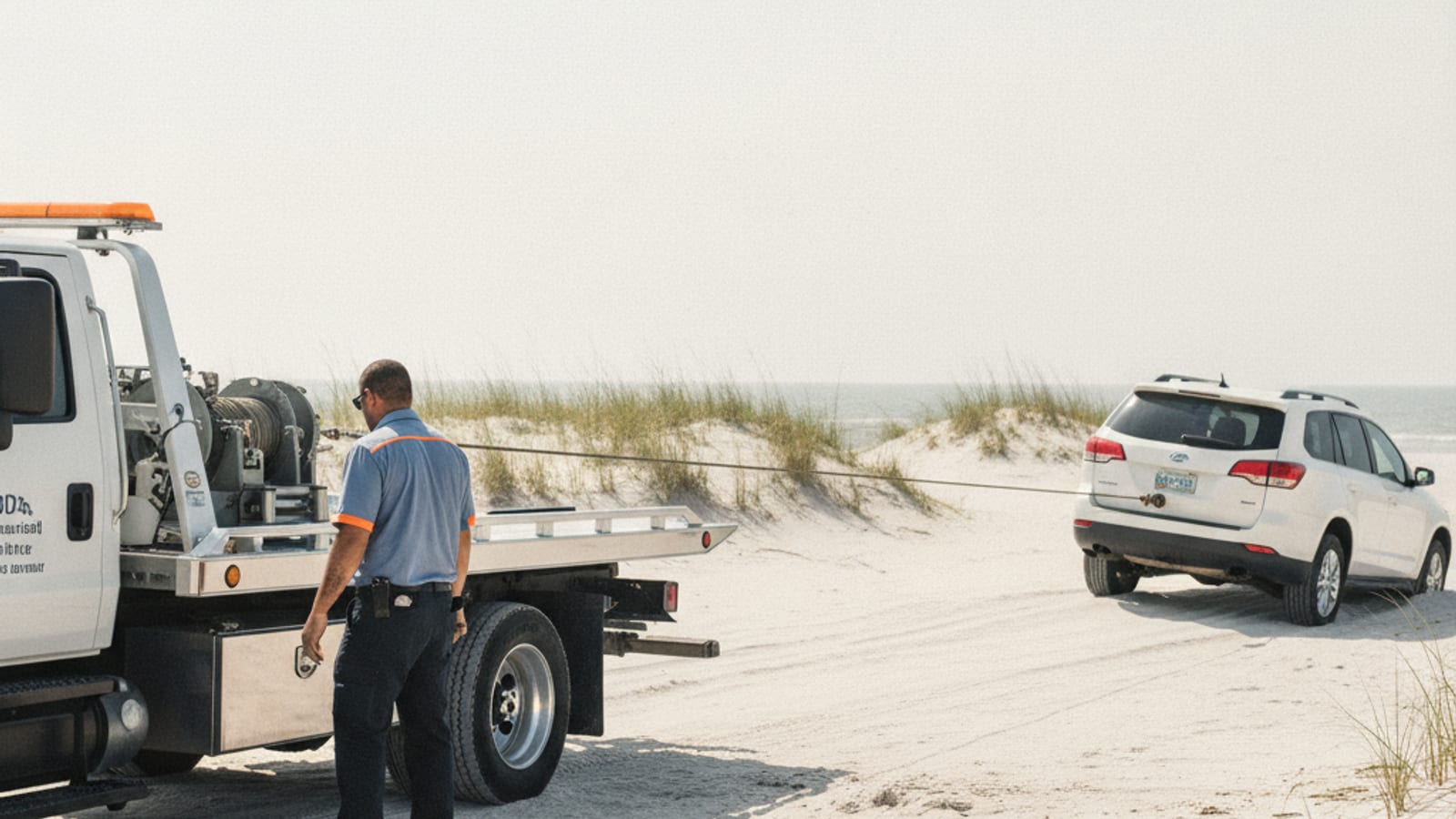
Stuck in the sand on Padre Island? Stop spinning the tires, turn the wheels straight, and take your foot off the gas before you dig in any deeper. Call (361) 967-8088. Quick Tow Corpus Christi is a referral line. The independent operator taking the job quotes the work and decides the recovery method. This site publishes a standard winch-out from $99. That is advertising, not a guaranteed beach-recovery total. A vehicle buried toward the tideline is quoted after the operator sees it.
What to do the moment your tires start spinning
Stop pressing the gas. Every extra second of wheelspin digs the tire deeper and packs sand tight around the axle and undercarriage, which makes the eventual recovery longer and harder.
Turn the wheels straight, put the car in park, and get out only if it’s safe to check the situation. Don’t dig with your hands or a beach shovel under a hot exhaust, and don’t try to jack a car up on soft sand. The jack sinks before the tire lifts.
If you’re near the tideline and the tide is coming in, that changes the priority. Get clear of the vehicle and tell the dispatcher when you call. A stuck car near rising water is a different call than a stuck car parked safely above the tide line.
Where this happens most on Padre Island
North Padre Island has one road in and one road out: the JFK Causeway across the Laguna Madre, then Park Road 22 running south down the island. Most sand calls start right where the pavement gives way to beach on Padre Island.
Padre Balli County Park, where Bob Hall Pier sits at 15820 Park Road 22, gets heavy day-use traffic and a steady run of stuck cars, especially on summer weekends when someone drives a little further onto soft sand than they meant to. South Beach and the Packery Channel access points run the same pattern.
Past the county park, the Padre Island National Seashore continues south. Confirm current driving rules with the park before you go. Cell service can get unreliable down island, and cross streets are scarce, so a GPS pin often helps more than a remembered mile marker.
Ask the park itself whether it tows private vehicles. Do not wait on a park truck unless a ranger has told you that help is coming.
Why a regular tow hook can’t pull a car out of sand
A standard roadside assistance hook on solid ground is a different job from a buried vehicle. Sand can load bumpers and unrated loops in ways a pavement pull does not. Ask the operator what recovery points and equipment they plan to use on your vehicle.
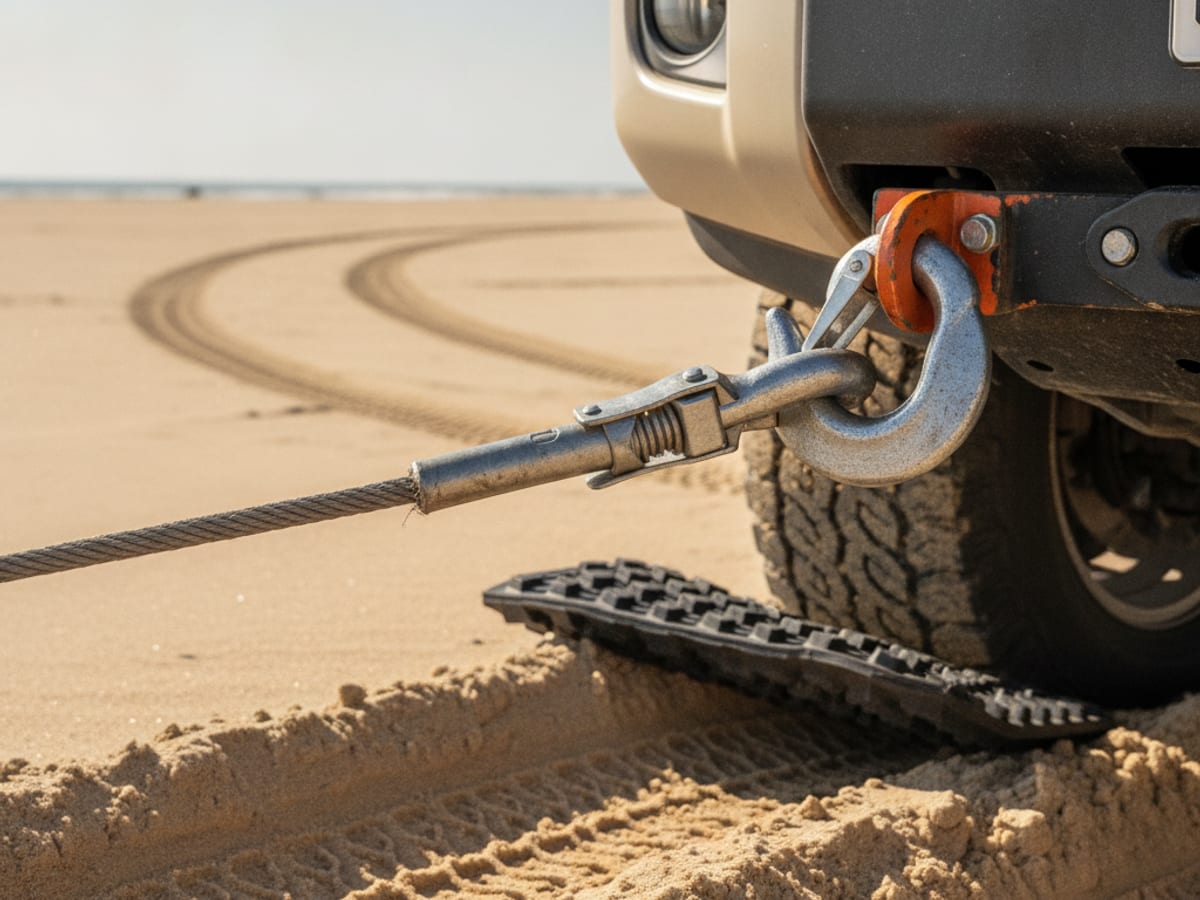
The wreckers discussed for a winch-out and recovery service call may use a powered winch. Ask whether that equipment will be on the truck taking your job. A controlled pull uses rated recovery points the operator identifies on scene. That is not a no-damage promise.
Do you need 4WD, or can a 2WD car get recovered too?
A 2WD car can sometimes be recovered the same way a 4WD truck is recovered: the winch does the pulling, not the drivetrain. That is not a guarantee that every sedan comes out undamaged or that every operator will accept the job.
Confirm current National Seashore driving rules before you go past the developed beach. A 2WD car buried down island with a rising tide and no cell signal is a harder call.
What a winch-out costs in Corpus Christi
A standard winch-out, the kind where a car is stuck on a soft shoulder or just off the pavement, is published on this site from $99.
A buried-in-sand beach recovery is a different job. More rigging and time can change the quote. Those get priced once the driver sees how deep the car is sitting and how far it is from the truck. If the car will not drive after it is pulled free, ask whether the same operator can quote a flatbed tow as a second part of the work.
How fast can a truck reach you down island
Inside the developed part of the island, the county park, and the pavement near Bob Hall Pier, it is a normal run for the Coastal Bend.
Past that, into the National Seashore itself, arrival takes longer. The beach isn’t a road with mile markers that line up neatly with GPS, cell service drops out, and a truck has to drive the beach itself to reach you, not a paved shortcut. If you know you’re headed down island, drop a pin or grab your GPS coordinates before you lose signal, and call as soon as you know you’re stuck rather than trying to dig out first and calling as a last resort. The sooner you call, the less time you spend waiting on an open beach. The referral line does not control the operator’s arrival.
Before you drive onto the beach
Carry a shovel and a set of traction boards in the trunk. They won’t get you out of everything, but they solve the shallow, early-stage stuck that would otherwise turn into a service call.
Know the tide schedule for the day, not just the general season. Sand that was firm and dry at low tide can be underwater a few hours later, and a car parked too close to the waterline at the wrong time is a bigger problem than a car stuck in dry sand above the tide line.
And have our number saved before you head down island: (361) 967-8088. Cell service on the National Seashore is not something you want to be searching for after you’re already stuck. For what to expect once you’re on the phone with us, see our guide to calling a tow truck near you in Corpus Christi.
Frequently asked questions
How much does it cost to get pulled out of sand on Padre Island?
A standard winch-out off a soft shoulder or beach access road is published from $99. A vehicle buried deep in sand near the tideline takes more rigging and time, so that gets priced on scene once the driver sees the situation.
What should I do the moment I get stuck?
Stop pressing the gas. Wheelspin packs sand around the axle and undercarriage and makes the recovery harder. Turn the wheels straight, put the car in park, and call us. If you’re near rising tide, get clear of the vehicle and tell the dispatcher.
Can you recover a 2WD car from sand, or do I need 4WD?
The winch does the pulling, not your drivetrain, so a 2WD sedan can be recovered in the same family of jobs as a 4WD truck. Confirm current park driving rules before you go farther down the beach.
Will winching damage my car?
Ask the operator to explain the recovery points and plan before the line goes taut. Damage is more likely when an unrated bumper loop is used. There is no no-damage guarantee.
Does the National Seashore tow stuck vehicles?
Ask the park. If a ranger tells you they will not tow private vehicles, call a commercial recovery operator rather than waiting on a park truck that may not be coming.
How fast can you reach me down island near the National Seashore?
Inside the developed part of the island and the county park near Bob Hall Pier, it is a normal run. Past that, into the National Seashore, it takes longer because the truck has to drive the beach itself and cell service is unreliable. Drop a GPS pin before you lose signal and call as soon as you’re stuck.
If you’re sitting in soft sand right now, stop spinning the tires and call (361) 967-8088. Ask the operator taking the job for the rate and the recovery plan.