An unfamiliar car has occupied your Portland business lot for hours or days. Removal may be possible, but don’t request a tow until you’ve checked your authority and the current local rules. That protects your business, the vehicle owner, and the operator handling the removal.
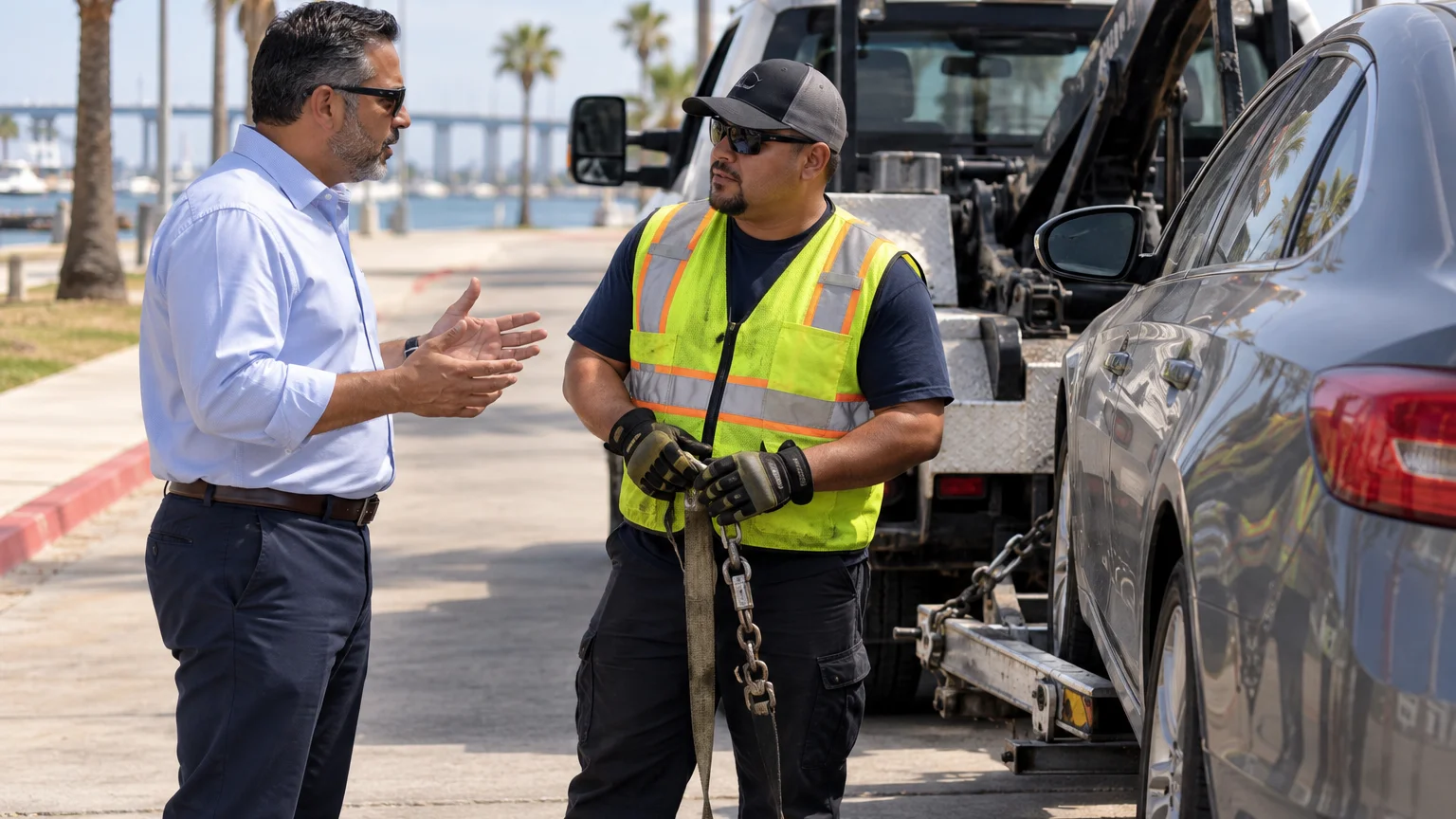
Confirm who controls the property
Start with the person or company that controls the parking area. That may be the building owner, a commercial tenant, or a property manager. A shared retail center may divide parking control among several parties.
Don’t assume that occupying a storefront gives you authority over every space. The lane behind your suite, a shared loading area, and customer parking may fall under different agreements. Review the lease, property-management contract, or written instructions from the owner.
Gather documents that show your relationship to the property. Useful records may include the lease, management agreement, site plan, or written authorization from the owner. These items don’t replace any authorization required by law. They help an operator understand who is making the request.
Portland’s current authorization requirements for a business-property tow couldn’t be confirmed from the approved source record. Ask the City of Portland which local rules apply before ordering a nonconsent removal. You can also ask the operator what written authorization it requires.
If the car blocks an entrance, loading space, service bay, or customer area, record that specific problem. Don’t describe it only as unwanted. A clear description helps separate a parking dispute from a vehicle creating an immediate business obstruction.
Quick Tow is a referral service. We don’t patrol lots, decide whether a vehicle is unauthorized, or approve removals. Our private property towing referral service connects property representatives with independent operators. The requesting party must confirm that the removal is authorized.
For a broader look at the process, read our guide to private property towing in Corpus Christi. Portland may have different local requirements, so don’t treat Corpus Christi guidance as Portland law.
Document the vehicle and parking location
Create a factual record before calling an operator. Photograph the complete vehicle and its position within the lot. Include the surrounding spaces, curb, entrance, loading zone, or business doorway affected by the parking.
Take separate photos of any posted parking notice. Make sure the image shows where the notice sits relative to the vehicle. Don’t move, cover, or create a sign after discovering the car.
Write down what you can observe without entering the vehicle:
- The vehicle’s make, model, and color
- The displayed license plate and state
- The exact space or area occupied
- The date and time you first documented it
- Visible damage, open windows, or missing wheels
- Whether it blocks access, deliveries, or normal parking
- Any contact attempts already made
Avoid guessing about the owner, the vehicle’s condition, or why it was left. “Parked across the service-bay entrance” is useful. “Abandoned by a former customer” isn’t established unless your records support it.
Keep copies of relevant security footage and written communications. If an employee spoke with the driver, record what was said and who heard it. Preserve the original material instead of editing it into a narrative.
These steps aren’t a statement of Portland’s legal evidence requirements. The exact local documentation standard couldn’t be confirmed from the approved source record. Ask the City of Portland and the towing operator what records they require.
A clean record also helps the operator identify the correct vehicle. That matters in a busy business lot where several similar cars may be parked near one another.
Check current authorization and notice rules
Texas regulates tow operators and towing companies. It also allows cities and counties to impose certain local requirements for nonconsent towing. Those local requirements may include registration or operator permits.
The approved source record doesn’t confirm Portland’s current sign, notice, authorization, or registration rules. It also doesn’t confirm whether Portland has adopted a local fee limit below the statewide maximum. Contact the City of Portland before treating any general Texas guidance as a complete local answer.
Ask the city direct questions:
- Who may authorize removal from a business property?
- Does the property need a specific parking sign?
- Are there rules for the sign’s wording, size, or placement?
- Must the vehicle receive notice before removal?
- Does Portland require local registration or permits?
- Has Portland adopted towing rates below Texas caps?
Don’t fill an information gap with a rule from Corpus Christi or another Texas city. A requirement that applies elsewhere may not answer the Portland question.
Texas recognizes separate towing operator license categories. They include Private Property Towing Operator, Incident Management Towing Operator, and Consent Towing Operator licenses. A towing company operating tow trucks over public roadways must also be licensed, subject to limited statutory exemptions.
You can verify an operator through the TDLR license search. Select “Tow Truck Operators,” then search by the operator’s name, license number, city, county, or ZIP code. Ask the company for the information needed to run the search.
Texas permits political subdivisions to require local registration for trucks performing nonconsent tows. They may also require local licensing or permits for operators doing that work. The approved ledger states that the local regulatory fee for such an operator permit is capped at $15. It doesn’t confirm that Portland currently charges that fee or requires that permit.
Don’t ask an operator to remove the vehicle until the required authority and notices are confirmed. Quick Tow can’t make that legal determination for the property.
Separate an unauthorized car from a junk vehicle
An unauthorized car and a junk vehicle aren’t automatically the same problem. A working car may be parked without permission. A damaged or nonrunning vehicle may belong to the business, a tenant, a customer, or someone else.
The distinction affects the next call. Private property towing concerns removal from property without the vehicle owner’s request. Junk car and abandoned vehicle removal may involve ownership records, transfer documents, disposal, or another process.
Don’t label a vehicle “junk” based only on appearance. Flat tires, body damage, dust, or an expired plate may raise questions, but the approved claims ledger doesn’t establish Portland’s legal definition. It also doesn’t confirm how long a vehicle must remain on private commercial property before Portland considers it junked or abandoned.
Ask the City of Portland which process applies. Describe the vehicle, its location, how long you’ve observed it, and whether the property owner holds any ownership documents. Ask whether the matter belongs with city code enforcement, law enforcement, or a private towing operator.
If your business owns the vehicle, tell the referral service and operator. If ownership is unknown, say that plainly. Don’t sign an ownership statement you can’t support.
Our guide to an abandoned car at a Corpus Christi rental property explains related documentation questions. It isn’t a substitute for Portland guidance or a business-property review.
This distinction can prevent the wrong process from starting. It also helps the matched operator decide whether the request fits private property towing or needs another authority.
Confirm the operator and removal process
Before removal, confirm that the operator holds the appropriate Texas license. Every operator in our network is licensed and insured, but the property representative should still verify the individual operator through TDLR.
Ask where the vehicle will be stored and how its owner can identify the storage facility. Confirm who will provide required notices and records. Portland’s exact notice process couldn’t be verified from the approved claims ledger, so get those responsibilities settled before the vehicle moves.
The matched operator should quote the price before doing the work. Quick Tow doesn’t set prices, collect payment, operate a storage facility, or promise what another company will charge.
For context, TDLR publishes statewide maximum charges for nonconsent towing. The stated maximum is $272 for a vehicle weighing 10,000 pounds or less, $380 for one weighing 10,001 to 25,000 pounds, and $489 per unit for a vehicle over 25,000 pounds, with a $978 maximum. A local ordinance may establish lower limits. Portland’s current local maximum couldn’t be confirmed, so check with the city and operator.
If the owner returns before the vehicle leaves, the stage of the hookup matters. When a vehicle isn’t fully hooked, TDLR says it must be released at no charge, without requiring proof of ownership. If it is fully hooked but hasn’t left, statewide drop-fee limits apply. Operators must accept cash, credit cards, and debit cards for a drop fee.
Once a vehicle reaches a storage facility, its owner must provide identification, acceptable proof of ownership, and payment before release. TDLR says access to retrieve ownership documents and personal property is free. The facility must provide that access within one hour during its applicable access hours.
A vehicle owner disputing a nonconsent tow may request a hearing on probable cause. The request must be filed within 14 days, excluding weekends and holidays, after storage or booting. A TDLR complaint doesn’t replace that hearing request.
Keep your photographs, authorization records, operator details, and removal paperwork together. Don’t alter the file after a dispute begins.
When to call us
Call when you’ve confirmed control of the Portland property, checked current local requirements, and need a licensed towing operator. Call us at (361) 967-8088 and we’ll connect you with a licensed operator.