A damaged car in Robstown may need more than a standard tow. The right request depends on its road position, wheel damage, and whether it left the pavement.
Quick Tow is a referral service. We connect drivers with independent, licensed towing operators serving Robstown and the Coastal Bend. The driver contracts with and pays the matched operator directly.
Describe where the vehicle stopped
Start with the car’s exact position. A street name alone won’t describe an accident scene clearly enough. Tell the operator whether the car is in a travel lane, on a paved shoulder, beside a driveway, or beyond the pavement.
Share the nearest visible cross street or road sign. A map pin helps, but add a plain description. Pins can land across a divided road or away from the vehicle. Mention which direction you were traveling before the crash.
Describe nearby landmarks without relying on a business name alone. The operator needs to understand the approach to the vehicle. Say whether traffic can pass and whether debris blocks part of the road. Don’t step into moving traffic to inspect the car or collect pieces.
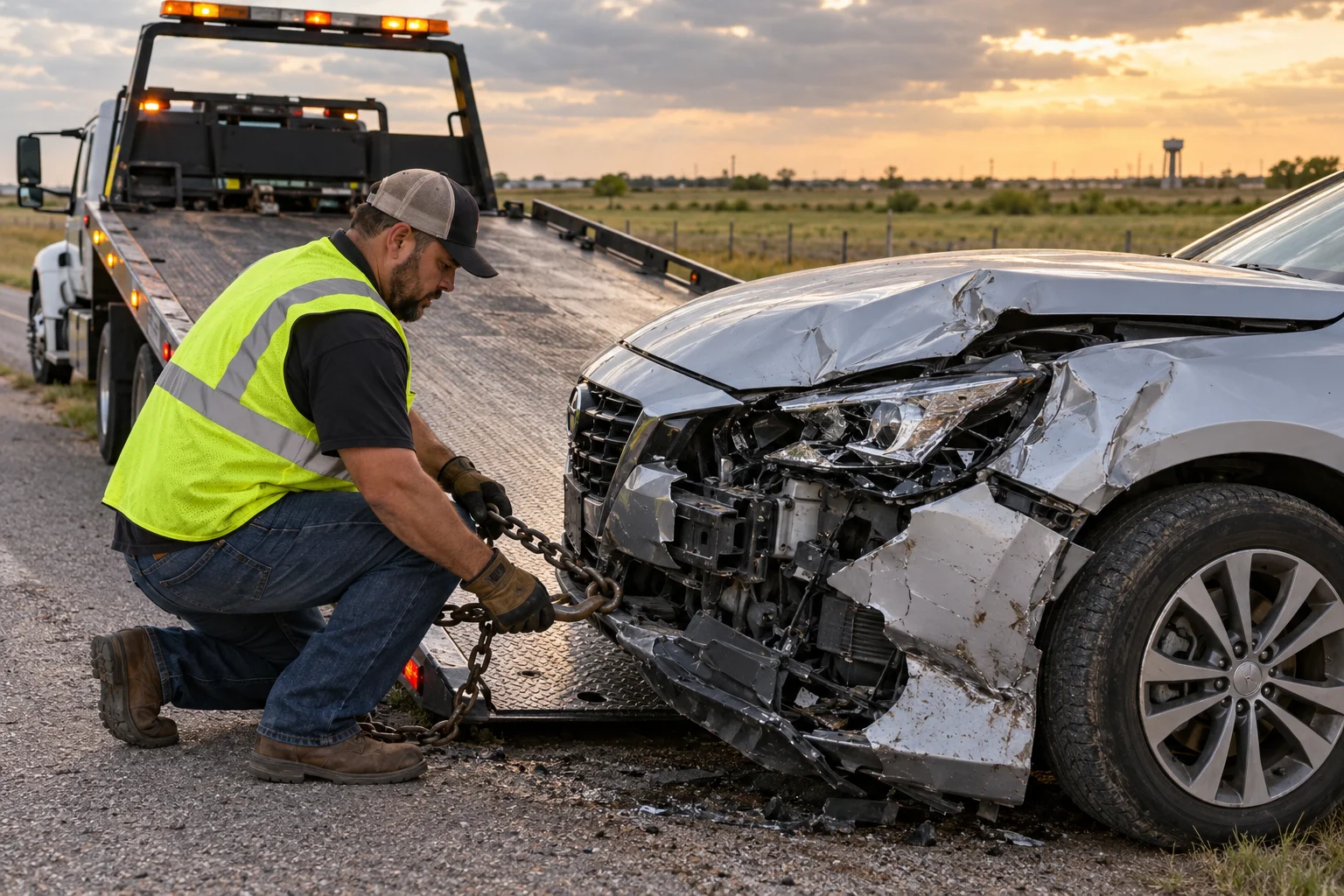
The car’s final position begins the tow-or-recovery decision. A passenger vehicle resting normally on firm pavement may need a standard tow. A car sitting sideways, against a curb, below the roadside, or partly in soft ground may require recovery work before loading.
Don’t try to reposition a damaged car just to simplify the call. Steering, wheel, or body damage may not be visible from the driver’s seat. Describe what you can see from a safe position.
For help matching the scene to an operator, review our accident recovery and winch-out service. If the vehicle remains exposed to traffic, say that clearly when requesting emergency towing.
Share wheel, steering, and body damage
Next, describe what changed after the impact. The operator needs more than “the car won’t move.” Explain what happens when you turn the steering wheel, if you can check without moving the vehicle.
Look at each visible wheel from a safe location. Report a wheel pointing in a different direction, a flat tire, a tire pushed into the body, or a wheel that no longer sits upright. Don’t reach underneath the vehicle or touch loose parts.
Mention body panels rubbing against a tire. A bent fender, loose bumper, or hanging splash shield can affect how the car moves. Share whether any part rests on the pavement. If the doors won’t open normally, include that detail too.
Fluid under the car matters. Describe its color and location without touching it. Smoke, strong fuel odors, fire, injuries, or an active traffic hazard call for emergency services first. A tow referral doesn’t replace police, fire, or medical help.
Tell the operator whether the engine runs, but don’t repeatedly restart a damaged vehicle. Also say whether the transmission can select neutral. Don’t force a shifter or steering wheel that won’t move normally.
These details help the independent operator choose a recovery approach after evaluating the scene. They don’t guarantee a particular truck or method. The operator may revise the plan after seeing damage that wasn’t visible during the call.
Our guide to accident recovery versus a standard tow explains why a damaged passenger car can need recovery work before ordinary transport begins.
Explain whether it left the pavement
A vehicle winch-out in Robstown starts with one basic fact: the car isn’t positioned for a normal hookup. Tell the operator whether all four tires remain on pavement. If not, describe which end left the road.
Use simple measurements you can observe safely. Say whether one tire crossed the pavement edge or the entire car entered the roadside area. Describe whether the vehicle is level, leaning, nose-down, or resting against an object. Don’t approach an unstable vehicle.
Ground conditions matter too. Tell the operator whether the surface appears dry, muddy, sandy, grassy, or covered by loose gravel. Avoid guessing how deep a ditch is. A photo taken from a safe location can show more than an uncertain estimate.
A winch-out and a tow aren’t always competing choices. Recovery work may be needed to return the vehicle to a position where it can be loaded or towed. The operator decides how to rig and move the car after checking its angle, damage, and surroundings.
Don’t describe the job as “just a pull” if the vehicle crossed the pavement edge. That wording can hide wheel damage, a steep angle, or blocked access. Give the full scene instead.
Also mention fences, signs, drainage features, trees, utility equipment, or other vehicles near the car. Don’t attempt to attach a rope or recovery strap yourself. The matched operator needs to inspect the vehicle before choosing attachment points or a pulling direction.
Clear details help the referral match the incident to a passenger-vehicle recovery operator. They also reduce confusion between a routine disabled-car tow and a recovery from beyond the roadway.
What changes near US 77 and Highway 44
Calls near US 77 and Highway 44 need precise location details. The source material for this page identifies both as relevant Robstown corridors. Current ramps, access points, and traffic conditions weren’t independently confirmed here, so check visible signs and your map before giving directions.
Don’t report only “near the highway.” Name the road shown on the nearest sign. Add your direction of travel and the last exit, intersection, or landmark you passed. If your map uses another route label, share both labels exactly as displayed.
Road position changes the request. A car beside faster traffic presents a different scene than one stopped on a local street. Tell the operator whether you’re near a ramp, intersection, median, paved shoulder, frontage access, or roadside entrance. Don’t cross traffic to read a sign.
If police or another public agency controls the scene, tell the operator. Share any instructions you received about where the car may be moved. Don’t claim that a particular destination is required unless the responding authority told you directly.
Texas law covers stationary tow trucks displaying the required visual signals. Approaching drivers must either change from the nearest lane when the road has at least two same-direction lanes, or reduce speed as required by law. The rule and its conditions appear in the Texas Transportation Code.
This article centers passenger vehicles. A commercial truck, bus, large trailer, or loaded work vehicle needs a different conversation. Our separate Robstown heavy-duty towing guide covers that category without treating it like a sedan recovery.
Confirm the recovery plan and destination
Before accepting the operator’s plan, repeat the scene details. Confirm the vehicle type, road position, visible damage, and whether it left the pavement. Correct anything that changed after the first description.
Ask whether the request is being treated as a standard tow, a winch-out followed by towing, or another recovery setup. The operator may need to inspect the scene before making that decision. Don’t assume the first description locks in the final method.
Then confirm the destination. A damaged car might go to a repair shop, storage facility, home, or another location chosen by the driver or directed by an authority. Make sure the destination can receive the vehicle. Quick Tow doesn’t choose the destination for you.
Remove personal items only when it’s safe and permitted. Keep your identification, insurance information, and any instructions provided at the scene. If the car enters a vehicle storage facility, Texas lists several acceptable ways to show ownership. These include an insurance card, vehicle title, or driver’s license matching the vehicle registration. Other approved documents may also be accepted.
Texas requires towing companies operating tow trucks over public roadways to be licensed, subject to stated exemptions. Operator license categories depend on the work performed. Consumers can check a towing operator through the TDLR license search using a name, license number, city, county, or ZIP code.
Every operator in our referral network is licensed and insured. Still, ask the matched operator to explain the proposed work and quote the price before beginning. The operator, not Quick Tow, sets the price and performs the recovery.
Stay accurate about the scene. A clear request gives the operator better information for deciding whether the car needs towing, winching, or both.
When to call us
Call when a damaged passenger vehicle in Robstown needs a licensed towing operator, especially after it leaves the pavement or can’t roll normally. Call us at (361) 967-8088 and we’ll connect you with a licensed operator.