A disabled work truck near Robstown needs the right operator and equipment. For heavy duty towing in Robstown, TX, accurate vehicle, load, wheel, and location details matter before dispatch. Those details help avoid sending a truck that can’t handle the job.
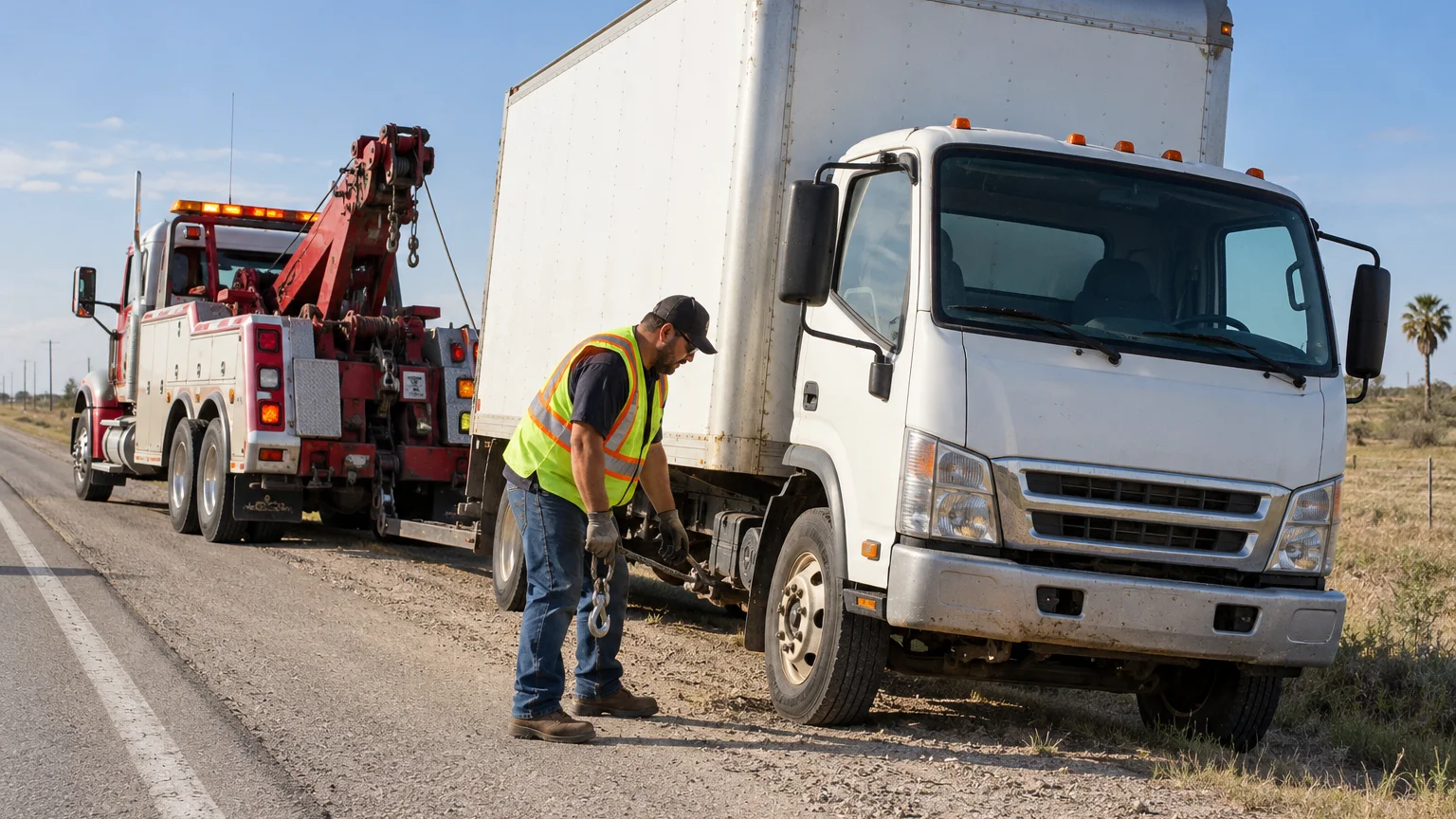
Identify the truck, load, and attached equipment
Start with the vehicle’s exact type. “Work truck” can describe many different setups. Tell the referral line whether you have a box truck, service truck, dump truck, bucket truck, delivery vehicle, or another commercial unit.
Next, share its year, make, model, and configuration. Include the number of axles and whether any axle appears damaged. Mention a liftgate, utility body, crane, tank, rack, or mounted tool system. Attached equipment can change the vehicle’s dimensions and balance.
The cargo matters too. Explain what the truck carries and whether the load has shifted. State whether the cargo is secured, loose, liquid, or sensitive to tilting. Don’t guess at hazardous-material classifications. Use the shipping papers or company records available to you.
A box truck towing request near Robstown also needs body details. Describe the box length if your records show it. Tell the referral line whether the rear door opens and whether cargo blocks access. Mention visible roof, wall, frame, or liftgate damage.
Don’t leave out trailers. An attached utility, cargo, livestock, or equipment trailer turns one disabled vehicle into a more involved dispatch. Share the trailer type, axle count, connection type, and load description. State whether the truck and trailer remain aligned.
Quick Tow connects callers with independent operators. It doesn’t own heavy wreckers or perform towing work. Our heavy-duty towing referral service uses the information you provide to seek an operator suited to the reported vehicle and condition.
Share weight and wheel details from manufacturer records
Heavy towing can’t be matched safely from appearance alone. Give the operator recorded figures whenever they’re available. Check the manufacturer label, registration documents, fleet file, equipment manual, or shipping paperwork.
Useful details include the truck’s gross vehicle weight rating and its current loaded weight. Those figures aren’t interchangeable. One comes from the manufacturer. The other reflects the vehicle and cargo at the time of the breakdown.
If you don’t know the current weight, say that plainly. Don’t estimate based on how full the cargo area looks. Explain what the truck carries and where the records may be found. The matched operator can decide what else must be confirmed.
Wheel and axle condition also shapes the plan. Count the axles and report which wheels can roll. Mention flat tires, missing wheels, locked brakes, steering problems, or an axle sitting out of position. If a wheel is buried in soft ground, describe that separately.
Tell the referral line whether the transmission shifts into neutral. Don’t force a selector or release an unfamiliar brake system. Simply report what happens when the normal controls are used. Share any dashboard warning or fault message exactly as displayed.
Manufacturer records are especially important when the truck has mounted equipment. A utility body or service crane may make a familiar chassis much heavier than expected. For machinery or a separate load instead of a disabled road vehicle, see our guide to heavy-duty equipment towing.
Clear records let the independent operator evaluate the requested job. The operator, not Quick Tow, confirms whether the available towing equipment has suitable capacity.
Describe your position near US 77 or Highway 44
“Near Robstown” isn’t enough for an accurate dispatch. US 77 and Highway 44 cover different approaches through the area. Give the road name, your direction of travel, and the nearest confirmed marker or business.
A phone map pin helps, but add plain-language context. State whether the truck is on a shoulder, travel lane, parking lot, driveway, loading area, or unpaved edge. If you passed an exit before stopping, identify it only if you’re certain.
Explain how another large vehicle could approach. Mention a narrow gate, low entrance, tight turn, parked trailers, soft ground, or limited space around the disabled truck. Don’t promise that a heavy wrecker can enter. Just describe what you can see.
Your position relative to traffic matters as well. Tell the referral line which side faces the roadway. Report whether the truck is straight, angled, leaning, or partly off the pavement. If the vehicle is around a curve or blocked from view, say so.
Don’t walk into moving traffic to read a marker. Use your map, shipping records, or nearby fixed signs when you can do so from a safe place. If the scene presents an immediate danger, contact emergency services.
Truck towing in Robstown, Texas, can also involve a business yard or delivery site rather than a highway shoulder. In that case, provide the gate location and any entry instructions you’re authorized to share. Identify the on-site contact without posting private access codes publicly.
For broader planning around company vehicles, our fleet and work-truck roadside guide explains which breakdown details help separate roadside service from towing.
When recovery needs differ from a standard tow
A truck that remains upright on firm pavement may need a tow. A truck in a ditch, mud, damaged loading area, or collision scene may need recovery first. Tell the referral line what happened, not merely that the truck won’t move.
Describe the truck’s current position. Is it upright, leaning, jackknifed, or resting against an object? Are wheels below the pavement edge? Has the load moved inside the body or trailer? Does the frame appear bent?
Report visible leaks, smoke, fire, downed lines, or spilled cargo to emergency services. Don’t approach an unstable vehicle to get better photos. Keep yourself and other occupants away from hazards identified at the scene.
Collision damage can change which end of the vehicle is accessible. Share whether the steering, suspension, axle, bumper, body, or hitch appears damaged. Don’t crawl underneath to inspect it. Photos taken from a safe position can help the matched operator understand the layout.
The same distinction applies when a work truck is stuck. A powered wheel spinning in soft soil isn’t enough information. Explain how many wheels are off the firm surface, whether the truck is loaded, and whether anything is attached.
A recovery request may require different rigging and scene planning than a normal tow. Our page on accident recovery and winch-outs covers referrals for vehicles that can’t be reached or loaded as a routine roadside tow.
Texas requires towing companies operating tow trucks over public roadways to be licensed, subject to specific statutory exemptions. Towing operators also need the license category that fits the work performed. Consumers can verify a towing operator through the Texas Department of Licensing and Regulation license search.
Confirm capacity, destination, and the quote
Before dispatch is finalized, repeat the core job details. Confirm the vehicle type, recorded weight information, axle count, load, attached equipment, wheel condition, and exact location. Correct anything that changed while you waited.
The independent operator must confirm that the towing equipment fits the reported job. Ask directly whether the vehicle, cargo, attachment, and present position were included in that assessment. If an important figure remains unknown, identify it as unknown.
Choose a destination before the truck is moved when possible. It might be a fleet yard, repair facility, dealer, secure property, or another location authorized to receive the vehicle. Confirm that the destination accepts the truck type and can accommodate its dimensions. Quick Tow can’t verify a facility’s access or acceptance for you.
Share anything affecting entry at either end. This may include a gate, loading dock, narrow driveway, surface condition, parked equipment, or restricted turning space. Tell the operator whether someone will meet the truck.
Heavy-duty work is quoted separately from the site’s light-duty published rates. Quick Tow doesn’t set the operator’s price. The driver contracts with and pays the independent towing operator directly.
Ask the matched operator to explain what the quote covers before work begins. Confirm whether it reflects the truck, load, attached equipment, recovery conditions, distance, and destination you reported. If the scene changes, ask how that affects the job before additional work proceeds.
Every operator in the network is licensed and insured. You can still verify an individual operator’s license through TDLR before authorizing the tow. A complete request gives you and the operator the same picture of the job.
When to call us
Call when a disabled box truck, loaded work vehicle, or heavier commercial unit near Robstown needs a licensed towing operator. Call us at (361) 967-8088 and we’ll connect you with a licensed operator.