Flatbed towing service near you. Four wheels off the ground.
Quick Tow Corpus Christi is a referral line for callers seeking flatbed towing in the Coastal Bend. A flatbed may be appropriate when a wheel lift is not suitable, including some all-wheel-drive, electric, lowered, or damaged vehicles. Give the operator the year, make, model, wheel and suspension condition, clearance, and pickup access. The operator confirms availability, the required loading equipment, and whether a flatbed is consistent with the vehicle manufacturer's instructions.
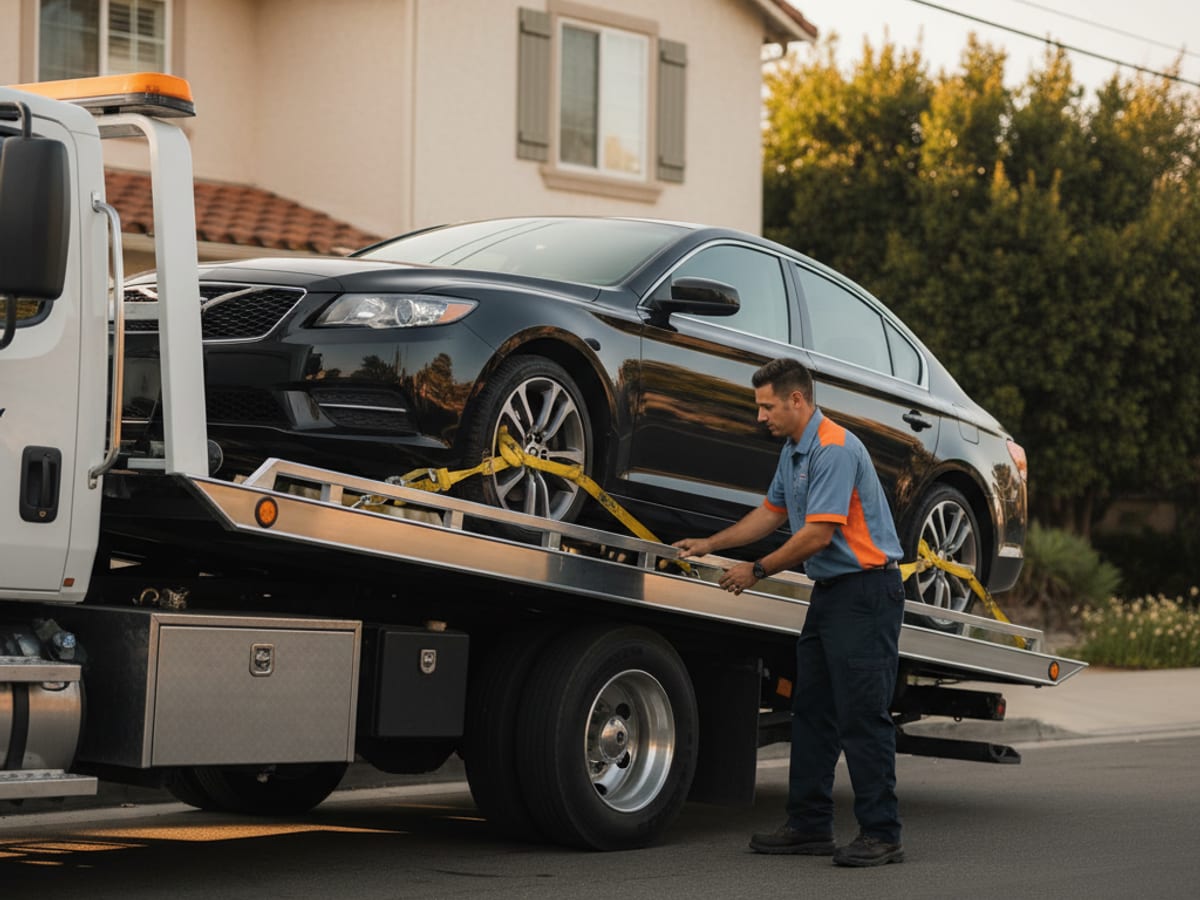
What can you ask an operator about for Flatbed Towing?
- Ask the operator for the bed angle and ramp setup for the measured clearance
- Soft-strap wheel nets (no frame hook or chain damage)
- AWD and 4WD safe flatbed towing service
- EV flatbed transport - Tesla, Rivian, Lucid, Mustang Mach-E, Hummer EV
- Sports car, lowered, and low-clearance loading
- Damaged-vehicle recovery after collision
- Long-distance flatbed towing service within Texas and out-of-state
- Ask whether covered-trailer transport is available for the vehicle
When do you need Flatbed Towing?
- Your car is AWD or 4WD (wheel lift damages transfer case)
- You drive an EV (wheel lift damages drive motors)
- Vehicle is lowered, has aftermarket body kit, or low front splitter
- Front or rear wheel is damaged, flat, or locked
- Transmission is in park and cannot be shifted
- Post-accident move with visible frame or suspension damage
- Classic car needing flatbed towing service without a scratch
- Long-distance move where flat-towing risks mileage and gearbox wear
What do drivers ask about Flatbed Towing?
Is there a flatbed tow truck near me in Corpus Christi?
Call with the vehicle and exact pickup point. The operator who answers confirms whether flatbed service is available there and whether the vehicle instructions, damage, clearance, and access call for a flatbed. Confirm the price directly with that operator.
Why flatbed towing instead of wheel lift?
Anything all-wheel drive needs flatbed towing, full stop - wheel lifts leave two wheels on the ground and the spinning driveshaft destroys the transfer case. EVs are the same story - dragging a Tesla or Rivian with drive wheels on the ground fries the motor. Sports cars and lowered cars need a flatbed because wheel lifts lift only one end and the other end scrapes. If you're not sure, call and say what you drive.
How much does flatbed towing cost in Corpus Christi?
Local flatbed towing service runs from $125 for a hook-up plus mileage at roughly $3-5 per mile. Longer distance is quoted by the operator. Get the total before dispatch, not at the drop-off. Covered-trailer and exotic transport is priced separately - call for a quote.
Can a Tesla or EV go on a flatbed?
EV transport instructions vary by manufacturer, model, model year, condition, and battery state. Check the owner manual and tell the operator whether the wheels can roll and whether transport mode is available. The operator must confirm the loading method and equipment before moving the vehicle.
Is long-distance flatbed towing available?
Ask the operator whether they can take the full route and whether a flatbed or another transport method fits the vehicle. Confirm the written quote and pickup window directly.
Where can you ask about Flatbed Towing in the Coastal Bend?
Quick Tow is a referral line. Pick your city for useful location details, then ask the operator who answers to confirm availability, equipment, timing, and terms for that call.
See flatbed towing in all 36 cities
Need flatbed towing in the Coastal Bend?
Call the referral line. The operator who answers confirms availability and quotes the work directly.