Emergency towing referral line in Corpus Christi.
When a tire blows on SPID or your engine quits near the Harbor Bridge, start with the exact road, direction, vehicle, and safe pickup point. Quick Tow Corpus Christi is a referral line that can connect you with a local towing operator. The operator who answers confirms availability, equipment, arrival estimate, and the published pricing for that call.
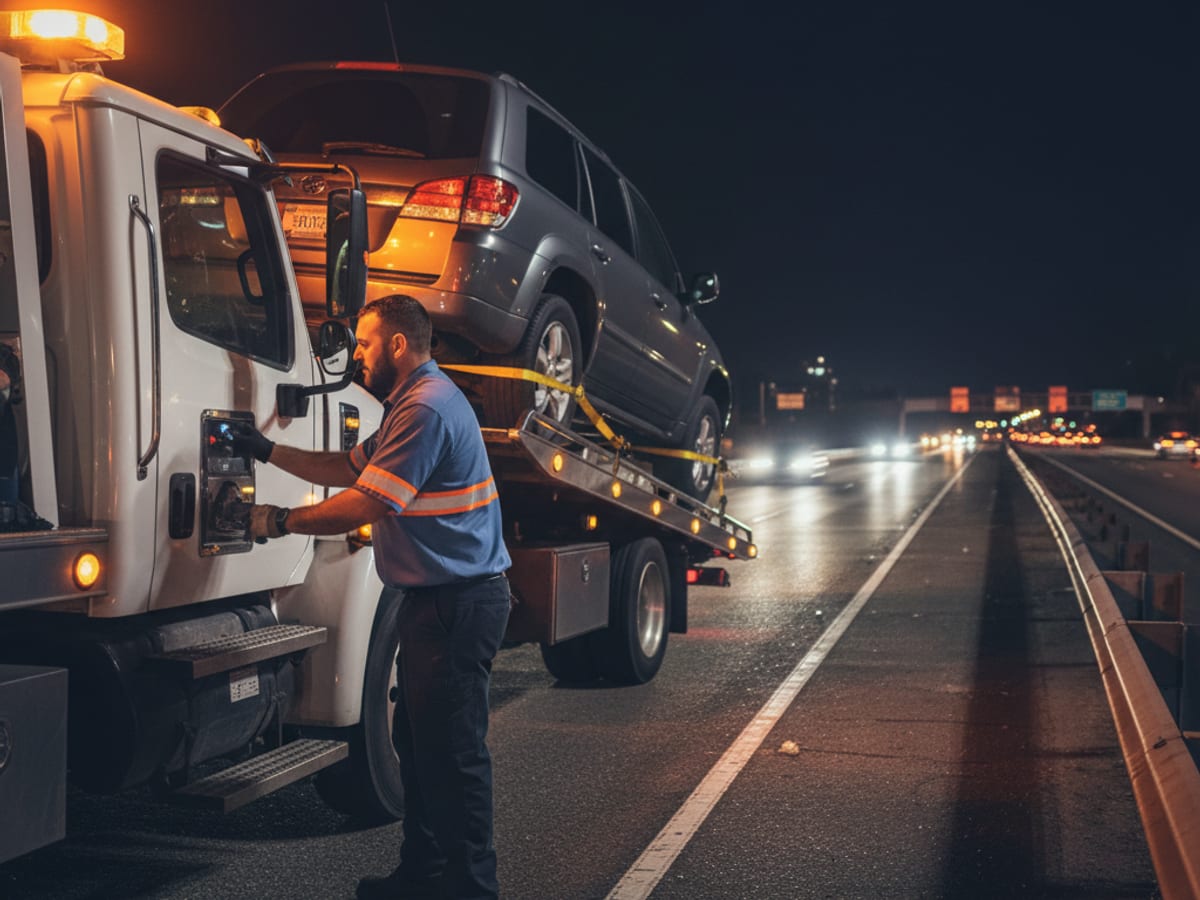
What can you ask an operator about for Emergency Towing?
- The line takes calls 24 hours, 7 days, including holidays
- Ask whether a flatbed or wheel-lift operator is available for your location
- Freeway, bridge, beach, and rural-road recovery
- Post-collision staging and insurance-compliant paperwork
- Stuck-in-sand, winch-out, and off-road recovery
- Tell the operator the vehicle weight so they can confirm suitable equipment
- The operator confirms timing directly with you
- Police-directed and DPS-scene work
When do you need Emergency Towing?
- Vehicle will not start and you are stranded
- Flat tire you cannot safely change on the shoulder
- Overheating on the Harbor Bridge or a rural highway
- Accident or collision requiring vehicle removal
- Ran out of fuel in an unsafe location
- Locked out overnight and need transport home
- Key broken, lost, or stolen away from home
- Driving under the influence - safe ride for you and the car
What do drivers ask about Emergency Towing?
How much does an emergency tow cost in Corpus Christi?
A typical light-duty tow under 10 miles starts at the published $125 hookup plus disclosed mileage. Heavy-duty and long-distance work is priced separately. Confirm the complete written quote with the operator before you say yes.
How fast can someone get to me?
Timing depends on the exact location, traffic, and which operator can accept the job. Ask the operator who answers where the truck would come from and what arrival estimate they can commit to.
Will someone come to the freeway?
For a private call, give the exact highway, direction, nearest exit or mile marker, and safe pickup point. The operator who answers confirms whether they can reach it. When law enforcement directs a tow, follow the officer at the scene.
What do I do while I wait?
If you are on the freeway, stay in the vehicle with seatbelts on and hazards flashing unless there is fire or smoke. If you are off the road in a safe spot, step away from the vehicle. Do not try to change a tire on the shoulder of SPID or I-37. Call, stay put, and let the operator work the scene.
Do insurance or motor club dispatches work here?
If you have roadside coverage through your insurer or a motor club, call them first so they cover the tow - most dispatch a local operator and pay them direct. If you would rather not wait on a club queue, call here and the operator quotes the price before work.
Where can you ask about Emergency Towing in the Coastal Bend?
Quick Tow is a referral line. Pick your city for useful location details, then ask the operator who answers to confirm availability, equipment, timing, and terms for that call.
See emergency towing in all 36 cities
Need emergency towing in the Coastal Bend?
Call the referral line. The operator who answers confirms availability and quotes the work directly.