A disabled diesel pickup or work truck needs the right towing setup. When searching for “diesel truck towing near me,” describe the whole vehicle, not only its engine. Those details help the matched operator decide whether the available equipment fits the job.
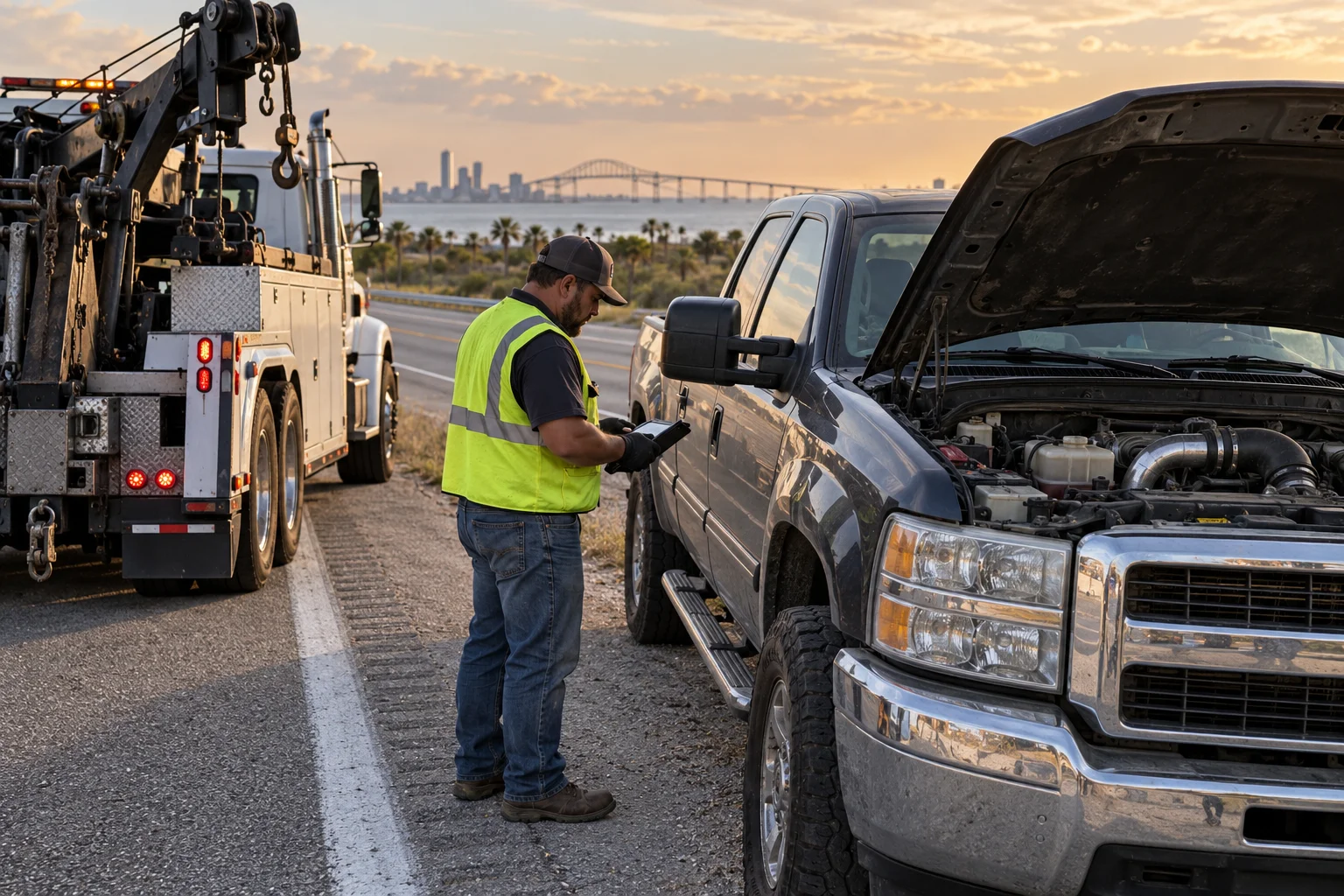
Pickup, work truck, or heavier diesel: say which
“Diesel truck” can describe several very different vehicles. It might mean a standard pickup, a service-body truck, or a commercial work truck. It could also mean a pickup carrying tools, pulling a trailer, or fitted with aftermarket equipment.
Start with the year, make, model, and body style. Then explain how the truck is used. A crew-cab pickup with an empty bed presents different questions than a utility-body truck loaded for work. A cab-and-chassis truck with mounted equipment needs another look.
Don’t rely only on labels such as “heavy-duty” or “three-quarter-ton.” Tell the operator what’s physically present. Mention a service body, welding setup, toolbox, fuel tank, liftgate, rack, or mounted machinery. Don’t estimate the total weight if you don’t know it.
A diesel engine alone doesn’t determine the towing method. The vehicle’s size, configuration, condition, and load all matter. The matched operator must confirm that the truck and towing equipment suit each other.
Say whether the diesel truck is separate from its trailer. If a trailer remains attached, describe that too. Include its type, axle count, load, and visible damage. The operator may treat the truck and trailer as separate parts of the recovery.
This page focuses on pickups and medium-duty work trucks. Tractor-trailer owners should read our guide to semi-truck towing in Corpus Christi. Owners of large pickups can also review the specific questions involved when arranging a tow for a one-ton dually.
Weight, dual wheels, and driveline details to share
The vehicle identification label is a useful starting point. Look for the manufacturer’s gross vehicle weight rating, commonly shown as GVWR. Share the printed figure with the operator rather than guessing from the truck’s appearance.
Also mention what the truck currently carries. Tools, materials, tanks, mounted equipment, and bed contents can affect the operator’s decision. If you can’t inspect something safely, say that it’s unknown. The operator can decide what must be checked at the scene.
Tell the referral line whether the rear axle has single or dual wheels. Don’t assume the model name answers that question. A clear photo of the rear wheels, truck profile, and hitch area may help the matched operator understand the setup.
Driveline details matter too. Say whether the truck is two-wheel drive, four-wheel drive, or another configuration shown by the manufacturer. Mention whether the transmission shifts into neutral. If it doesn’t, don’t force it. Tell the operator which wheels are locked, damaged, missing, or unable to roll.
Describe the breakdown without diagnosing it. Useful descriptions include “the engine stopped,” “the transmission won’t select neutral,” or “the rear wheel is damaged.” Avoid declaring that a specific part failed unless a mechanic confirmed it.
Share any manufacturer towing instructions available in the owner’s manual. The operator can compare that information with the truck’s condition and the equipment being considered. Quick Tow doesn’t choose the rigging method or perform the tow. The independent operator makes those decisions for the actual vehicle.
Photos can reduce ambiguity, but they don’t replace an on-scene assessment. Include the front, rear, driver’s side, passenger side, wheel setup, and any damaged area.
Calallen, Robstown, and US 77 work routes
Location changes the request around Corpus Christi. “Near Calallen” isn’t precise enough when a truck is stopped along a highway, frontage road, worksite entrance, or private lot. Share the road name, direction of travel, nearest cross street, and a map pin.
Calallen sits near the I-37 and US 77 corridor. That makes direction especially important. Tell the referral line whether the truck is headed toward Corpus Christi, Robstown, or farther inland. If you exited the highway, name the exit or nearby business without walking along traffic lanes.
Robstown calls often involve US 77, local streets, yards, and work properties. Explain whether the truck is on pavement, gravel, dirt, or soft ground. A truck parked inside a gated site is different from one stopped on a highway shoulder. Mention gates, narrow entrances, overhead obstructions, and limited turning space.
US 77 also carries traffic south toward Kingsville. If the breakdown happened outside Robstown, don’t use the nearest town as the entire location. Send the operator a pin and describe your direction. Include the nearest visible exit, intersection, or mile marker when you can read it safely.
Destination matters before dispatch. A diesel pickup may need a residence, dealership, repair shop, fleet yard, or secure storage location. Confirm that the destination accepts the truck and can accommodate its size. Quick Tow can’t verify a shop’s hours, access, or repair capability for you.
If the truck blocks traffic or sits in an exposed position, say so immediately. Our emergency towing service can connect callers with an independent operator, but the referral line can’t promise an arrival time.
When heavy-duty equipment may be needed
Some diesel pickups fit equipment commonly used for passenger vehicles. Others need a heavier towing setup. The word “diesel” doesn’t settle that question, and neither does the badge on the fender.
The matched operator may consider the truck’s ratings, current load, wheel arrangement, wheelbase, body equipment, and condition. A loaded service body can present different demands than an empty pickup. A truck with locked wheels or collision damage can also change the required approach.
Dual rear wheels deserve a clear mention. So do long beds, extended cabs, flatbeds, utility bodies, liftgates, and mounted equipment. Tell the operator about anything extending beyond the normal body. Include a hitch, rack, bumper attachment, or equipment stored above the cab.
Ground conditions can affect the equipment decision. A truck on level pavement isn’t the same request as one sitting in mud, sand, a ditch, or a construction area. Don’t describe a recovery as a standard tow when the vehicle can’t be reached from firm ground.
Our heavy-duty towing referral service is the right starting point when the vehicle’s size or configuration exceeds an ordinary pickup request. Quick Tow connects drivers with independent, licensed operators. It doesn’t own tow trucks, select rigging, or decide equipment capacity.
If you aren’t sure whether the truck needs heavy-duty equipment, don’t choose based on appearance. Provide the manufacturer details, label information, photos, load description, and exact location. Let the operator confirm the needed capacity.
A tractor, semi, bus, or large commercial vehicle falls outside this pickup-focused guide. Identify it accurately so the request reaches an operator equipped to evaluate that vehicle class.
Confirm capacity, destination, and the quote
Before accepting the dispatch, confirm that the operator understands the exact truck. Repeat the year, make, model, body type, GVWR, wheel setup, driveline, load, and visible damage. Correct anything that was shortened or misunderstood.
Ask the operator to confirm that the proposed towing equipment has suitable capacity for the truck as presented. Quick Tow can make the connection, but it doesn’t inspect equipment or approve the towing method. That responsibility stays with the independent operator handling the job.
Confirm the pickup point in plain language. Include the map pin, travel direction, surface, access restrictions, and traffic position. If the truck is inside a yard, tell the operator how to enter. If a gate code or site contact is required, arrange that access before the truck arrives.
Then confirm the destination. Give the full business or property name and address. Ask the destination whether it can receive the truck in its present condition. A repair shop may have space or access limits that Quick Tow can’t verify.
The operator matched to the call should quote the price before doing the work. Heavy-duty jobs are quoted separately from Quick Tow’s published light-duty starting rates. Ask what the quote covers, who receives payment, and whether the truck’s load, trailer, recovery needs, or destination could change it.
Texas requires towing companies operating tow trucks over public roadways to be licensed. Consumers can check an operator through the TDLR license search using a name, license number, city, county, or ZIP code. Select “Tow Truck Operators” when searching.
Keep the operator’s name, company name, license information, destination, and quoted terms together. That gives you a clear record before the truck moves.
When to call us
Call when a disabled diesel pickup or medium-duty work truck needs a licensed towing operator in the Coastal Bend. Have the truck details, wheel setup, location, load, and destination ready. Call us at (361) 967-8088 and we’ll connect you with a licensed operator.