A breakdown near Bishop can feel very different from one in Corpus Christi. If you need Bishop towing, give dispatch your direction, nearest town, vehicle type and exact roadside position. Those details help us connect you with an independent, licensed operator equipped for the location.
The run south: Driscoll, Bishop, Kingsville, Riviera
Highway 77 carries drivers south from Corpus Christi through Driscoll and Bishop. Kingsville and Riviera continue the run toward the lower Coastal Bend. Sarita and Encino are farther down the same corridor.
The town name alone may not pinpoint your vehicle. A Bishop address, a southbound shoulder and a county road outside Bishop describe different scenes. Start with your direction of travel. Then share the nearest exit, crossroad, mile marker or visible business.
Our Bishop towing referral page is the right starting point for a disabled vehicle near town. Tell us whether the car is on a city street, frontage road, parking area or Highway 77 shoulder. Mention any trailer, damaged wheel or blocked steering.
Driscoll calls need the same precision. Saying “south of Corpus Christi” leaves a wide search area. A location pin helps, but add a written description. Pins can land beside the correct road while missing the proper entrance.
Kingsville may be your location or your destination. A disabled vehicle near Bishop might need a shop in Kingsville. Another driver may want the vehicle returned to Corpus Christi. The operator needs both points before accepting the call.
Riviera towing requests should include the nearest safe access point. If you’re beyond Riviera toward Sarita, say so immediately. Don’t choose a closer town simply because its name appears first on a map.
Long gaps between exits and what that means
A corridor tow starts with finding the right side of the road. Northbound and southbound vehicles may require different approaches. A median, frontage road or divided section can also change how the operator reaches you.
Send these details together:
- Your direction of travel
- The last town or exit you passed
- The next sign you can read
- A map pin or coordinates
- The vehicle’s color, type and plate
- Whether it rolls, steers and shifts into neutral
- Any trailer, cargo or collision damage
Don’t rely only on a dropped pin. Tell dispatch if the pin shows a nearby field, frontage road or opposite lane. A short written correction can prevent confusion.
Your destination also matters. A tow into Bishop isn’t the same trip as moving the vehicle to Kingsville or Corpus Christi. Name the city and, when known, the exact property where the operator can leave it. Confirm that the destination will accept the vehicle before dispatch.
If the breakdown blocks traffic or involves a collision, contact emergency authorities first. Our emergency towing referral service can connect you with an operator, but the responding authorities control an active crash scene.
Texas also has specific rules for drivers approaching a stationary tow truck using proper visual signals. Under the state’s Move Over law, drivers must change lanes when the roadway has at least two lanes moving in their direction, or reduce speed as the law specifies.
Stay clear of moving traffic while you wait. If you can’t identify a safe place to stand, tell the dispatcher about the shoulder and traffic conditions.
Heat, tires, and the summer stretch
Summer trouble often starts with a warning light, vibration or visible tire damage. Don’t describe every tire problem as a simple flat. The operator needs to know what you can actually see.
Check from a safe position. Report a shredded tread, sidewall cut, bent wheel or tire separated from the rim. Say whether the car remains level or one corner has dropped. If you heard an impact, mention it.
A usable spare can change the service needed. Tell dispatch whether you have one and whether you can locate the wheel-lock key. Pickup trucks, dual-rear-wheel vehicles, trailers and larger SUVs may need different equipment than a small sedan.
Don’t promise that the spare is good because it’s in the vehicle. If you haven’t checked its condition, say that. The matched operator can decide whether a roadside tire change makes sense or the vehicle needs towing. Our guide to a flat tire in Corpus Christi explains what information to gather before calling.
Heat can also appear alongside other symptoms. Report any temperature warning, steam, fluid under the vehicle or loss of power. Don’t open a hot cooling system beside the highway. A tire call and an overheating call require different information, even when both leave you on the same shoulder.
Before a summer drive south, check the tires and spare. Keep your destination address available offline. Mobile service may not be dependable at every stopping point, so a screenshot of your route can help you describe where the car stopped.
Ranch roads and where a truck can actually reach you
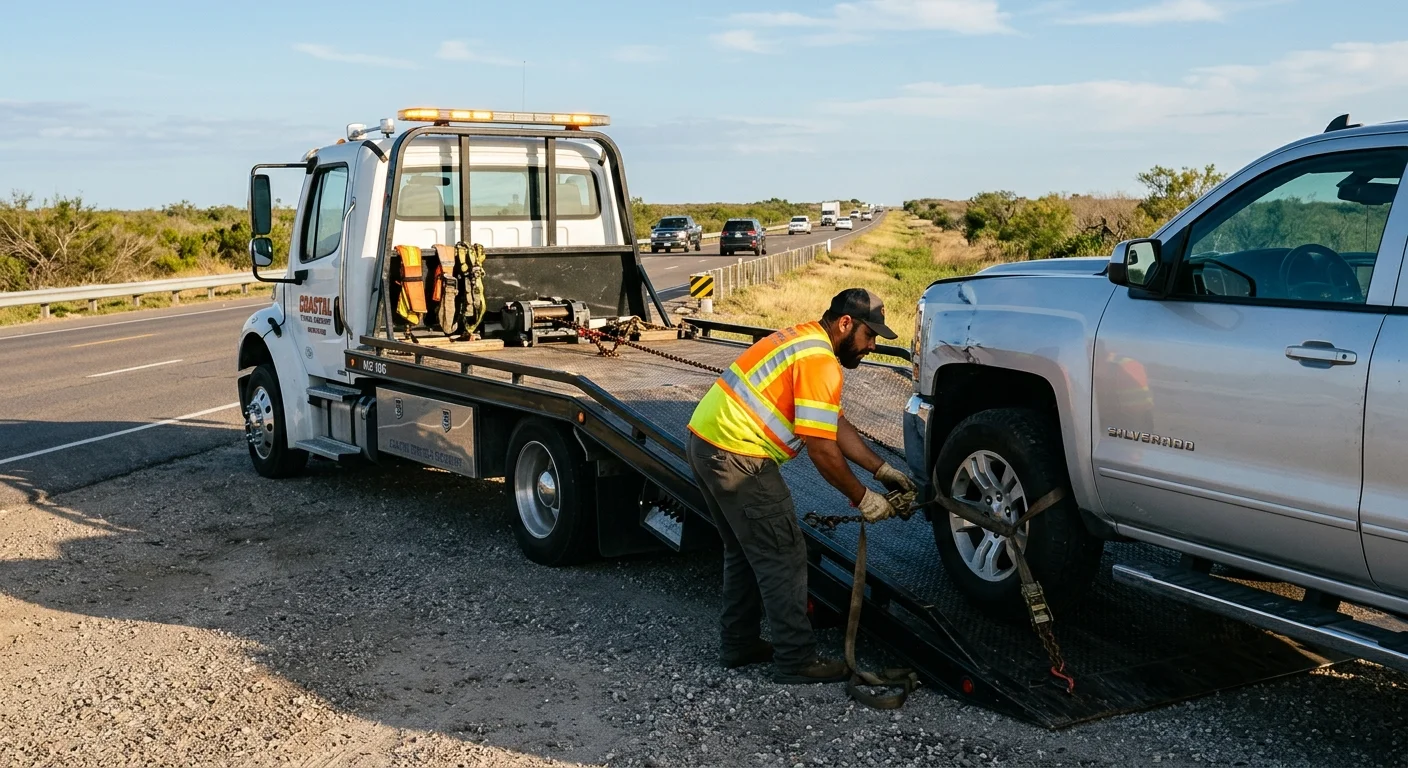
A Highway 77 shoulder is different from a ranch road, field entrance or locked gate. Tow truck access depends on the surface, available turning room and the disabled vehicle’s position. Give dispatch a clear picture before an operator heads toward the scene.
Start with the public road name. Then describe the entrance, gate or driveway. If the vehicle is behind a locked gate, arrange access with the property owner. Don’t ask an operator to enter private land without clear permission.
A map pin might mark the vehicle while hiding the usable entrance. Send the pin, then explain how to reach the gate from Highway 77. Mention whether the road is paved, caliche, gravel, sand or soft ground. Describe tight turns, low branches and cattle guards if they affect access.
Be direct about where the wheels are. “Off the road” could mean two tires beyond the pavement. It could also mean the vehicle sits in a ditch or far from a firm surface. Those are different jobs.
A vehicle that won’t roll may need more than a normal hookup. Report locked wheels, broken suspension, missing tires or a trailer sitting at an angle. If the vehicle left the roadway, explain whether it’s upright and whether anyone is hurt. Contact emergency authorities first when injuries or traffic hazards are present.
Don’t try to pull the vehicle with an improvised strap. The matched operator should assess the scene and choose suitable recovery equipment. For a ditch, mud or soft-ground situation, read about accident recovery and winch-outs before describing the call.
Kingsville, Riviera, Sarita and Encino calls
The farther south the vehicle sits, the more important accurate location details become. “Near Kingsville” may describe a city street, Highway 77 shoulder or rural road outside town. Give the nearest reliable landmark without guessing.
Our Kingsville towing referral page connects drivers with independent operators serving that area. Texas requires the operator who does the work to hold the applicable TDLR license, and that record is public. The driver contracts with and pays the towing operator directly.
Texas requires towing operators and towing companies operating over public roadways to hold the appropriate licenses, subject to specific exemptions. You can check an operator through the TDLR license search using a name, license number, city, county or ZIP code.
For Riviera, Sarita and Encino calls, state the town you last passed and your travel direction. Read mile markers and signs exactly as shown. Don’t estimate a location from elapsed driving time.
Also describe the vehicle fully. A motorcycle, sedan, pickup, work truck, RV and trailer don’t use identical towing setups. Include approximate vehicle length when a trailer or RV is involved. Report any cargo shift, damaged hitch or detached trailer.
Decide where the vehicle should go before the operator arrives. A local destination may not be open or able to receive it. Call the property first and confirm where it can be left. If the trip crosses several towns, our long-distance towing guide explains the details an operator will need.
The operator matched to the call should quote the price before doing the work. The final amount depends on that operator and the actual job. Don’t blend a tow you requested with Texas rules for nonconsent towing, since they’re different situations.
When to call us
Call when your vehicle can’t be moved safely, has left the roadway or needs equipment beyond basic roadside help. A licensed towing operator should handle the hookup, transport or recovery.
Call us at (361) 967-8088 and we’ll connect you with a licensed operator.