A breakdown in Bishop forces one quick choice: fix the problem there or move the vehicle. For Bishop towing calls, roadside help makes sense when a limited service can get the vehicle moving again. Quick Tow connects drivers with independent, licensed operators who assess the situation and perform the work.
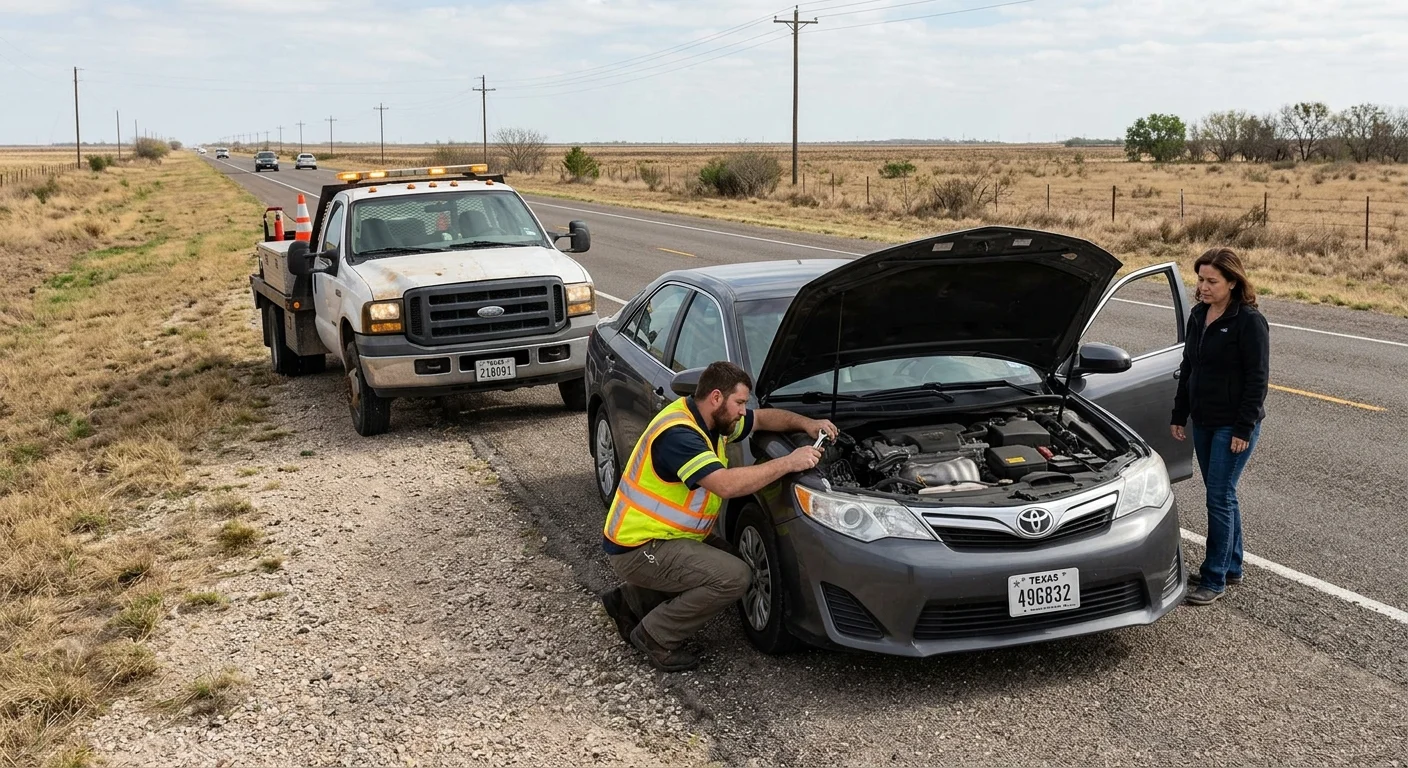
Roadside problems that can be handled where you stopped
Roadside assistance fits problems that can be addressed without transporting the vehicle. The important question is whether the vehicle can leave under its own power afterward.
Several common problems may fit that description:
- A dead battery may call for a jump-start.
- An empty fuel tank may call for fuel delivery.
- Keys locked inside may call for a lockout service.
- A flat tire may call for installation of a usable spare.
Tell the operator exactly what happened before choosing one of these services. A car that won’t start can have a dead battery, but it can also have another mechanical problem. A flat tire becomes a different job when there’s no spare, the spare is damaged, or the wheel has visible damage.
Roadside service also depends on the place where the vehicle stopped. A car sitting in a Bishop parking space presents a different setup from one stopped beside Highway 77. Share whether the vehicle is in a lot, beside a curb, on a highway shoulder, or blocking a travel lane.
The operator may determine that the requested roadside service won’t solve the problem. In that case, the call can shift to a tow. That decision should follow the vehicle’s condition, not a guess made from a short description.
Our roadside assistance service explains the basic help available through matched operators. Before requesting it, check for a usable spare, locate the keys, and note any warning displayed inside the vehicle. Those details help the operator understand the call.
When the vehicle needs to be towed
A tow is the better match when the vehicle can’t be driven after basic roadside help. It’s also appropriate when moving the vehicle under its own power would depend on an uncertain mechanical condition.
Describe any collision damage, steering problem, brake problem, fluid beneath the vehicle, or wheel that won’t turn normally. Mention whether the engine shut down while driving or the vehicle now refuses to shift. These details help the independent operator choose a suitable truck and loading method.
A missing or unusable spare can also turn a tire call into a tow. The same applies when the problem involves the wheel instead of only the tire. Don’t describe every no-start as a battery problem. If a jump has already been attempted, say so when requesting the match.
The destination matters too. You may need a repair facility in Bishop, a shop toward Kingsville, or a destination farther north toward Corpus Christi. Confirm that the chosen location can receive the vehicle. If you haven’t selected a destination, tell the operator before accepting the job.
Our emergency towing service is for situations where a vehicle needs transport rather than a limited roadside service. Quick Tow makes the referral, but it doesn’t perform the tow. The independent operator handles the vehicle, sets the price, completes the work, and collects payment directly.
If you’re uncertain, describe the symptoms without diagnosing them. “The engine turns but won’t start” gives the operator more useful information than “I need a battery.”
Bishop streets and the Highway 77 corridor
Location changes the Bishop towing decision. A disabled vehicle on a city street may have room for a roadside service. A vehicle along Highway 77 may require a different truck position, approach, and loading plan.
Highway 77 carries drivers north toward Corpus Christi and south toward Kingsville. State your direction of travel before giving nearby details. “Highway 77 near Bishop” doesn’t tell an operator which side of the divided route holds the vehicle.
A phone map pin helps, but it shouldn’t replace a clear description. Share the route name, travel direction, nearest visible cross street, and whether you’re on the main lanes or a nearby road. If you don’t know a road name or marker, say that rather than guessing.
Inside Bishop, give the street name and the nearest intersection shown on your map. For a parking lot, identify the business or property name and the entrance closest to the vehicle. Mention gates, narrow approaches, trailers, low clearance, or another vehicle preventing direct access.
This page focuses on the city-level decision between roadside help and towing. Drivers traveling beyond Bishop can use our separate Highway 77 guide from Bishop to Kingsville for corridor-specific planning.
Texas law also affects traffic approaching a stationary permitted tow truck using proper visual signals. On a highway with at least two lanes moving in the same direction, approaching drivers must vacate the nearest lane or reduce speed as prescribed by state law. That rule protects the roadside work area, but it doesn’t tell the operator where your vehicle is. Accurate location details still matter.
Vehicle and location details the operator needs
Start with the vehicle’s year, make, model, and color. Include whether it’s a car, pickup, motorcycle, van, SUV, RV, or vehicle pulling a trailer. If you know the drive configuration, share that too.
Then describe what the vehicle can still do:
- Does the engine start and remain running?
- Can the transmission shift into neutral?
- Do all four wheels roll?
- Does the steering respond normally?
- Are any tires flat, missing, or visibly damaged?
- Are the keys with you?
- Is the vehicle lowered, modified, heavily loaded, or attached to a trailer?
Don’t test something that you’re uncomfortable checking. “I don’t know” is more useful than an answer based on a guess. The operator can decide what else must be confirmed before loading or servicing the vehicle.
Your location description should be just as specific. Send the map pin, then state whether you’re in Bishop proper or on Highway 77. Add the direction of travel, nearest cross street, lot entrance, and any access restriction.
Tell the operator where the vehicle sits within the location. “Back row beside the loading area” is clearer than a business name alone. On the highway, explain whether the vehicle is fully outside the travel lane or partly blocking it.
Finally, give the requested destination and mention any passengers, pets, or cargo that affect the call. Ask how those people or items will be handled. A tow transports the vehicle, but passenger arrangements and property handling should be confirmed directly with the matched operator.
What to confirm before accepting the match
Quick Tow is a referral service. It connects Bishop drivers with independent towing operators, but it doesn’t own trucks, employ drivers, perform services, or set the operator’s price. You contract with and pay the matched operator directly.
Texas requires the operator who does the work to hold the applicable TDLR license, and that record is public. Texas requires towing companies and towing operators working over public roadways to hold the licenses that apply to their work. You can independently check an operator through the TDLR license search using a name, license number, city, county, or ZIP code.
Before accepting the match, confirm the company name and the service being requested. Ask whether the job is roadside assistance or a tow. If it’s a tow, confirm the destination and the vehicle information the operator received.
Ask the operator for the quoted price and what circumstances could change it. The amount may depend on the vehicle, loading conditions, mileage, timing, and requested service. Quick Tow doesn’t control that charge, and this page can’t confirm a Bishop-specific total.
A tow you request is a consent tow. Texas nonconsent towing caps cover a different type of transaction and shouldn’t be treated as the price for a tow you arrange yourself. Confirm the operator’s accepted payment methods and how payment will be collected.
You should also ask what happens if the initial roadside service doesn’t get the vehicle moving. Confirm whether a tow would require a separate authorization or revised price. That conversation keeps the service, destination, and payment expectations tied to the operator actually doing the work.
Keep the operator’s company name and any written job details you receive. If the vehicle’s condition or location changes before service begins, update the operator directly.
When to call us
Call when a roadside service may get your vehicle moving, or when its condition requires a licensed towing operator. Quick Tow will refer you to an independent operator who handles the service and payment directly. Call us at (361) 967-8088 and we’ll connect you with a licensed operator.