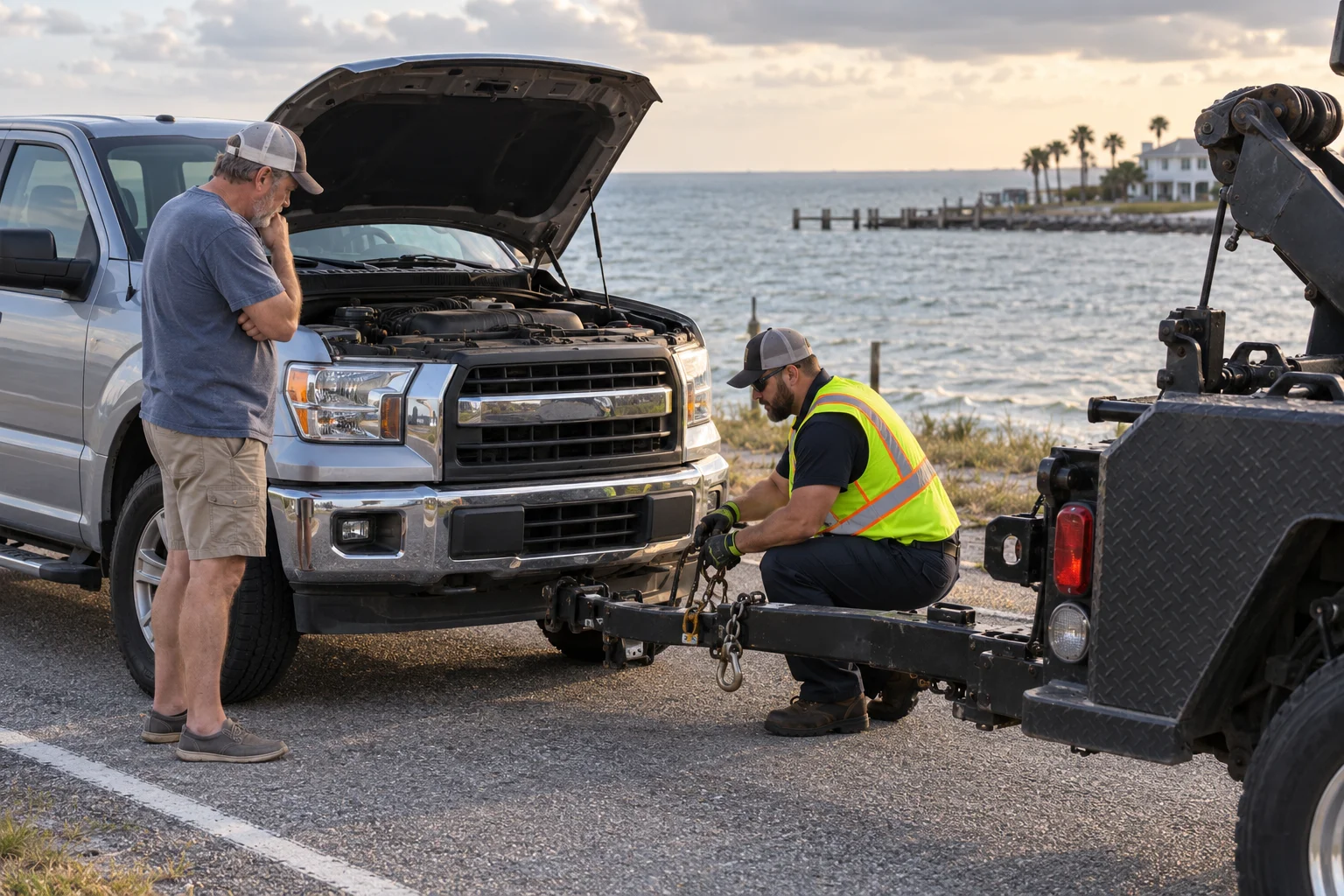
A stalled car in Rockport leaves one immediate decision: request a roadside fix or arrange a tow. The right answer depends on the symptoms, your location, and what an operator can safely handle there.
Identify what stopped the vehicle
Start with what happened before the car stopped. Clear details help the matched operator decide what equipment the call may require. They also reduce confusion between a roadside request and a towing request.
Explain whether the engine shut off while moving or never started. Mention warning lights, unusual sounds, smoke, leaking fluid, or a strong odor. If a tire failed, say whether you have an inflated spare. Tell the operator if a wheel, suspension part, or body panel looks damaged.
For battery trouble, describe what happens when you turn the key. Clicking, dim lights, and complete silence are different observations. Don’t diagnose the battery yourself. Another electrical or mechanical problem may produce similar symptoms.
If the vehicle ran out of fuel, give the fuel type. Don’t guess, especially with a diesel pickup. If the keys are locked inside, disclose whether a child, pet, or vulnerable person is also inside. Share that detail when you place the call.
Share the vehicle’s year, make, model, and drive type if known. Mention modifications, low ground clearance, oversized tires, or a loaded pickup bed. These details can affect the operator’s equipment choice.
Describe any restart attempts or driving after the problem began. Then let the operator assess the next step. Our general roadside assistance service page explains the kinds of calls that may begin as roadside requests.
Decide whether roadside help may be enough
Roadside help may fit a contained problem that doesn’t require vehicle transport. Common requests include a jump start, fuel delivery, lockout assistance, or help installing a usable spare. The matched operator must confirm what can be done at your location.
A jump start isn’t a promise that the vehicle will stay running. If it starts but warning lights remain, the operator may recommend a tow. The same applies when a spare is available but the wheel area has visible damage.
A flat tire isn’t always a simple tire change. A missing spare, damaged wheel, broken stud, or unsafe stopping position can change the request. Tell the operator before dispatch if the vehicle is leaning or the tire separated while driving.
A tow usually makes more sense when the car won’t move under its own power. It may also fit an overheating vehicle, damaged steering, fluid loss, collision damage, or repeated stalling. The operator can confirm the towing method after hearing the symptoms and vehicle details.
This distinction matters because roadside assistance and towing solve different problems. Our guide to roadside assistance versus towing offers a broader comparison.
There’s no verified statewide program in the approved research showing that every Texas driver receives free roadside help. Check your auto insurance, vehicle warranty, credit card benefits, or roadside membership before assuming coverage. Ask whether service limits, mileage limits, or reimbursement rules apply.
There also isn’t one confirmed cheapest option for every Rockport breakdown. The lowest useful choice depends on the problem, location, vehicle, coverage, and operator quote.
Share your position around Rockport and SH 35
“Rockport” alone isn’t enough for a roadside call. Give the operator a precise position, especially when you’re near SH 35 or between Rockport and Fulton.
Start with the road name and direction of travel. Add the nearest cross street, business, entrance, or visible landmark. If you’re in a parking lot, identify the business and the side of the building. A dropped map pin can help, but describe the location too.
On SH 35, explain whether you’re on the roadway, shoulder, frontage access, or a nearby lot. Say which direction the vehicle faces. Mention a nearby intersection or exit if you can already identify it.
Your stopping position can change the service plan. Tell the operator if the car blocks a travel lane, driveway, parking aisle, or narrow access point. Mention soft ground, a ditch, standing water, or limited clearance. Don’t describe the car as “off the road” if part of it remains near traffic.
Texas law covers stationary tow trucks using the required visual signals. Approaching drivers must change out of the closest lane when the road has at least two lanes in that direction, or reduce speed as specified by law. Tell the operator where the vehicle is positioned.
Describe any immediate danger when you place the call. For a breakdown that requires removal rather than a roadside attempt, review the emergency towing service before calling.
When coastal exposure or trailer trouble changes the call
Rockport calls sometimes involve water exposure or a trailer, but those details need separate handling. Don’t treat a wet vehicle, submerged wheel, or damaged trailer like an ordinary flat tire.
If water reached the vehicle, tell the operator how high it appeared to rise. Mention whether the engine was running and whether you tried to restart it. The approved research confirms that storm surge and coastal flooding are hurricane hazards. It doesn’t establish a Rockport-specific corrosion timeline or predict what damage a particular vehicle has suffered.
Avoid promising yourself that the car only needs a jump. Water exposure may change how the operator approaches the vehicle. The operator must assess whether roadside work is appropriate or transport is the safer choice.
Trailer calls also require more detail than a standard car breakdown. Provide the trailer type, load, number of axles, and visible problem. Say whether the tow vehicle remains operable. Mention a failed tire, wheel, hub area, coupling, jack, or lighting issue without trying to diagnose the cause.
A boat trailer with an axle or wheel-end problem is outside this ordinary roadside guide. Read our dedicated guide to boat-trailer axle trouble in Rockport before requesting help. It explains the information an operator needs for that different call.
Tell the matched operator whether the boat, cargo, or equipment has been unloaded. Also explain where everyone with the vehicle is waiting. The matched operator can explain what must happen before a roadside fix or tow can proceed.
Confirm the operator, destination, and quote
Before accepting service, confirm who is coming and what request they received. Ask whether the call is being treated as roadside assistance or a tow. The matched operator should confirm whether the described problem can be handled roadside.
Every operator in our network is licensed and insured. Texas requires towing operators and towing companies operating tow trucks on public roadways to hold the applicable licenses. You can check an operator through the Texas Department of Licensing and Regulation license search. Search by operator name, license number, city, county, or ZIP code.
If towing is likely, choose a destination before the vehicle is loaded. That may be your home, a repair facility, a tire shop, or another property where the vehicle may be left. Confirm that the destination can accept the vehicle, especially outside its normal business hours.
Ask the operator to quote the job before work begins. Quick Tow is a referral service. The driver contracts with and pays the independent operator directly, and Quick Tow doesn’t set the operator’s final price.
Our published roadside calls start at $75. Published fuel delivery is $75 plus the fuel cost, while lockout service is listed at $65 to $95. Those figures aren’t guaranteed totals or statewide market rates. Vehicle type, location, requested work, and the operator’s assessment may change the actual quote.
Texas nonconsent towing caps don’t apply to a tow you request yourself. Don’t blend those state caps with a voluntary roadside or towing quote. Confirm the service, destination, payment method, and quoted price directly with the operator.
When to call us
Call when roadside work can’t restore safe movement, or the vehicle needs transport from Rockport or SH 35. A disabled vehicle with steering, wheel, collision, overheating, or repeated stalling trouble may require a licensed towing operator. Call us at (361) 967-8088 and we’ll connect you with a licensed operator.