A breakdown in Flour Bluff creates one immediate decision. Can roadside help get the carro moving, or does it need towing? The answer depends on the symptoms, road position, and where you planned to go next.
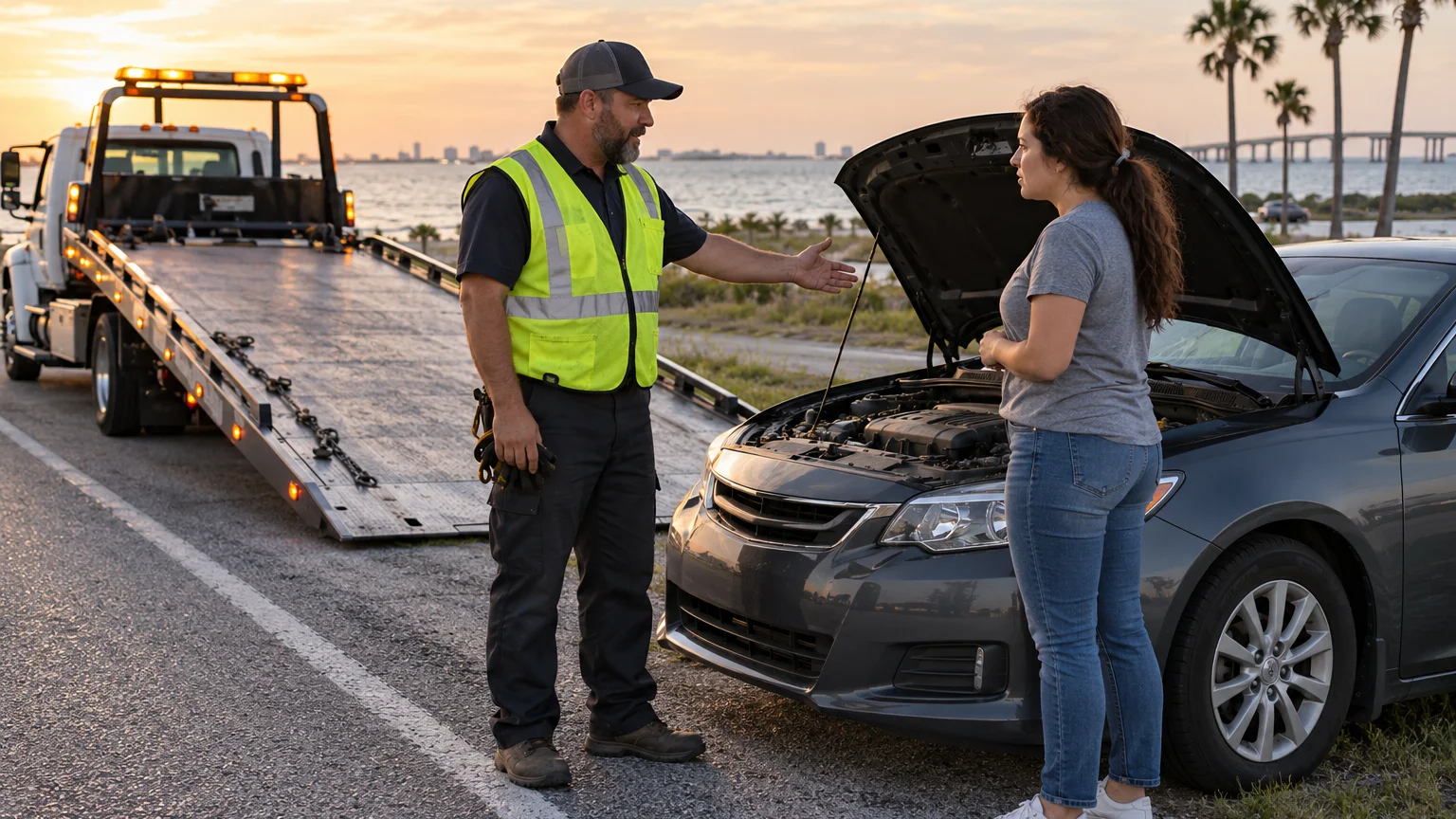
Describe what stopped the carro or pickup
Start with what happened before the vehicle stopped. That detail helps an independent operator understand whether limited roadside help may fit the call.
Tell the operator what you saw, heard, or felt. Useful details include:
- The engine cranks but doesn’t start.
- The lights work, but the starter doesn’t respond.
- A tire is flat or visibly damaged.
- The temperature warning appeared.
- Fluid is visible beneath the vehicle.
- The steering or brakes feel different.
- The vehicle won’t shift into gear.
- The carro started shaking, knocking, or losing power.
- You ran out of fuel or aren’t sure.
- The keys are locked inside.
Don’t diagnose the problem if you don’t know. “It made a grinding sound and stopped moving” is more useful than guessing that the transmission failed. Describe the last normal action, the first unusual symptom, and what the vehicle does now.
Also mention the vehicle itself. Give the year, make, model, and approximate size. Say whether it’s a sedan, SUV, pickup, lowered vehicle, or another configuration. Tell the operator if it carries a load or pulls a trailer.
Our roadside assistance service connects Flour Bluff drivers with independent operators. Quick Tow doesn’t repair vehicles or perform towing. The operator matched to the call decides what service they can provide after hearing the details.
If you’re still sorting out the basic choice, read our broader guide to roadside assistance versus towing in Corpus Christi. For a Flour Bluff call, your exact position matters just as much as the symptoms.
Share your position in Flour Bluff
“Somewhere in Flour Bluff” isn’t enough for an operator to find you. Share a precise pin from your phone when possible. Then describe what you see around the vehicle.
State whether you’re on SPID, Waldron Road, or another named road. Read the road name directly from your map if you’re uncertain. If the map shows an access road, parking lot, or driveway, include that detail. Don’t rely only on a nearby business name because entrances may face different roads.
Your direction of travel matters too. Say whether you were heading toward Padre Island or back toward Corpus Christi. If you recently turned, name the last road you used. Give the nearest intersection shown on your map, but don’t guess at one you passed earlier.
Describe the vehicle’s position clearly:
- In a marked parking space
- At a fuel station or shopping center
- In a driveway
- Along an access road
- On a road shoulder
- Blocking part of a travel lane
- In soft ground, mud, or a ditch
These details help the operator assess access before accepting the job. They also affect whether ordinary roadside service is realistic. A simple issue in a parking lot isn’t the same call as a disabled pickup beside moving traffic.
If you’re near the JFK Causeway or already beyond Flour Bluff, say that directly. Our JFK Causeway breakdown guide covers the location details that matter there. If you believe your position presents an immediate danger, contact emergency services.
When roadside help may be enough
Roadside help may fit when the problem is limited, the vehicle remains accessible, and an operator confirms the requested service. It isn’t a general repair appointment. The goal is usually to address one specific problem or determine that towing is the better next step.
A no-start condition could be related to the battery, but similar symptoms can have other causes. Tell the operator whether the dashboard lights appear, whether you hear clicking, and whether the engine turns over. Don’t promise yourself that a jump will solve it.
For a flat tire, describe the tire and your location. Say whether you have an inflated spare, the correct wheel-lock key, and access to the trunk or spare-tire compartment. A missing spare or damaged wheel can change the request from tire help to towing.
For a possible fuel issue, state what the gauge shows and what happened before the engine stopped. If the vehicle has warning messages or keeps stalling, share those details. Fuel delivery won’t address an unrelated mechanical fault.
A lockout is different because the vehicle may still run normally once access is restored. Tell the operator where the keys are visible and whether a child, pet, or another urgent condition is involved. Emergency circumstances require emergency services, not an ordinary roadside request.
Before dispatch, ask what service the independent operator has agreed to provide. Quick Tow makes the referral but doesn’t set the operator’s capabilities. A clear description prevents a mismatch between the help requested and the equipment sent.
When the vehicle may need a tow
Towing becomes the stronger choice when the vehicle can’t be returned to normal operation through a limited roadside service. It may also be appropriate when further driving could worsen an unknown problem.
Tell the operator if the vehicle has leaking fluid, damaged steering, brake trouble, severe overheating, collision damage, or a wheel that won’t roll normally. A vehicle that starts isn’t automatically ready to drive. Restarting it doesn’t resolve every warning light, unusual sound, or loss of control.
A tow may also be needed when the original roadside request can’t be completed. The spare may be missing. The battery may not be the cause of the no-start condition. The vehicle may remain stalled after fuel is added. An operator can explain the available next step based on the scene and equipment.
Position can influence the decision. A disabled carro in an open parking lot gives an operator different working access than one near moving traffic. A pickup with a trailer, a loaded vehicle, or a vehicle that can’t shift into neutral may need a different towing setup. Share those details before an operator accepts the call.
If towing appears necessary, our emergency towing referral service can connect you with a licensed operator. Quick Tow doesn’t own trucks or employ tow drivers. The driver contracts with and pays the independent operator directly.
For trips continuing toward Padre Island, don’t describe the destination only as “across the bridge” or “toward the island.” Give the operator a named destination and its full address.
Confirm the operator, destination, and quote
Before service begins, confirm who’s coming and what you requested. Ask for the independent operator’s name, company name, and the service they’ve agreed to handle. Every operator in the network is licensed and insured.
Texas requires towing companies operating tow trucks over public roadways to be licensed, subject to specific statutory exemptions. You can check a towing operator through the Texas Department of Licensing and Regulation license search. Select the towing license type and search using the available operator details.
If the vehicle needs towing, choose the destination before dispatch when possible. That might be your home, a repair shop, a tire shop, or another place that has agreed to receive the vehicle. Confirm the business name, street address, entrance, and whether the destination will accept the carro when it arrives.
Don’t assume the operator will choose a repair facility. Quick Tow doesn’t select mechanics or authorize repairs. The towing operator transports the vehicle to the destination you approve, subject to the operator’s acceptance of the job.
Ask the operator for the full quote before work begins. Confirm what the quote covers, the destination, payment methods, and any condition that could change the total. Quick Tow doesn’t set prices, collect payment, or guarantee an operator’s quote.
Repeat the vehicle details and Flour Bluff pickup location one last time. Confirm the road name, direction of travel, map pin, vehicle type, and symptoms. If the situation changes before the operator comes, report the change. A carro that rolls into a parking lot presents a different pickup than one left in its original road position.
When to call us
Call when limited roadside service can’t resolve the problem, or the vehicle needs a licensed towing operator. We’ll connect you with an independent operator who can review the vehicle, location, destination, and requested service. Call us at (361) 967-8088 and we’ll connect you with a licensed operator.