A disabled car in Rockport may need more than a short local tow. If its repair shop, dealership, or home is in Corpus Christi, confirm the whole trip before an operator is dispatched.
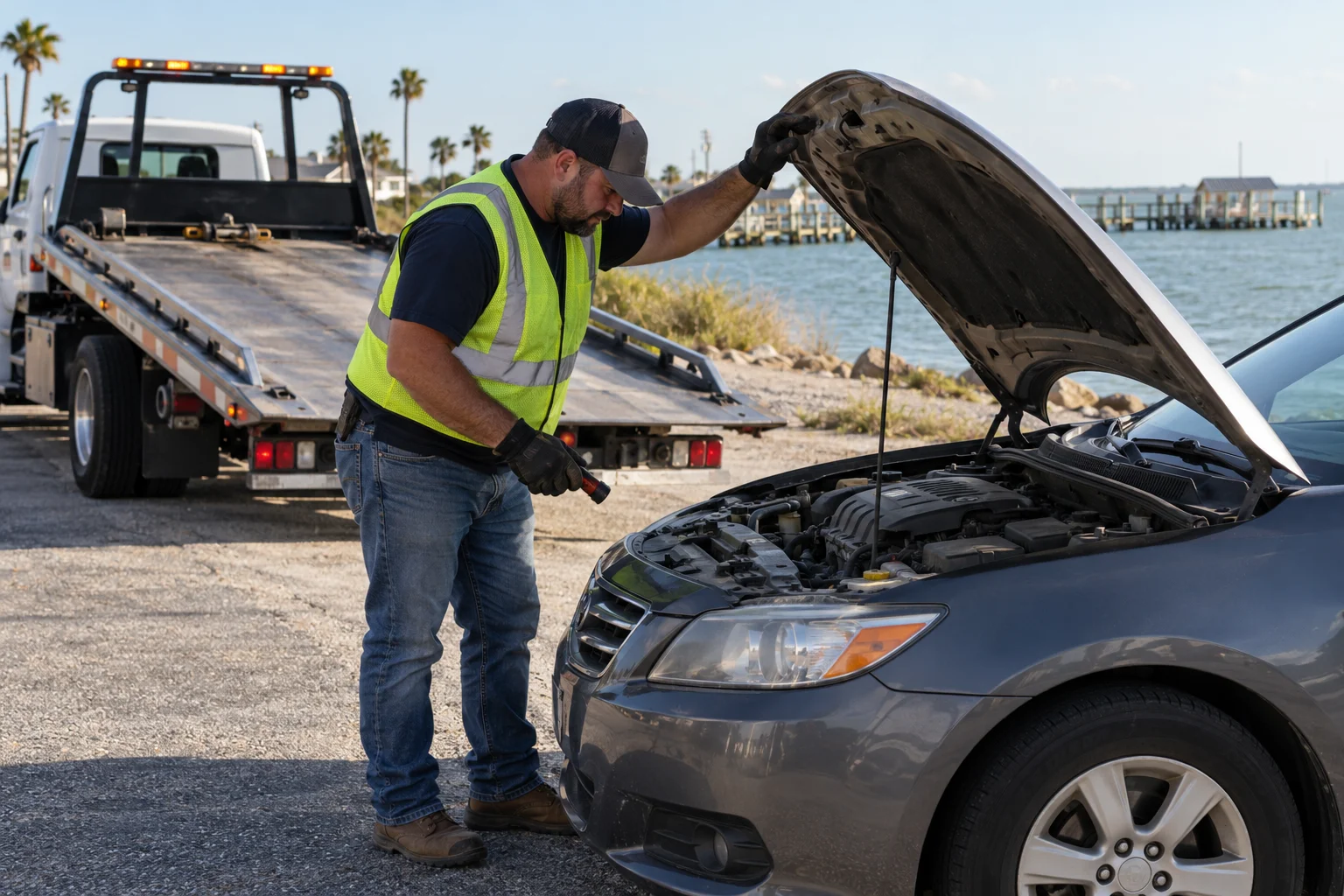
This city-pair request needs precise information. The operator must know what’s being moved, where it sits, and exactly where it’s going. Quick Tow connects drivers with independent, licensed operators serving the Coastal Bend. The matched operator confirms the equipment, destination, and quote.
Describe the vehicle and why it cannot drive
Start with the year, make, model, and body style. A compact sedan and a full-size pickup create different loading questions. Tell the operator if the vehicle is two-wheel drive, four-wheel drive, or all-wheel drive when you know.
Next, explain what happened. “It won’t start” is useful, but more detail helps. Say whether the engine turns over, the transmission shifts, and the steering works. Mention warning lights, collision damage, leaking fluid, missing wheels, or a broken suspension part. Don’t try to diagnose the failure if you aren’t sure. Describe what you can see and hear.
The operator also needs to know whether the vehicle rolls. Confirm whether it can shift into neutral and whether its wheels turn freely. If the keys are missing, say that too. A locked steering wheel or electronic parking brake may affect the loading plan.
Tell the operator about modifications before dispatch. Low clearance, oversized tires, running boards, a lift kit, or a loaded truck bed may matter. Share anything attached to the vehicle, including a bike rack or cargo carrier.
Photos can help the matched operator review visible conditions. Take wide photos of the vehicle and its surroundings. Include closer views of damaged wheels or body panels. Don’t stand in moving traffic to get them.
If you’re unsure whether a platform is appropriate, review our flatbed towing guide. The operator still makes the equipment decision after reviewing the vehicle and pickup conditions.
Choose the exact Corpus Christi destination
“Corpus Christi” isn’t a complete delivery address. The matched operator needs the exact street address and the name of the destination. A repair shop in Corpus Christi proper isn’t the same delivery as a home in Flour Bluff or an address toward Padre Island.
Decide where the vehicle should go before requesting dispatch. Common choices include a repair facility, dealership, residence, body shop, or secured storage location. Quick Tow doesn’t choose the repair provider or guarantee that a destination will accept the vehicle.
Call the destination yourself when possible. Confirm that it accepts disabled vehicles and knows yours is coming. Ask where the operator should unload it. A large service entrance may have different access than the customer parking area.
After-hours delivery needs special attention. Confirm whether the property permits unattended vehicle drops. Ask how keys should be handled and where the vehicle may be placed. Don’t assume a closed shop has an open lot or approved drop area.
Give the operator a contact name for the receiving location. If another person will meet the tow, share that arrangement before dispatch. The vehicle owner should also decide who can approve any destination change during the trip.
A complete destination prevents vague planning. It also gives the operator the information needed to prepare a quote. For broader trip-planning questions, see our long-distance towing service.
If you haven’t chosen a destination, say so. The operator can’t confirm a city-pair job around an unknown endpoint. Set the address first, then request the tow.
Share pickup access around Rockport
The Rockport pickup point matters as much as the destination. Give the full street address, business name, parking-lot section, or other precise location. A dropped map pin can help, but it shouldn’t replace a clear description.
Explain where the disabled vehicle sits. It might be in a driveway, repair-shop lot, apartment space, marina area, narrow side street, or roadside location. Each setting presents different access questions. Don’t describe it only as “near Rockport” if you can provide something more exact.
Tell the operator which direction the vehicle faces. Mention gates, covered parking, low branches, soft shoulders, tight turns, steep driveways, or vehicles blocking access. If entry requires a gate code or property approval, arrange that before dispatch.
A vehicle inside a garage needs extra detail. Share whether the garage door opens and whether there’s space in front of it. Say if the vehicle can roll out or remains locked in place. Don’t attempt to drag it with another vehicle.
For a roadside pickup, move yourself away from traffic when you can do so safely. Provide the operator with visible identifiers from your actual location. Don’t cross traffic or walk along an exposed shoulder to inspect the car.
Rockport also sees towing requests involving trailers. A disabled passenger vehicle is a different job from a trailer with running-gear trouble. If the problem involves a boat trailer instead, use our guide to boat-trailer axle trouble in Rockport.
Precise access details let the operator evaluate the scene before accepting the trip. If the conditions change, update the operator before the truck reaches the pickup point.
Ask how equipment and distance shape the quote
Quick Tow is a referral service and doesn’t set the operator’s price. The independent operator matched to the request provides the quote. That quote should be based on the actual vehicle, pickup point, delivery address, and loading conditions you described.
Ask what towing method the operator proposes. Don’t request equipment based only on a photo you saw online. Vehicle configuration, wheel condition, clearance, and access can all affect the operator’s decision.
Confirm that the quote covers the trip from the Rockport pickup point to the selected Corpus Christi destination. Ask what information the quote assumes. If the vehicle won’t roll, sits off pavement, or needs extra positioning, make sure the operator knows before quoting.
Ask whether the quoted amount could change if the vehicle’s condition differs on arrival. For example, the operator may discover that a wheel is locked when it was reported as rolling. The useful question isn’t whether every long-distance tow has one standard price. It’s whether your description matches the job being quoted.
Don’t blend a requested tow with Texas nonconsent towing limits. A vehicle owner arranging transportation is requesting a consent tow. The approved claims ledger states that TDLR’s listed maximum charges apply specifically to nonconsent tows, not a tow requested by the owner.
No verified fixed rate was found for this exact Rockport-to-Corpus Christi trip. The matched operator sets the quote. Confirm it directly before authorizing dispatch.
For more detail about common quote inputs, read our Corpus Christi long-distance tow cost guide. It explains how vehicle condition, loading needs, and the chosen endpoints can affect a long-distance request without inventing a city-pair total.
Confirm delivery details before dispatch
Review the request from beginning to end before authorizing dispatch. Confirm the vehicle description, Rockport pickup location, Corpus Christi delivery address, proposed equipment, and operator’s quote. Correct any mismatch before the operator starts the trip.
Decide who will release the vehicle at pickup. If you won’t be present, tell the operator who will have the keys and authority to release it. Don’t leave that decision for the loading area.
Do the same for delivery. Give the operator the receiving contact’s name and explain whether someone will meet the vehicle. If the destination permits an unattended drop, confirm its instructions directly. Share only the instructions the destination provided.
Remove loose valuables before pickup when it’s safe to access the vehicle. Take photos showing its visible condition. Keep your keys, identification, and destination details together. These steps create a clear record without making promises about the tow.
Ask how payment will be handled with the independent operator. Quick Tow doesn’t collect payment for the towing work. The driver contracts with and pays the operator directly.
Texas requires towing operators working over public roadways to hold the appropriate license for the towing performed. Consumers can check an operator through the TDLR license search using a name, license number, city, county, or ZIP code. Every operator in the Quick Tow referral network is licensed and insured.
If the destination changes, contact the operator before delivery. A different shop or neighborhood changes the agreed endpoint. The operator must confirm whether that change affects the job or quote.
When to call us
Call when a disabled car or pickup needs a licensed towing operator for the trip from Rockport to Corpus Christi. Have the vehicle condition, exact pickup point, delivery address, and access details ready. Call us at (361) 967-8088 and we’ll connect you with a licensed operator.