A disabled bike near Portland needs more than a general tow request. The operator needs your exact location, the motorcycle’s condition, and any loading limits. Clear details help the matched operator evaluate the job before heading your way.
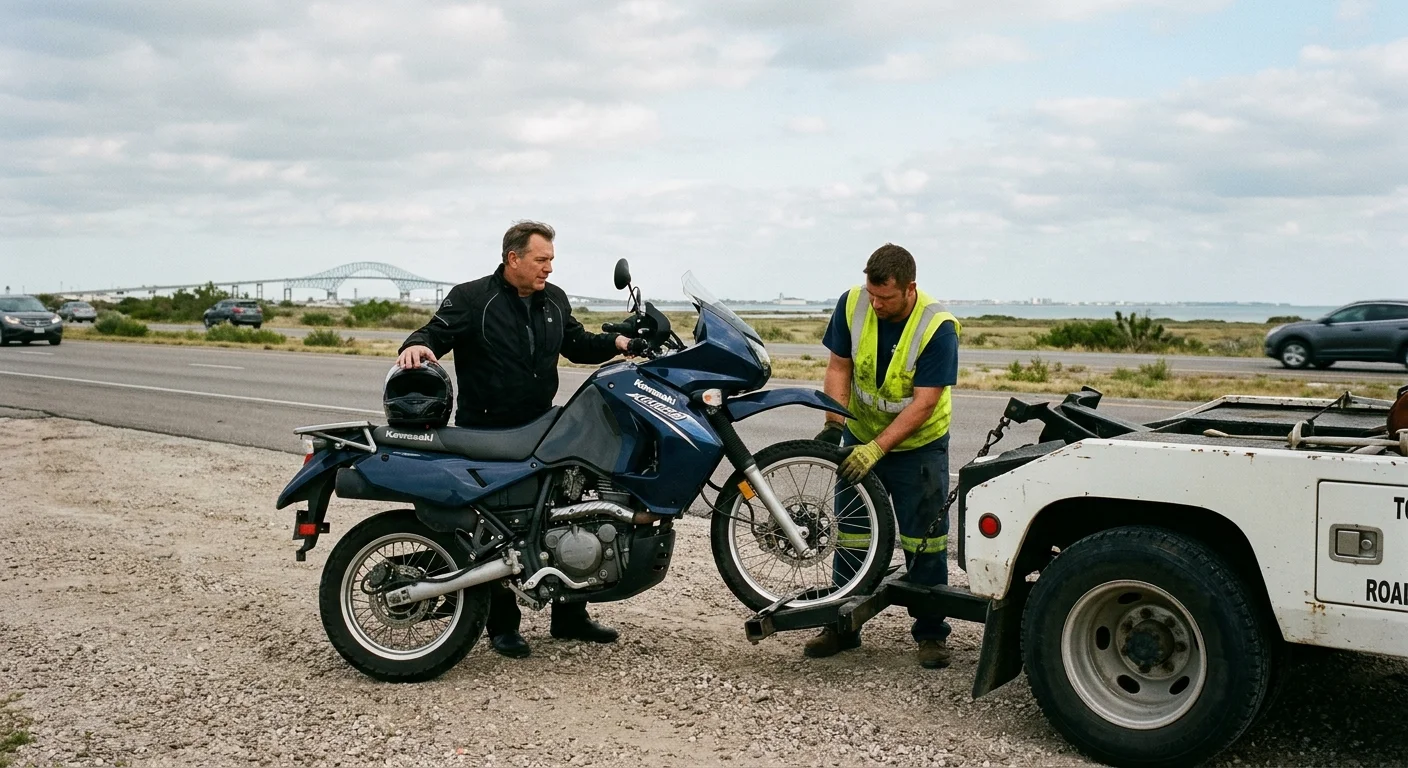
What happened to the motorcycle and where it stopped
Start by explaining what happened, even if you don’t know the cause. Tell the operator whether the motorcycle won’t start, has a flat tire, lost a chain, or was involved in a collision. Mention leaking fluid, loose bodywork, or parts touching the ground.
The bike’s current condition affects the loading plan. Say whether both wheels roll, the handlebars turn, and the transmission shifts into neutral. If the key broke or the steering is locked, include that detail. Tell the operator if the motorcycle is lying on its side or standing on its kickstand.
Next, describe where you stopped. “Near Portland” covers too much ground for a useful dispatch request. State whether you’re in Portland, on the Portland side of US 181, approaching the Harbor Bridge, or already across the bridge near the Corpus Christi Northside.
Include your travel direction. A location pin can help, but add visible context. Name the nearest exit, cross street, business, sign, or parking entrance. Clarify whether the bike is on a shoulder, frontage road, ramp, parking lot, or private driveway.
Tell the operator about anything affecting access. Examples include a narrow shoulder, a low parking structure, soft ground, a locked gate, or traffic close to the motorcycle. Don’t assume a standard truck can reach every position.
Our motorcycle towing referral service connects riders with independent local operators. The operator can use your description to decide whether the available truck and loading setup fit the job.
Flatbed, trailer, and securement questions to ask
Motorcycles don’t all load the same way. Their weight, wheelbase, ride height, bodywork, and current damage can change what’s needed. Don’t request equipment based only on a photo you saw online. Describe the bike first, then ask the operator to explain the proposed setup.
Ask whether the motorcycle will travel on a flatbed, a motorcycle trailer, or another suitable carrier. If you’re considering flatbed towing, confirm that the matched operator can load your specific motorcycle in its present condition. A bike that rolls freely presents a different job than one with a locked wheel or damaged steering.
Discuss securement before loading begins. Ask where the operator plans to place straps and how the wheels will be supported. Mention fairings, crash bars, saddlebags, a windshield, custom paint, lowered suspension, or exposed wiring. Point out anything loose, bent, cracked, or recently installed.
Some motorcycles have owner guidance for transport or approved tie-down points. If you have the manual available, check it and share the relevant instructions. You can also tell the operator if a dealer or repair shop gave you transport directions.
Ask these questions in plain terms:
- What loading method do you plan to use?
- Can that setup handle a wheel that won’t roll?
- Where will the straps contact the motorcycle?
- Do any accessories need removal before loading?
- Can the bike remain upright during transport?
- Does the destination create any unloading limits?
No transport method creates a damage guarantee. Clear questions simply help you and the operator agree on the plan. Texas requires the operator who does the work to hold the applicable TDLR license, and that record is public. You can also check an operator through the Texas Department of Licensing and Regulation license search.
Breakdowns near Portland and the Harbor Bridge approaches
Location wording matters around Portland because US 181 connects the city with the Harbor Bridge approaches and Corpus Christi. “By the bridge” doesn’t tell an operator which side, direction, or access point you mean.
State whether you’re traveling toward Corpus Christi or away from it. Then identify the side of the road and the nearest ramp or exit. If you left the main lanes, say whether you reached a frontage road, parking area, or nearby business entrance.
A pin dropped while moving may mark the wrong lane or side. Check the map before sending it. Pair the pin with a written message such as “Portland side, traveling toward Corpus Christi, past the last exit I saw.” Replace that example with the signs actually visible from your location.
Don’t tell the motorcycle tow truck to meet you somewhere else unless the bike is already there. Give the disabled motorcycle’s position first. If you moved away from traffic or weather, provide your position separately and explain how far you are from the bike.
Riders farther north on US 181 should make that clear too. Portland, the Harbor Bridge approaches, and the highway toward Sinton aren’t interchangeable pickup areas. Our guide to a Highway 181 breakdown between Portland and Sinton explains the location details that help with longer stretches of that route.
The same principle applies after crossing toward the Northside. Say that you’re on the Corpus Christi side, not simply “near Portland.” Accurate starting information lets the independent operator evaluate access, travel distance, and the proposed destination using the same location.
What to photograph before loading
Take condition photos before the motorcycle moves, when you can do so without placing yourself near moving traffic. Photos create a simple record of what the bike looked like at pickup. They also give the operator useful information before deciding how to load it.
Start with one wide photo showing the entire motorcycle and its position. Then photograph both sides, the front, and the rear. Include the wheels, tires, handlebars, fuel tank, seat, exhaust, fairings, mirrors, and visible accessories.
Take closer images of existing scratches, dents, broken panels, leaking areas, or bent parts. If the bike fell, photograph the side that touched the ground. Capture any loose luggage, saddlebags, phone mounts, cameras, or aftermarket pieces that could move during transport.
A photo of the surrounding area can help explain access. Show the shoulder width, parking entrance, curb, slope, gate, or nearby obstruction. Don’t rely on that image alone. Send a written location and access description with it.
Before loading, review the bike with the operator. Point to existing damage and ask about items that may need removal. Keep your keys, riding gear, identification, and personal belongings together unless the operator needs a key for loading or unloading.
For broader preparation beyond Portland, our Corpus Christi motorcycle towing guide covers common information riders should have ready. The Portland request should still include the local route, direction, and bridge-side details described here.
Photos don’t replace a conversation. They can’t show whether a wheel turns, a brake is locked, or the transmission reaches neutral. State those details directly.
How to confirm the destination and quote
Choose the destination before the motorcycle is loaded when possible. It might be your home, a repair shop, a dealership, or another address selected by you. Give the full destination address, not only the business name.
Contact the destination directly to confirm its current hours, entrance, and motorcycle acceptance policy. We couldn’t confirm those details for every Portland or Corpus Christi repair facility. The shop itself is the authority on where the motorcycle should be left and who can receive it.
If the business will be closed, ask whether it permits after-hours delivery. Get the exact drop point and any instructions for keys. Don’t assume the operator can leave a motorcycle outside a locked gate or in an unapproved parking space.
Confirm the quote with the matched operator before the work begins. Quick Tow is a referral service and doesn’t set the operator’s final bill. You contract with and pay the independent towing operator directly.
Our published motorcycle tow rate starts at $99. That isn’t a guaranteed total or a statutory rate. The operator matched to your call quotes the actual price based on the job details.
When reviewing the quote, confirm the pickup and destination addresses first. Ask what distance the quote covers and whether the motorcycle’s condition changes the loading charge. Mention a locked wheel, collision damage, difficult access, after-hours pickup, or special handling before accepting the quote.
Also ask what could cause the price to change. If the destination changes, the bike won’t roll, or the operator finds an access issue, pause and confirm the revised amount before more work proceeds. Ask which payment methods the independent operator accepts.
Repeat the final plan in one message:
- The motorcycle’s year, make, and model
- Its rolling, steering, and neutral condition
- The Portland pickup point and travel direction
- The loading method discussed
- The complete delivery address
- The quoted amount and stated conditions
That written recap gives both sides the same job description. It also catches an incorrect route, destination, or motorcycle condition before loading starts.
When to call us
A motorcycle that can’t roll, steer, or travel under its own power may need a licensed towing operator. Quick Tow connects Portland riders with independent, licensed operators who can evaluate the motorcycle and pickup location. Call us at (361) 967-8088 and we’ll connect you with a licensed operator.