Light-duty towing usually fits passenger cars and some small pickups or SUVs. The label alone doesn’t settle the equipment choice, though. The matched operator must confirm your vehicle, its condition, and the pickup location.
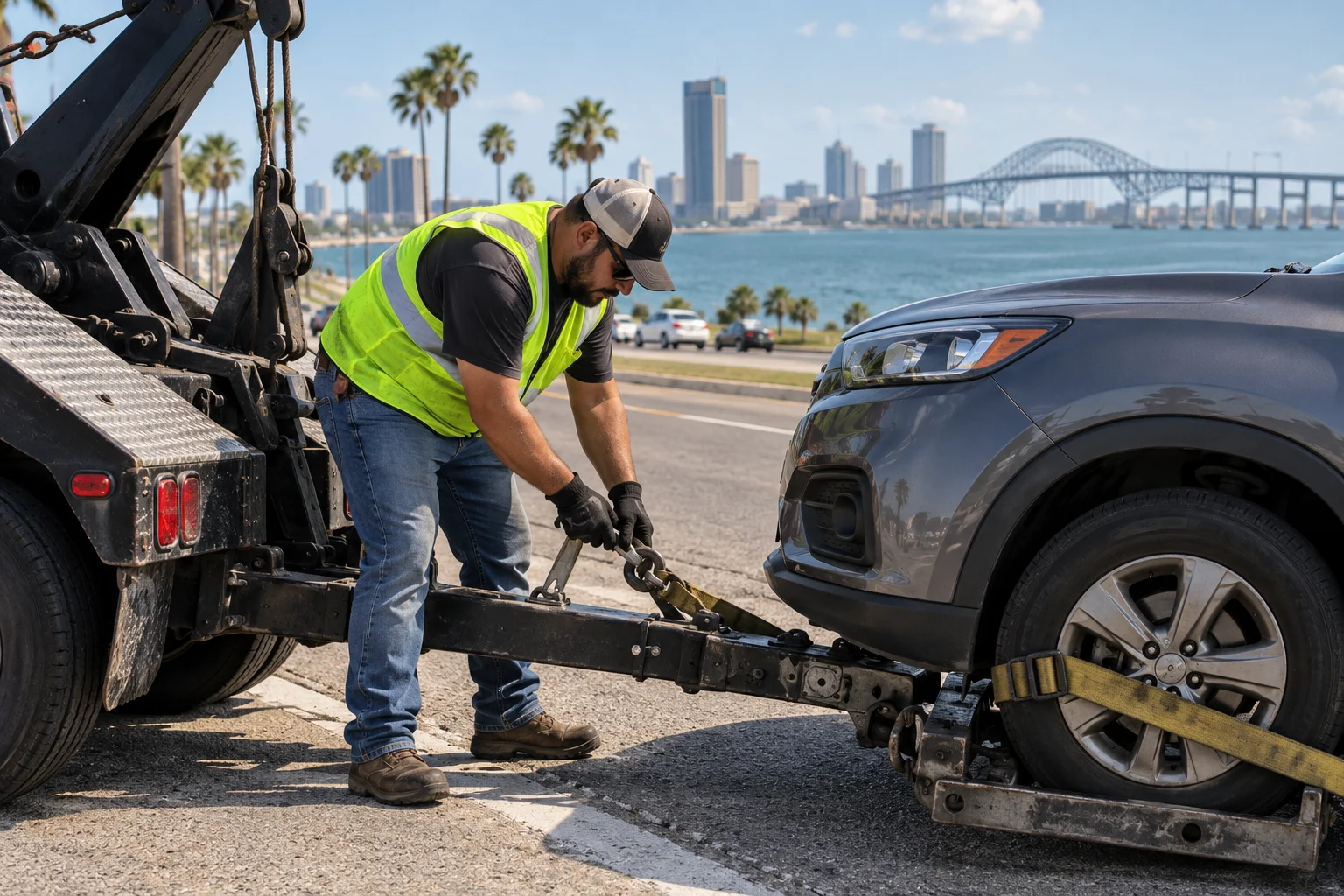
Which cars and small trucks may fit a light-duty call
Drivers searching for “light duty towing near me” usually need help with an everyday passenger vehicle. That might be a sedan, hatchback, crossover, minivan, or smaller pickup. Vehicle size, modifications, damage, and loaded cargo can change the request.
Don’t decide the category from appearance alone. A pickup carrying tools may need different planning than the same model when empty. Oversized tires, lowered suspension, body modifications, and attached equipment can also affect the match. The operator needs the actual vehicle details before accepting the job.
Start with the year, make, model, and body style. Say whether it’s front-wheel drive, rear-wheel drive, all-wheel drive, or four-wheel drive if you know. Mention anything attached, including a trailer or exterior rack. If you don’t know a detail, say that rather than guessing.
A clear side photo can help show the vehicle’s size and condition. Photos don’t replace the operator’s assessment, but they can prevent a vague dispatch request. Include a wheel photo when a tire, axle area, or suspension looks damaged.
Light-duty isn’t the right label for every pickup. It also doesn’t cover every trailer, RV, commercial vehicle, or heavily loaded work truck. Quick Tow connects callers with independent operators, but it owns no tow trucks. The matched operator confirms whether the available equipment fits the vehicle.
If you’re trying to tow a car or small truck, describe the vehicle first. Let the operator name the towing category after reviewing those details.
When damage or locked wheels changes the equipment request
A normal-sized car can still require a more careful equipment choice. Collision damage, locked wheels, steering problems, or a vehicle that won’t shift into neutral may change how it can be moved.
Tell the operator whether each wheel appears straight and able to roll. Mention a flat tire, missing wheel, bent wheel, or anything dragging beneath the vehicle. Say if the steering is locked or the keys are unavailable. Don’t force the shifter or try to roll a damaged car just to make the call sound simpler.
Transmission position matters too. If the vehicle is stuck in park, explain exactly what happens when you move the selector. Our guide to a car that won’t shift into neutral explains the details worth sharing before dispatch.
Collision damage needs a plain description. Tell the operator which corner or side was hit. Mention deployed airbags, broken glass, leaking fluid, or parts touching the pavement. Don’t diagnose an axle, transmission, or suspension failure unless a qualified person has confirmed it.
Location can make the condition harder to handle. A car sitting squarely in a parking space differs from one angled against a curb. A vehicle in a garage may also have height and turning limits. Share those limits before an operator is matched.
The goal isn’t to pick the truck yourself. It’s to describe anything that prevents ordinary rolling, steering, or loading. The operator can then confirm whether a wheel-lift, flatbed, or different recovery setup fits the call.
What to share from SPID, downtown, or Flour Bluff
A useful light-duty towing request starts with a precise Corpus Christi location. A map pin helps, but it shouldn’t be the only detail. Pins can land on the wrong side of a divided road or inside a large property.
On SPID, say whether you’re on a main lane, frontage road, ramp, shoulder, or nearby parking lot. Give your direction of travel and the last exit or cross street you passed. If you’re safely inside a business lot, name the business and describe where the vehicle sits.
Downtown calls need a street and cross street. Add the nearest building, garage entrance, or visible landmark. Tell the operator if the car is inside a parking structure. Include any posted clearance without estimating it.
In Flour Bluff, provide the exact road or business rather than saying you’re near the neighborhood. A destination near Padre Island isn’t the same request as a shop in central Corpus Christi. Likewise, a tow toward Portland, Robstown, or Kingsville needs the destination stated before dispatch.
Share these details in one message or call:
- Vehicle year, make, model, and body style
- Exact pickup point and direction of travel
- Whether the vehicle rolls, steers, and shifts
- Visible damage or a missing key
- Garage, gate, curb, or access restrictions
- Requested destination and any known access instructions
Don’t stand in traffic to inspect a wheel or read a sign. Report what you can see from a safer position. The operator can ask for more information if the dispatch details aren’t enough.
A nearby operator still needs the right vehicle and access information. “Near me” identifies distance. It doesn’t identify the equipment that fits the job.
How flatbed and wheel-lift options differ
A wheel-lift and a flatbed move vehicles in different ways. A wheel-lift supports one end of the vehicle while the other end remains on the road. A flatbed places the vehicle on a carrying platform.
Neither option is automatically right for every light-duty call. Drivetrain, wheel condition, clearance, damage, access, and manufacturer guidance can affect the decision. The independent operator should confirm the method before loading.
A wheel-lift towing request may fit some ordinary passenger vehicles when their condition allows it. It can also be relevant where the pickup area has limited working room. That doesn’t mean every parking garage or tight space can accept the same truck. Share the entrance, turns, clearance signs, and vehicle position first.
Flatbed towing keeps the vehicle off the road during transport. It may be requested for certain drivetrain concerns, wheel damage, low clearance, or owner preference. The operator still has to confirm that a flatbed can enter the pickup area and load the vehicle as it sits.
If you’re comparing the two, read our local guide to flatbed towing in Corpus Christi. It covers the information needed for a better equipment request.
Don’t ask for a wheel-lift only because you expect one method to cost less. Don’t request a flatbed only because the car looks valuable. Describe the vehicle, damage, surroundings, and destination. Then ask the operator to explain the proposed method.
Quick Tow refers drivers to independent licensed and insured operators. The operator controls the equipment, loading decision, work, and final bill. You contract with and pay that operator directly.
Confirm the operator, destination, and quote
Before work begins, confirm who was matched to your call. Ask for the towing company’s name and the operator’s name. Texas requires towing companies and operators working over public roadways to hold the applicable licenses, subject to specific exemptions.
You can check an operator through the Texas Department of Licensing and Regulation license search. Select the tow truck operator license type, then search by name, license number, city, county, or ZIP code. If the details don’t match what you were given, pause and clarify before the vehicle is moved.
Repeat the destination next. Use the full business name and street address when you have them. Confirm that the destination expects the vehicle, especially when a shop, gated property, dealership, or after-hours lot is involved. Quick Tow couldn’t confirm local facility access rules for every destination. Ask the receiving location directly about its current instructions.
The towing operator should quote the job before doing the work. Ask what the quote includes and what conditions could change it. Pickup access, vehicle condition, towing method, destination, mileage, and timing may all be relevant to the operator’s price. Don’t treat a starting figure as a guaranteed total.
Also confirm the payment methods the operator accepts. Quick Tow doesn’t set prices or collect towing payments. The driver contracts with the independent operator and pays that operator directly.
Finish by repeating the core facts: vehicle, location, condition, equipment plan, destination, and quote. That short check can uncover a wrong address or incomplete damage description before loading begins.
When to call us
Call when your car or small truck can’t be driven and a licensed towing operator needs to confirm the correct equipment. Call us at (361) 967-8088 and we’ll connect you with a licensed operator.